
Choosing where and how to live as we age represents one of the most significant decisions any of us will face. Whether you’re exploring options for yourself or helping a parent navigate this transition, the landscape of senior housing in the UK can feel overwhelming. From retirement villages and sheltered housing to nursing homes and staying put with adaptations, each path offers distinct advantages depending on your circumstances, health needs and personal preferences.
The good news is that today’s options extend far beyond the outdated image of institutional care. Modern senior housing encompasses everything from vibrant communities with on-site amenities to carefully adapted family homes where someone can age safely and independently. Understanding these choices—and knowing how to evaluate them properly—empowers you to make decisions that genuinely enhance quality of life rather than simply managing decline.
This resource covers the full spectrum of senior residences and housing, from understanding different accommodation types to practical home adaptations. We’ll explore how to assess care quality using CQC ratings, what makes a bathroom genuinely safe rather than merely accessible, and why details like door widths and threshold heights matter more than you might expect.
The terminology around senior housing often causes confusion. People frequently use terms interchangeably when they actually describe quite different living arrangements. Getting clarity on these distinctions helps you match options to actual needs rather than assumptions.
Retirement villages, sometimes called Integrated Retirement Communities, offer independent living within a community designed for over-55s or over-60s. Residents typically purchase or rent a self-contained property—a flat, bungalow or house—while having access to shared facilities like restaurants, gyms and social spaces. Many people wrongly assume these communities are simply waiting rooms for care homes, but research consistently shows that residents often experience improved health outcomes and delayed care needs compared to those living in standard housing.
Sheltered housing provides independent accommodation with an added layer of support, traditionally through a live-in warden. The shift from resident wardens to floating support services has confused many tenants, as the visible daily presence has been replaced by dispersed alarm systems and periodic visits. Securing a council sheltered tenancy involves navigating waiting lists that can stretch for months or years, making early planning essential. Extra care housing sits between sheltered accommodation and residential care, offering personal care services within the building while residents maintain their own front door.
Understanding the distinction between residential care and nursing care prevents costly mismatches. Residential homes provide personal care—help with washing, dressing and meals—while nursing homes offer this plus 24-hour nursing supervision from registered nurses. Choosing incorrectly means either paying for services you don’t need or, more seriously, inadequate care for complex health conditions. When assessing needs for a partner or parent, honest evaluation of current capabilities and likely trajectory matters more than optimism.
A beautifully decorated lobby tells you nothing about care quality. The mistake of choosing a home based on first impressions rather than substantive assessment leads to devastating consequences when problems emerge months later.
The Care Quality Commission inspects and rates all registered care providers in England. Learning to interpret these reports reveals patterns that casual visitors miss. Look beyond the overall rating to individual domain scores: Safe, Effective, Caring, Responsive and Well-led. A home rated ‘Good’ overall might have concerning scores in specific areas. Pay particular attention to the narrative sections describing what inspectors actually observed, as these reveal day-to-day realities that ratings cannot capture.
Finding a Dementia Gold Standard care home requires specific investigation. Dedicated dementia units versus mixed care environments suit different individuals—wanderers often need specialist units with secured gardens and circular walking routes, while those with mild cognitive impairment might thrive in mixed settings with more stimulation. Design elements matter enormously: contrasting colour décor reduces falls and confusion, clear signage supports orientation, and appropriate lighting maintains natural rhythms.
If remaining at home with support is the goal, selecting a CQC-rated home care agency deserves equal rigour. The complaint about receiving a different carer every visit reflects poor agency practices that undermine continuity and trust. Before signing contracts, ask agencies directly about their staff consistency policies and what happens when your regular carer is unavailable.
The widespread criticism of 15-minute care visits as ‘flying visits’ reflects genuine concern—meaningful personal care rarely happens in such compressed timeframes.
For many seniors, staying in their own home remains the preferred option. Making this sustainable requires honest assessment of the property and willingness to modify it. Victorian and Edwardian properties, beloved for their character, present particular challenges that modern buildings don’t share.
Creating genuinely accessible space often means more than cosmetic changes. A 1500mm turning circle allows wheelchair users to rotate completely, but achieving this in narrow UK terrace houses demands creative space planning. Part M of Building Regulations governs accessibility standards for extensions and major renovations—understanding what compliance requires before starting work prevents expensive remediation later.
Flush thresholds between rooms eliminate trip hazards and allow wheeled mobility aids to pass freely. However, achieving seamless flow requires attention to details that contractors sometimes overlook, such as maintaining weather seals when installing threshold ramps at external doors.
Traditional UK hallways account for a disproportionate percentage of falls among seniors. Narrow passages, poor lighting, changes in floor level and obstacles like console tables create compound hazards. Many properties have a step between hallway and living areas that made sense architecturally but becomes dangerous as mobility decreases. Auditing these spaces systematically—rather than waiting for an accident—allows preventive intervention.
Bathrooms combine hard surfaces, water and the physical vulnerability of undressing—a dangerous combination. Knowing when to replace a bathroom suite involves recognising the signs that current arrangements have become hazardous rather than merely inconvenient.
The choice between walk-in showers and bath lifts depends on dependency levels and specific mobility limitations. Walk-in showers eliminate the need to step over bath edges entirely, while bath lifts preserve the bathing experience for those who can still manage transfers safely. Walk-in baths present their own challenge: you sit waiting to drain the water before opening the door, which can leave someone cold and uncomfortable. Installing dual waste systems with pumps addresses this by emptying the bath in under two minutes.
Suction grab bars seem like an easy solution, but they fail instantly on porous or textured tiles common in UK bathrooms. The consequences of unexpected failure mid-transfer are severe. Screwed grab rails provide reliable support, and tenants can request permission for installation as a reasonable adjustment under disability legislation. Positioning matters significantly—a grab bar in the wrong location provides false confidence without genuine support for the most vulnerable movements.
Slip resistance ratings like R10 and R11 indicate how much grip flooring provides when wet. An R10 rating proves insufficient for wet rooms used by seniors with compromised balance—R11 or higher offers appropriate safety margins. Crucially, placing thick bath mats on top of non-slip flooring actually increases fall risk by creating unstable surfaces that shift underfoot.
Getting safely into and out of the home presents challenges that internal adaptations cannot address. Victorian terraced entrances with steep steps, public pavement constraints and threshold configurations all require specific solutions.
Installing a ramp on a public pavement requires council permission—proceeding without approval creates legal liability and may require removal. Half-steps break down high thresholds into manageable increments, while threshold ramps address the smaller lips at UPVC door frames. The common mistake of buying ramps that are too short creates dangerous ‘ski slopes’ with gradients that exceed safe limits.
Where you position PIR sensors determines whether lights activate before reaching the step or only after you’ve already navigated it in darkness. Wrought iron handrails can maintain kerb appeal better than clinical white plastic alternatives, demonstrating that safety modifications need not compromise the character that makes a home feel like home.
Kitchens determine whether someone can prepare their own meals or becomes dependent on others. Thoughtful adaptations extend independence without requiring complete refurbishment.
Variable-height worktops accommodate both standing and seated users, making them ideal for households where needs vary or may change over time. Lever taps suit arthritic hands better than traditional twist mechanisms, while sensor taps eliminate gripping requirements entirely. Eye-level ovens prevent dangerous bending with hot dishes, addressing the common error of installing under-counter ovens that require exactly this hazardous movement.
Using contrasting colours helps visually impaired seniors identify handles, switches and edges. Corner cupboard solutions like Lazy Susans or Le Mans mechanisms make previously dead space accessible without crawling on the floor—an activity that becomes impossible long before other mobility declines.
Accommodating wheelchairs, mobility scooters or walking frames demands attention to measurements and clearances that seem trivial until something doesn’t fit.
Measuring door widths correctly—the clear opening rather than the frame dimensions—ensures a power chair actually passes through. The mistake of widening door frames while forgetting the hinge knuckle projects into the opening wastes effort and money. For scooter users in flats without garages, storage and charging arrangements require creative solutions that balance accessibility, safety and building regulations.
Rear-wheel drive chairs offer better traction while mid-wheel drive provides tighter turning circles for small UK terrace layouts. Understanding which configuration suits your specific environment prevents purchasing equipment that proves impractical in daily use.
Navigating senior housing decisions requires balancing practical considerations with personal values and preferences. Whether adapting a beloved family home or transitioning to supported accommodation, the quality of that decision depends on understanding what’s genuinely available and what each option actually involves. The detailed explorations throughout this section address specific questions—from CQC report interpretation to grab bar positioning—that transform overwhelming choices into manageable, informed decisions.
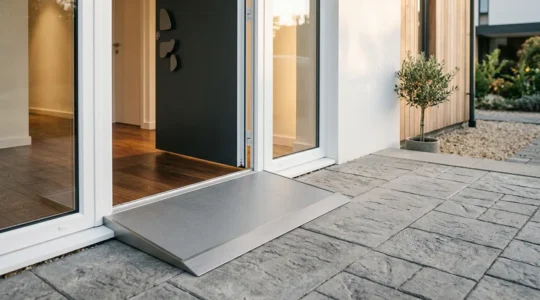
In summary: Prioritise material science: Aluminium offers superior outdoor durability over rubber, which can degrade and smell over time. Protect your door’s weather seal: The ramp must sit flush against the threshold without compressing or damaging the crucial seal. Precise…
Lire la suite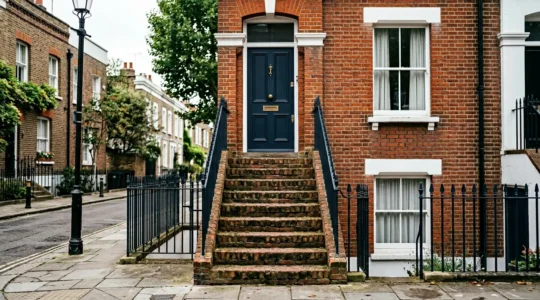
Adapting a period entrance for a rollator user doesn’t mean sacrificing its historic charm for a clinical, modern ramp. Understand the strict legal line between your property boundary and the public pavement before planning any ramp. Use subtle ‘half-steps’ and…
Lire la suite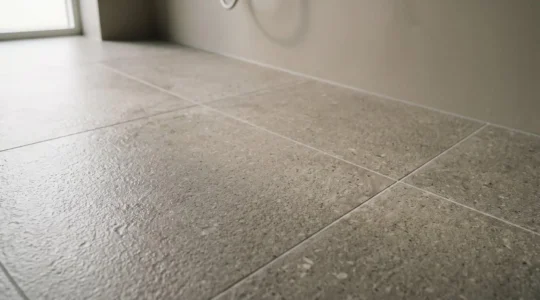
The secret to a safe, elegant floor isn’t just picking an ‘R11’ rating; it’s understanding the science of surfaces to integrate safety seamlessly into your home’s design. An R10 rating is insufficient for wet areas because it fails to manage…
Lire la suite
From a product safety perspective, suction grab bars are not a safe alternative to screwed-in rails; their failure is a matter of when, not if, due to the fundamental physics of vacuum mechanics. Even perfectly smooth-looking tiles possess micro-porosity that…
Lire la suite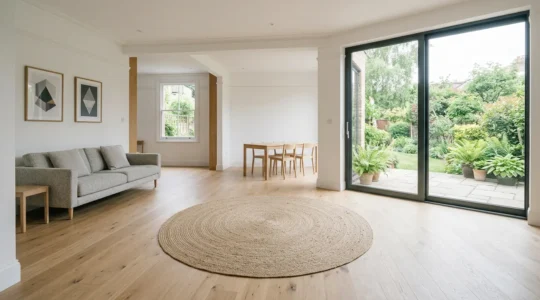
Achieving a genuinely accessible open-plan layout is not about demolition; it’s a precise engineering exercise in creating seamless, barrier-free pathways for life. Success lies in mastering details like flush thresholds, effective door widths, and guaranteed circulation space, not just removing…
Lire la suite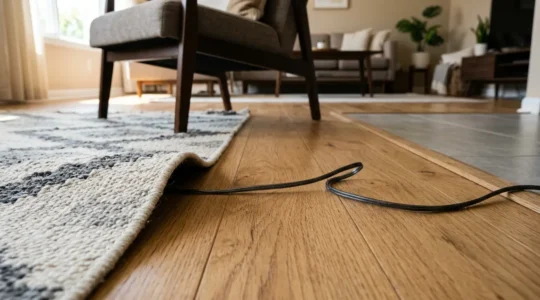
Contrary to popular belief, fall-proofing your home isn’t about major renovations or simply clearing clutter. It’s about training your eyes to perform a forensic audit, spotting the ‘invisible’ hazards created by decades of habit—subtle lighting issues, familiar trailing cables, and…
Lire la suite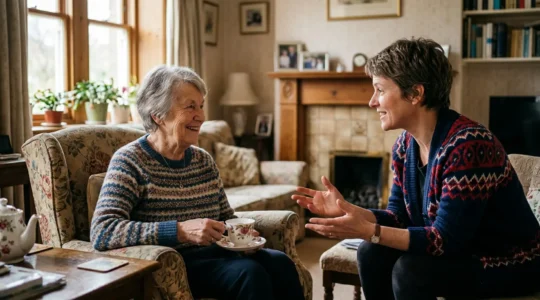
The key to securing a consistent carer is not just choosing a ‘Good’ agency, but actively structuring a « continuity-first » care package by understanding the system’s rules. Superficial questions about staff turnover are not enough; you must understand the difference between…
Lire la suite
A care home’s CQC report isn’t a simple pass/fail grade; it’s an intelligence document filled with coded warnings that marketing brochures are designed to hide. Surface-level ratings like ‘Good’ can mask critical failures in safety, staffing, and leadership that are…
Lire la suite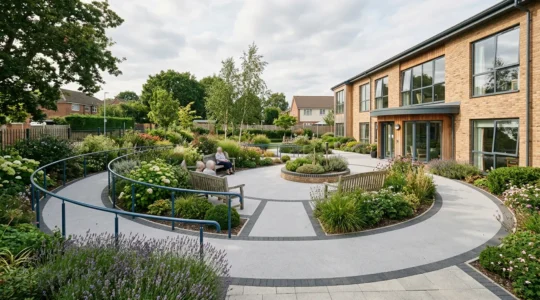
A ‘Dementia Gold Standard’ care home is defined not by basic safety compliance, but by its proactive culture of ‘enabling safety’ that prioritises dignity and independence. It requires families to move beyond CQC ratings and learn to assess a home’s…
Lire la suite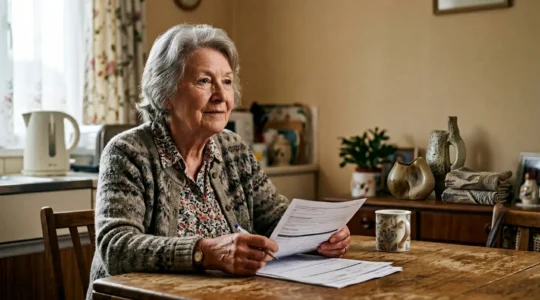
Securing a sheltered housing tenancy is not a passive waiting game but an active process of building a ‘priority case’ that meets the council’s specific assessment criteria. The key is to demonstrate a clear need for supported living by leveraging…
Lire la suite