
Maintaining health and well-being after 65 involves far more than simply managing existing conditions. It requires a proactive approach that spans preventive screening, mental health awareness, mobility preservation, and the intelligent use of NHS services designed specifically for older adults. For many UK seniors and their families, navigating this landscape can feel overwhelming—yet understanding the key pillars of senior health transforms confusion into confident action.
Whether you are approaching retirement, caring for an elderly parent, or already managing multiple health considerations, this resource covers the essential areas that influence quality of life in later years. From accessing free NHS health checks to understanding when a geriatrician offers advantages over a general physician, each topic connects to practical steps you can take today.
The articles within this category explore specific challenges in depth, but here we provide the foundational knowledge that ties everything together—helping you see how immunity, mental health, mobility, medication, and technology work as interconnected elements of holistic senior well-being.
Prevention remains the most powerful tool in senior healthcare, yet many over-65s underutilise the free services available through the NHS. Understanding what screenings exist—and how to access them efficiently—can catch conditions before they become serious.
The NHS offers comprehensive health checks for adults, including specific screenings for conditions that disproportionately affect seniors. Blood pressure monitoring, cholesterol assessment, and diabetes screening form the backbone of these evaluations. Interpreting results correctly matters enormously: a reading that seems acceptable for a 40-year-old may warrant different consideration for someone over 65.
Key screenings to discuss with your GP include:
The UK climate presents specific challenges for older adults. Limited sunlight during winter months directly affects vitamin D synthesis, which in turn influences bone density—a concern that intensifies after 65. Meanwhile, maintaining immune function during cold months requires attention to nutrition, sleep, and sometimes supplementation under medical guidance.
Circadian rhythm disruptions, such as waking consistently at 4 AM, often worsen during darker months and can cascade into mood disturbances and cognitive fog. Addressing these patterns early prevents them from becoming entrenched.
Mental health in seniors remains significantly underdiagnosed, partly because symptoms present differently than in younger adults and partly due to generational reluctance to discuss emotional struggles. Yet anxiety and depression are highly treatable at any age.
New-onset anxiety in the 70s is more common than many realise, often triggered by health concerns, bereavement, or loss of independence. Depression may manifest as physical symptoms—fatigue, pain, appetite changes—rather than expressed sadness. Both conditions respond well to treatment, whether through NHS talking therapies, cognitive behavioural therapy (CBT), or appropriate medication.
The critical error many families make is waiting until a crisis point before seeking professional help. Early intervention produces better outcomes and often requires less intensive treatment.
Distinguishing occasional forgetfulness from Mild Cognitive Impairment (MCI) or early dementia requires professional assessment. Memory clinics, accessible through GP referral, provide comprehensive evaluation. Understanding the difference between validation therapy and reality orientation helps families support loved ones experiencing confusion more effectively.
Crucially, hiding symptoms delays access to medications that work best in early stages. Open communication with healthcare providers serves the patient’s interests far better than protective concealment.
The NHS patient pathway can seem labyrinthine, particularly when managing chronic conditions like arthritis, COPD, or heart failure. Knowing how to advocate for appropriate referrals transforms passive receipt of care into active partnership.
A geriatrician differs fundamentally from a general physician in their approach to patients over 80. Where general medicine often focuses on curing specific diseases, geriatric medicine prioritises function, quality of life, and the complex interplay between multiple conditions. Requesting a Comprehensive Geriatric Assessment (CGA) or referral to a frailty unit may require persistence, but the holistic evaluation these services provide often identifies issues that fragmented care misses.
Similarly, pain management clinics offer expertise beyond simple analgesia, and the Expert Patient Programme provides structured support for conditions like diabetes that require daily self-management.
Getting your GP, district nurse, and social worker to communicate effectively requires proactive effort. Maintaining your own records, preparing symptom diaries before appointments, and explicitly requesting that professionals share information can bridge the gaps that otherwise fragment care.
Muscle loss—not joint problems—represents the single greatest threat to independence in later life. This reality often surprises people who assume mobility decline is inevitable rather than preventable.
Research consistently demonstrates that frailty can be reversed through appropriate strength training, even after 75. NHS reablement programmes, typically offering six weeks of free support following a fall or hospital discharge, provide structured frameworks for rebuilding strength and confidence.
The error of letting a carer do everything—while well-intentioned—actually accelerates physical decline. Encouraging participation in daily activities, however slowly performed, maintains function far better than excessive assistance.
Walking sticks, crutches, and frames serve different purposes, and incorrect use creates new problems. Setting rollator handles too low causes back pain; using a rollator as a wheelchair by having someone push it defeats its purpose entirely. Proper assessment ensures the aid matches the need.
Key considerations for safe mobility include:
Polypharmacy—taking multiple medications daily—is common in seniors and carries significant risks. Drug interactions between heart and kidney medications, or between alcohol and common prescriptions, can prove dangerous.
Pharmacist medication reviews offer valuable opportunities to reduce pill counts and identify unnecessary prescriptions. Preparing thoroughly for these reviews—listing all medications including over-the-counter supplements—maximises their benefit.
Electronic pill dispensers help manage complex dosing schedules, though some medications cannot safely go into dosette boxes due to stability concerns. When swallowing pills becomes difficult, liquid formulations often exist as alternatives worth requesting.
The error of treating a side effect with yet another drug creates cascading complications. Questioning whether symptoms might be medication-related should become routine.
Digital health tools increasingly support senior care, from NHS Virtual Ward programmes for heart failure monitoring to wearable devices detecting atrial fibrillation. Understanding these technologies’ capabilities and limitations helps integrate them sensibly.
Smart watches can reliably detect certain arrhythmias when properly configured, but generic devices vary significantly in accuracy compared to medical-grade equipment like Omron monitors. Taking blood pressure only when stressed produces skewed data; consistent measurement protocols matter.
Presenting home-collected data in formats GPs can easily interpret—rather than raw data dumps—increases the likelihood that your monitoring efforts influence clinical decisions.
The NHS App enables repeat prescription ordering without surgery visits. The Electronic Prescription Service sends medications directly to delivery pharmacies. Online triage forms, when completed thoroughly, improve the chances of receiving appropriate callback prioritisation.
Video consultations require attention to lighting and audio quality for accurate visual assessment—a consideration easily overlooked.
Physical activity remains beneficial at any age, though approaches must adapt to individual circumstances. Zone 2 training—moderate intensity exercise where conversation remains possible—provides cardiovascular benefits with minimal strain.
Chair yoga benefits those with limited mobility, with pranayama breathing techniques proving particularly valuable for COPD management. Hydrotherapy pools at 34°C offer different therapeutic benefits than leisure pools at 28°C, particularly for fibromyalgia and arthritis.
Water reduces effective body weight by up to 90%, enabling pain-free movement impossible on land. The key lies in listening to your body rather than pushing through pain—a common error that causes setbacks.
Reducing salt without sacrificing flavour involves herbs, spices, and acidic ingredients rather than simply eating bland food. Whether diet and exercise can replace cholesterol medication after 70 depends on individual circumstances requiring medical guidance.
Recognising personal limits matters: shovelling snow or walking in freezing wind with angina risks serious cardiac events. The error of thinking yourself limitless until collapse remains surprisingly common.
Understanding these interconnected aspects of health and well-being empowers UK seniors and their carers to engage more effectively with available services, make informed decisions, and maintain quality of life throughout later years. Each article in this category explores specific topics in greater depth—providing the detailed guidance needed to act on the foundations established here.

For seniors, especially those on medication, heart rate is a flawed and often dangerous metric for exercise intensity; the key to safe Zone 2 training lies in mastering internal signals like breathing and perceived exertion. Your heart’s recovery speed after…
Lire la suite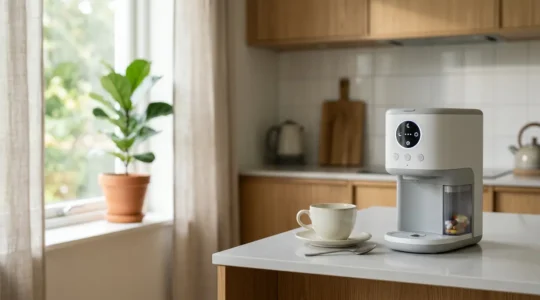
The true value of an electronic pill dispenser isn’t just reminding you to take pills; it’s transforming your medication schedule into actionable data for you and your healthcare team. A smart dispenser provides an objective record of adherence, crucial for…
Lire la suite
Effective remote care for dementia isn’t about surveillance; it’s about translating subtle data patterns into a coherent health narrative that reveals issues like UTIs before they become emergencies. Sensor data, such as toilet flush frequency, creates a personalized digital footprint,…
Lire la suite
In summary: Accessing your GP is no longer just about phone calls; mastering digital tools like the NHS App is key. Success in remote healthcare depends on strategic preparation, from your technical setup to how you describe your symptoms. Knowing…
Lire la suite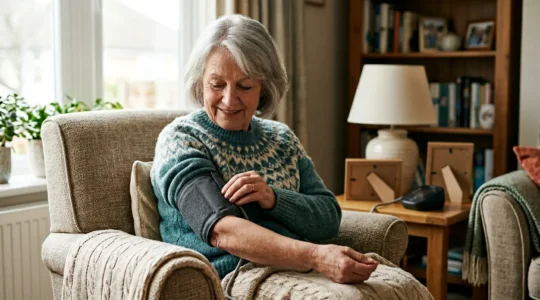
Securing a place on an NHS Virtual Ward for heart failure is an active partnership you can initiate, not a passive process of waiting to be chosen. Your role is to transform from a passive patient into a proactive « Health…
Lire la suite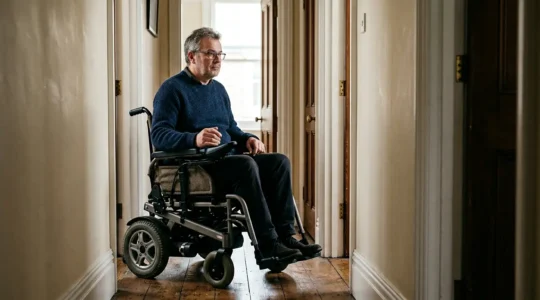
Successfully securing an NHS powered wheelchair is not about passively waiting for approval; it’s about proactively building a clinical case that proves your non-negotiable need for indoor independence. The NHS primarily funds powered mobility to maintain safety and function inside…
Lire la suite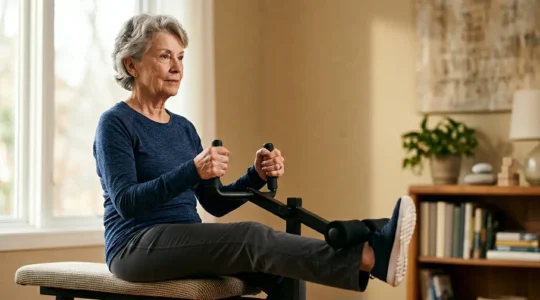
The key takeaway: ‘Frailty’ is not an inevitable part of aging but a reversible state of deconditioning primarily caused by muscle loss, which can be fought and reversed with targeted strength training at any age. Landmark studies show that even…
Lire la suite
The fear that misplacing keys signals the start of Alzheimer’s is common, but often misplaced; the key distinction lies not in the act of forgetting, but in your brain’s ability to retrace its steps. Normal aging involves occasional memory slips,…
Lire la suite
Spotting the difference between depression and early dementia isn’t about checking symptoms off a list. It’s about learning to observe the subtle patterns behind the behavior. This guide moves beyond generic advice, teaching you to see the crucial distinctions in…
Lire la suite
The key to managing complex health issues in later life is not just adding more specialists, but orchestrating a single, holistic review through a Comprehensive Geriatric Assessment (CGA). A CGA moves beyond treating individual diseases to co-designing a care plan…
Lire la suite