
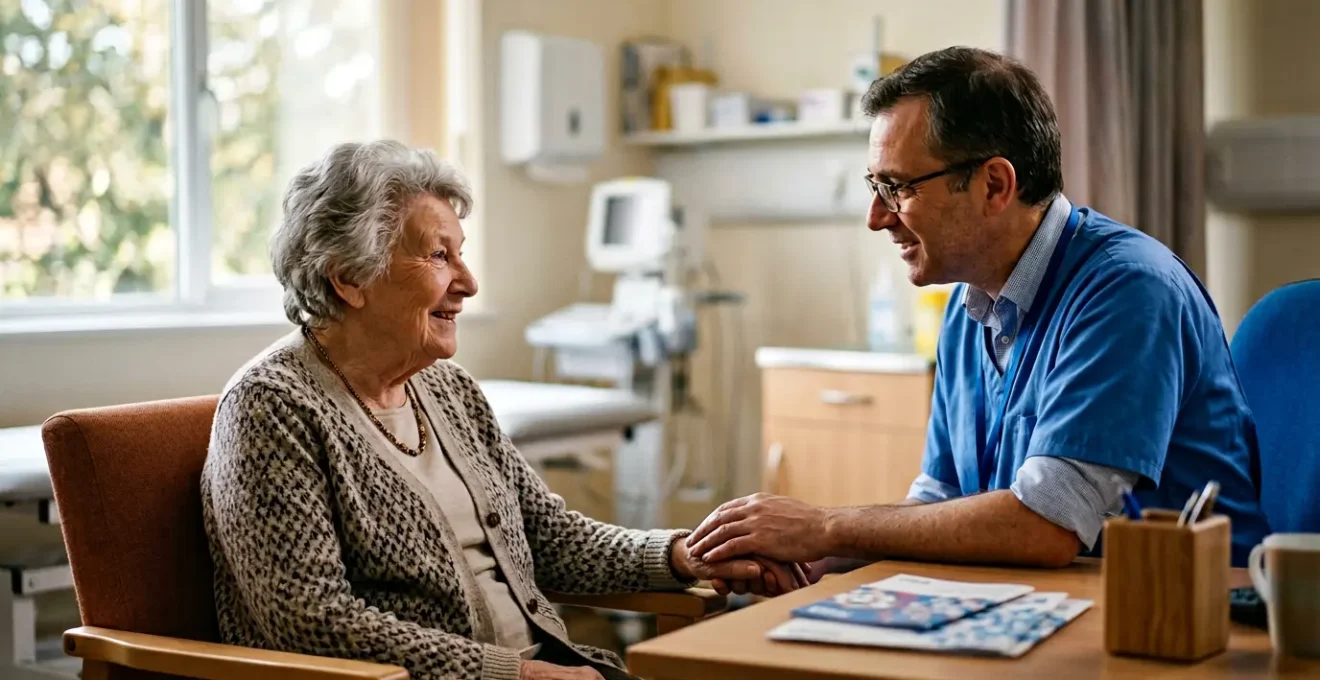
The key to managing complex health issues in later life is not just adding more specialists, but orchestrating a single, holistic review through a Comprehensive Geriatric Assessment (CGA).
- A CGA moves beyond treating individual diseases to co-designing a care plan that prioritizes the patient’s quality of life and personal goals.
- Empowered families can proactively request a CGA from their GP, prepare effectively for the consultation, and ensure all care providers work from a unified strategy.
Recommendation: Use the practical tools in this guide to prepare a structured symptom diary and confidently request a referral to a geriatrician or frailty unit.
For many families navigating the health of a frail older person, the experience can feel like a fragmented and frustrating puzzle. One specialist prescribes medication for the heart, another for the kidneys, and a third for mobility, yet no one seems to be looking at the whole person. You are left managing a dizzying array of appointments, conflicting advice, and a growing list of medications, often feeling powerless within a system designed to treat single organs, not complex individuals. This is particularly true for those over 80, where multiple health systems are often in gentle decline.
The conventional approach often involves a referral to yet another specialist, adding a further layer of complexity. But what if the solution wasn’t more specialists, but a different *kind* of specialist? A professional trained to see the complete picture, weigh competing priorities, and shift the focus from aggressive, curative treatments to a plan that honours the individual’s values and goals for their remaining years. This is the role of the geriatrician and the purpose of a Comprehensive Geriatric Assessment (CGA).
This article repositions the CGA from a passive medical process into an active, patient-driven strategy. It is not just about what a CGA is, but how you can proactively access one, prepare for it to ensure maximum benefit, and use its findings to orchestrate a truly coordinated care team. We will explore how to have productive conversations with your GP, manage medication conflicts, and ensure the entire care team—from district nurse to social worker—is working from the same page. This is your practical toolkit for reclaiming control and co-designing a life of quality and dignity.
This guide provides a clear pathway through the NHS system, outlining the distinct value of geriatric medicine and offering actionable steps to organise truly integrated care, including options like ‘Hospital at Home’.
Summary: A Guide to Holistic Elderly Care via CGA
- Why is a geriatrician different from a general physician for patients over 80?
- How to persuade your GP to refer you to a frailty unit?
- Curative vs palliative approach: what does a geriatrician prioritize?
- The mistake of treating normal aging processes as diseases requiring aggressive intervention
- How to prepare a symptom diary that helps the specialist diagnose quickly?
- How to manage the conflict when medications for heart and kidneys interact negatively?
- How to get the GP, District Nurse, and Social Worker to actually talk to each other?
- How to organize ‘Hospital at Home’ services for a senior with multiple conditions?
Why is a geriatrician different from a general physician for patients over 80?
A general physician is an expert in diagnosing and treating disease. A geriatrician, however, is an expert in managing the complex interplay of medical, functional, and social factors that define the experience of a frail older person. While a GP might focus on managing hypertension or diabetes according to standard guidelines, a geriatrician asks a different set of questions: How do these conditions and their treatments affect your ability to get dressed, make a meal, or see your friends? What matters most to you for your remaining years? This holistic viewpoint is critical when you consider that in the UK, frailty is associated with nearly half of all hospital admissions for older people, a stark indicator of a system often reacting to crises rather than proactively managing well-being.
The core difference lies in the tool we use: the Comprehensive Geriatric Assessment (CGA). This is not just a medical check-up; it’s a multi-domain evaluation. We look beyond blood tests and scans to build a complete picture. This includes a detailed medical review with a special focus on polypharmacy and the potential for ‘deprescribing’ (safely stopping unnecessary medications). We conduct a functional assessment, observing gait, balance, and the ability to perform activities of daily living (ADLs). A psychological evaluation screens for cognitive changes and mood disorders, while a social and environmental review considers the patient’s support network and home safety.
Ultimately, a general physician treats diseases; a geriatrician treats a person within the context of their life. For a patient over 80 with multiple conditions, this shift in perspective from a disease-focused model to a person-centred one is the most significant and beneficial distinction. It’s about adding life to years, not just years to life.
How to persuade your GP to refer you to a frailty unit?
Requesting a referral to a specialist can feel daunting, but approaching the conversation with your GP as a collaborative partner, armed with specific information, can be highly effective. The goal is not to question their expertise but to request access to a different, more holistic type of assessment that you believe is now necessary. Eligibility for a CGA is generally for older people who are living with frailty, which often manifests as having multiple long-term conditions, experiencing falls, significant mobility issues, or cognitive changes.
Instead of a vague complaint like « Mum isn’t doing well, » present concrete evidence. You can start by using the public-facing Clinical Frailty Scale (CFS). This is a simple 9-point scale that helps objectify a person’s level of frailty. Arriving at the appointment and saying, « I’ve looked at the Clinical Frailty Scale and I believe Mum is around a 5 or 6; we’re really noticing a decline, » provides a specific, evidence-based starting point for the discussion.
Framing your request with reference to official guidance is also powerful. A phrase like, « I’ve been reading the NICE guideline on multimorbidity, and it recommends a holistic, person-centred approach. Could a Comprehensive Geriatric Assessment help us achieve that? » shows you are an informed and engaged part of the care team. Above all, highlight specific triggers that justify the referral: recent falls, an increase in hospital visits, noticeable confusion, or the fact that they are now taking five or more regular medications (polypharmacy). Conclude with a clear and direct request: « We would be grateful for your help in getting a specialist overview from the frailty team to ensure we’re all on the right track. »
Curative vs palliative approach: what does a geriatrician prioritize?
In modern medicine, the default approach is often curative: to diagnose a disease and treat it aggressively to eliminate it. For a frail older person with multiple chronic conditions, this model can become problematic and even harmful. A geriatrician’s role is to recalibrate this balance, shifting the focus from a purely curative mindset to one that blends cure with palliation, always prioritizing the patient’s quality of life and personal goals. This doesn’t mean giving up; it means redefining what a ‘win’ looks like.

The central question is not « Can we treat this? » but « Should we treat this, and at what cost to the patient’s well-being? » For example, an aggressive chemotherapy regimen might extend life by a few months but cause debilitating side effects that leave the person bed-bound and unable to enjoy their family. Is that a victory? A geriatrician facilitates a conversation to understand what the patient values. If their priority is to be comfortable, pain-free, and able to sit in their garden, the care plan is co-designed around that goal. This absolutely allows for patient refusal of treatments that don’t align with their goals, framing it as an empowered choice, not a failure of care.
Case Study: The Proven Impact of a Geriatric Approach
This focus on function and quality of life delivers tangible results. A Cochrane review of trials involving CGA found a significant positive impact. Patients who received a CGA were more likely to be alive and independent six to twelve months later compared to those under usual medical care. At the 6-month mark, the analysis showed that for every 17 patients who underwent a CGA, one death or significant deterioration was prevented. This demonstrates that a geriatric approach, which balances curative and palliative elements, leads to better, more meaningful outcomes.
The mistake of treating normal aging processes as diseases requiring aggressive intervention
One of the greatest risks in modern healthcare for older adults is the medicalisation of normal ageing. A slight, age-related decline in kidney function is not necessarily a disease requiring a new medication; a systolic blood pressure of 150 mmHg in an 85-year-old may be perfectly acceptable and safer than aggressively treating it down to 120 mmHg, which could cause dizziness and falls. This is the difference between normal ageing and frailty; ageing is a universal process, whereas frailty is a state of increased vulnerability to stressors due to a decline in multiple physiological systems.
The tendency to view every deviation from a ‘normal’ lab value as a problem to be fixed leads to a cascade of interventions, prescriptions, and potential harm. This is a primary driver of polypharmacy—the use of multiple medications—and the associated risks. The consequences are not trivial; a UK study found that 6.5% of hospital admissions were caused by adverse drug reactions. Many of these are predictable and preventable.
A geriatrician is trained to apply an ‘ageing lens’ to diagnostics. We understand that what is abnormal in a 50-year-old might be normal in an 85-year-old. Our approach involves a constant process of questioning: Is this symptom truly a sign of a new disease, or is it a manifestation of existing conditions, a side effect of a current medication, or simply a part of the natural ageing process? The first step is often not to add a new pill, but to consider which existing ones can be safely stopped. This practice of proactive deprescribing is a core tenet of geriatric medicine and a powerful tool to reduce the burden of treatment and improve quality of life.
How to prepare a symptom diary that helps the specialist diagnose quickly?
Arriving at a consultation with a specialist armed with vague recollections is a missed opportunity. To make the most of your limited time, you need to provide what we might call ‘symptom intelligence’—clear, structured data that helps the geriatrician see patterns and make connections. A well-prepared diary transforms the family from passive observers into active partners in the diagnostic process. It should go beyond a simple list of complaints and cover the key domains of a CGA.

For at least two weeks before the appointment, track not just medical symptoms but their real-world impact. Note energy levels, appetite, and sleep patterns. Crucially, document the functional consequences: was there a day they couldn’t manage the stairs, or an afternoon where confusion seemed worse? This context is vital. Also, make a note of their social interactions. Did they speak to anyone? Did they seem lonely or withdrawn? These social and psychological data points are just as important as a blood pressure reading to a geriatrician.
One of the most powerful and simple actions you can take is the « bag of meds » tactic. Do not just bring a list; physically gather every single medication bottle—prescriptions, over-the-counter drugs, vitamins, herbal supplements—and bring them to the appointment. This allows for an immediate, accurate, and complete review of everything the person is taking, which is the cornerstone of tackling polypharmacy. Finally, before the appointment, agree as a family on the top three most pressing concerns. This ensures your biggest worries are addressed and makes the consultation maximally effective.
Your Action Plan: Preparing the CGA Prep-Pack
- Medical/Symptom Log: For 2 weeks, track daily symptoms, pain levels (1-10), energy, appetite, sleep, and any acute events like falls or confusion.
- Functional Report: Note their ability to dress, cook, manage stairs, bathe, and handle medications. Document any recent decline.
- Social Snapshot: Record who visits, how often they have social contact, and any feelings of loneliness or isolation.
- Home Safety Notes: Identify trip hazards, poor lighting, or accessibility issues like a need for grab rails in the home.
- The « Bag of Meds » Tactic: Physically bring every single medication bottle (prescribed and over-the-counter) to the appointment for a full review.
How to manage the conflict when medications for heart and kidneys interact negatively?
This is a classic geriatric conundrum and a perfect example of competing priorities. A cardiologist might prescribe a diuretic to manage heart failure, but this can worsen kidney function, prompting a renal specialist to advise stopping it. The patient and their family are caught in the middle of conflicting specialist advice. This is precisely the scenario where a geriatrician’s role becomes indispensable. We act as the « general contractor » for the patient’s health, creating a single, unified plan that balances these competing demands.
Our goal is to find a therapeutic equilibrium. This may mean accepting a slightly less-than-perfect blood pressure to preserve kidney function, or vice versa. The ‘right’ answer is not found in a textbook but in a careful assessment of the individual patient’s overall state and, most importantly, their own goals. The decision-making process is guided by a Multidisciplinary Team (MDT) meeting, where the geriatrician brings together the relevant specialists (cardiologist, pharmacist, etc.) to agree on a single, coordinated strategy. The focus is on the patient’s net benefit, not on optimising a single organ’s metrics.
Case Study: The Power of Pharmacist-Led Deprescribing
Deprescribing is a key strategy in resolving these conflicts. It’s not about stopping treatment, but about targeted removal of problematic or unnecessary drugs. The impact can be profound. For example, a study of 46 care home residents found that pharmacist-led deprescribing of certain medications led to a significant decrease in frailty scores after just six months. This highlights the crucial role of specialist pharmacists within the geriatric team. Furthermore, a UK audit of frail patients found that 63% of geriatric ward admissions had recommendations for deprescribing, showing how common and necessary this intervention is.
How to get the GP, District Nurse, and Social Worker to actually talk to each other?
In a fragmented system, the responsibility for coordinating care often falls unofficially to the family. You become the project manager, ferrying information between different professionals who may never speak to one another directly. The key to breaking down these communication silos is to create a ‘single source of truth’ that everyone can work from. This document is the CGA report.
Once the Comprehensive Geriatric Assessment is complete, it will produce a detailed plan with clear action points. Your first step is to formally request that this report be shared with every single person involved in the patient’s care: the GP, the district nurse team, the social worker, and any other therapists or community providers. This ensures everyone is operating from the same holistic strategy, rather than their own narrow perspective. When communicating with any team member, always ask to be copied into emails and correspondence. This maintains your visibility and allows you to gently nudge the process along if communication breaks down.
If you are struggling to achieve this coordination, you can escalate the issue. The NHS in England is now structured into Integrated Care Systems (ICS), which are specifically designed to solve these communication problems. You can contact your local ICS and request that a dedicated care coordinator be assigned to your family member’s case. For more complex disputes, especially around medication or care plans, you have the right to request a formal Multidisciplinary Team (MDT) meeting, where all parties are required to come together to resolve the issue. By proactively using the CGA as a central document and understanding the system’s structure, you can shift from being a passive messenger to an effective care coordinator.
Key takeaways
- A geriatrician’s focus is on the whole person, balancing medical, functional, and social needs to improve quality of life, not just treat disease.
- Patients and families can proactively request a CGA from a GP by presenting specific evidence, such as a Clinical Frailty Scale score and highlighting triggers like falls or polypharmacy.
- The CGA report should be used as the ‘single source of truth’ to coordinate care between GPs, nurses, social workers, and other specialists, ensuring everyone works from a unified plan.
How to organize ‘Hospital at Home’ services for a senior with multiple conditions?
For many older patients with an acute illness like a chest infection or a flare-up of heart failure, the default pathway is hospital admission. However, for a frail individual, a hospital admission can be disorienting and lead to deconditioning. The ‘Hospital at Home’ service, also known as a Virtual Ward, offers an alternative: delivering hospital-level care in the comfort and familiarity of the patient’s own home. This service is for patients who are sick enough to need hospital admission but stable enough to be safely managed remotely.
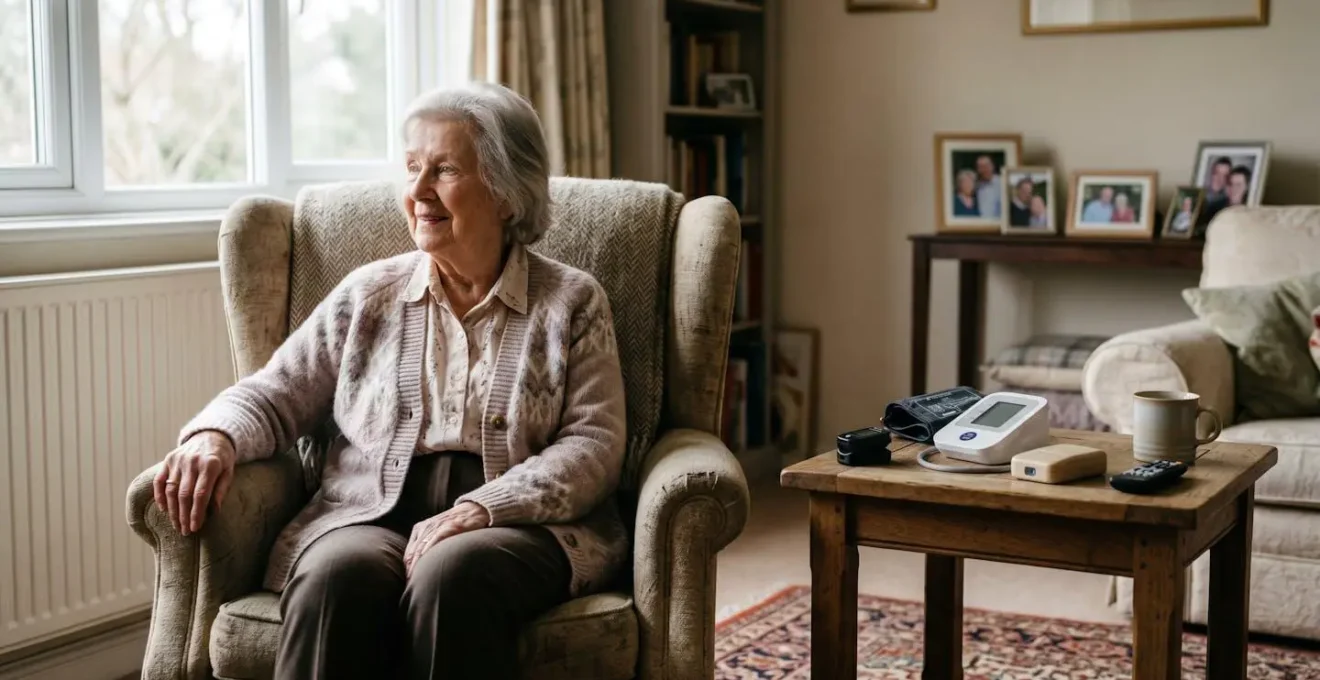
A virtual ward is overseen by a hospital consultant (often a geriatrician) and delivered by a multidisciplinary team of nurses, therapists, and paramedics who conduct daily ‘ward rounds’ either in person or via video. The patient is provided with remote monitoring equipment, such as a blood pressure cuff and pulse oximeter, with the data transmitted directly to the hospital team. This allows for continuous oversight and rapid intervention if their condition changes. The team can perform blood tests, prescribe medications, and even administer IV antibiotics at home.
Access to this service is typically via a referral from a GP, a paramedic team, or the A&E department. The evidence gathered during a CGA is invaluable in making the case for a virtual ward admission, as it demonstrates a comprehensive understanding of the patient’s medical and social situation, confirming their suitability for safe management at home. With the NHS expanding this service, with a target capacity of 20 virtual ward beds per 100,000 GP-registered people as of March 2025 in England, it is becoming an increasingly important and accessible option for managing acute illness in frail older adults.
By shifting your perspective from passively receiving care to actively co-designing it, you can transform the healthcare journey. A Comprehensive Geriatric Assessment is the most powerful tool at your disposal to achieve this. The next logical step is to begin preparing your own ‘symptom intelligence’ diary and schedule a collaborative discussion with your GP to request a referral.