
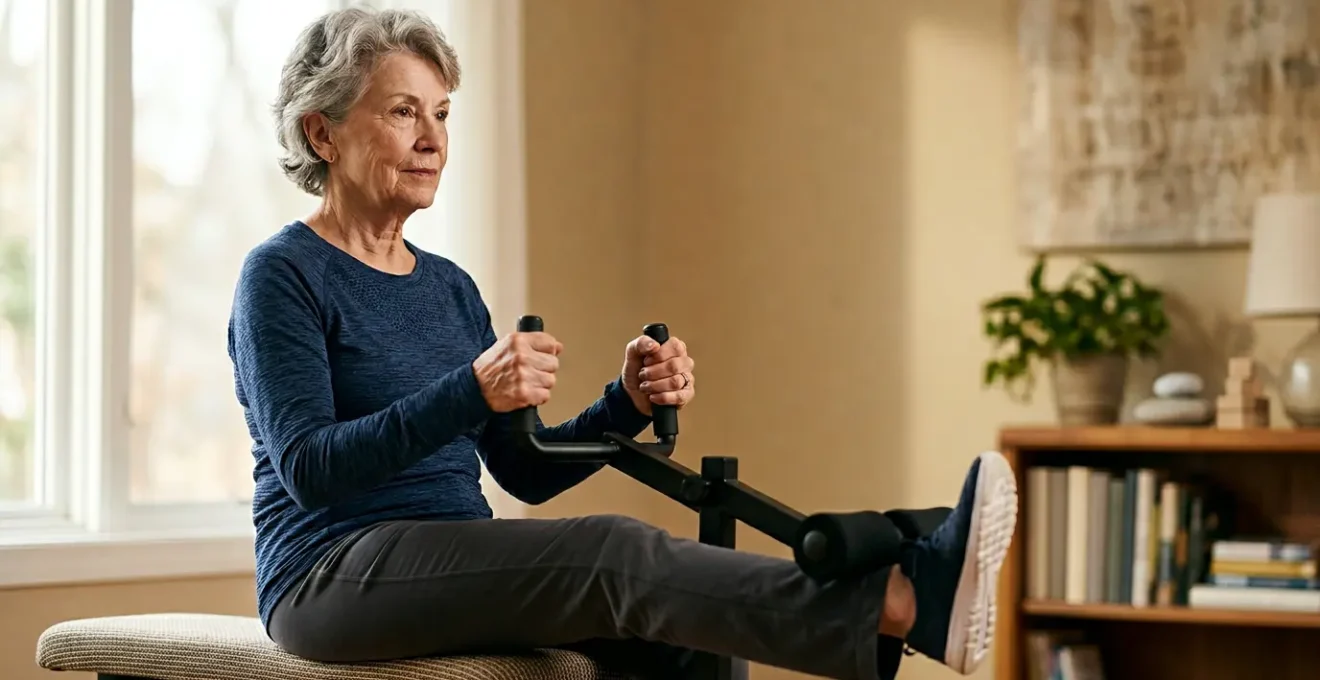
The key takeaway: ‘Frailty’ is not an inevitable part of aging but a reversible state of deconditioning primarily caused by muscle loss, which can be fought and reversed with targeted strength training at any age.
- Landmark studies show that even individuals in their 90s can reverse a decade of muscle aging in just 8 weeks.
- Inactivity is the real enemy; the fear of falling often creates a ‘deconditioning cascade’ that ironically increases fall risk.
Recommendation: Begin a consistent, progressive strength and balance program, even one starting with simple chair-based exercises, to rebuild your functional threshold and secure your independence.
For too long, the narrative has been the same. A fall, a period of illness, or just the creeping stiffness in the joints leads to a diagnosis, formal or informal: « you’re becoming frail. » This term is often delivered as a final verdict, a signal to slow down, to do less, to accept a shrinking world. It’s a message that equates age with inevitable decline. As a rehabilitation specialist, I am here to tell you that this narrative is not just unhelpful; it is scientifically incorrect and profoundly damaging.
The label of ‘frailty’ is not a diagnosis of your chronological age; it is a description of a deconditioned physical state. The primary driver of this state is not worn-out joints or a number on a calendar, but a specific, measurable, and—most importantly—reversible condition: sarcopenia, or age-related muscle loss. While common advice encourages gentle walks or simply « being careful, » these approaches fail to address the root cause. They are a passive surrender to a problem that demands an active fight.
This is where we introduce a paradigm shift. What if the solution wasn’t to coddle the body but to challenge it? What if the key to reversing frailty wasn’t less activity, but more of the *right kind* of activity? This guide is built on a foundation of clinical evidence demonstrating that progressive strength training is the most potent tool you have to fight back against frailty, rebuild what was lost, and reclaim your independence. We will dismantle the myths, explain the science, and provide a clear, actionable roadmap to turn the tide. This is not about accepting limits; it’s about systematically pushing them back.
In this comprehensive guide, we will explore the science behind muscle loss and provide a step-by-step framework for rebuilding your strength. From understanding the systemic shocks that accelerate decline to learning the practical exercises you can do at home, you will gain the knowledge and tools to take control of your physical future.
Summary: Reversing Frailty and Rebuilding Your Foundation
- Why is muscle loss the biggest threat to your independence, not your joints?
- How to get 6 weeks of free NHS reablement after a fall?
- Walking stick vs crutches vs frame: what is right for balance issues?
- The error of stopping going out, which actually increases fall risk
- How to find wide-fit shoes that actually support the ankle?
- The mistake of ‘hibernating’ that weakens muscles in just 3 weeks of inactivity
- How standing behind the chair for support improves fall resilience?
- How to use chair yoga to alleviate arthritis pain without strain?
Why is muscle loss the biggest threat to your independence, not your joints?
Many people assume that aching joints or arthritis are the primary barriers to an active life in their later years. While joint pain is a real concern that must be managed, it is a smokescreen hiding a far greater threat: sarcopenia. This is the medical term for the gradual loss of muscle mass, strength, and function that comes with aging. It is sarcopenia, not your joints, that determines whether you can get out of a chair unaided, climb stairs, carry your shopping, or recover your balance after a stumble. It is the loss of this ‘functional threshold’ that truly robs you of independence.
Muscle is your body’s metabolic engine and your primary shock absorber. Strong muscles support and protect your joints, reducing the strain on cartilage. Weak muscles, on the other hand, lead to instability, poor posture, and increased stress on your skeletal system, often worsening the symptoms of arthritis. More critically, muscle is what provides the power and speed to react. When you trip, it is the explosive power of your leg and core muscles that allows you to correct your position and prevent a fall. Without sufficient muscle mass, that recovery mechanism fails.
The insidious nature of sarcopenia is that it creates a vicious cycle. Less muscle leads to less activity, which in turn leads to further muscle loss. But here is the empowering truth: this process is not a one-way street. Muscle tissue is incredibly responsive to stimulus, regardless of age.
Case Study: 90-Year-Olds Reverse a Decade of Muscle Loss in 8 Weeks
To understand the remarkable potential for rebuilding muscle, look no further than a landmark study involving ten 90-year-old participants. These individuals undertook a program of lifting heavy weights for just 8 weeks. The results were astounding: on average, they increased their thigh muscle area by 9%. This gain effectively reversed almost a decade of natural muscle aging in just two months, proving that the body’s capacity to build strength remains profoundly active even in the oldest old.
Therefore, the strategic focus must shift from simply managing joint pain to actively combating sarcopenia. By building and maintaining muscle, you are not just getting stronger; you are building a biological reserve that safeguards your mobility, protects your joints, and secures your independence for years to come.
How to get 6 weeks of free NHS reablement after a fall?
A fall or a hospital stay can be a significant shock to the system, acting as a powerful accelerator of muscle loss. In fact, research from the British Geriatric Society outlines that 10 days in a hospital bed can lead to a decade’s worth of lost muscle mass for a person over 80. This is a critical moment where intervention can mean the difference between a full recovery and a permanent decline in function. In the UK, the NHS provides a vital, often underutilised, service called ‘intermediate care’ or ‘reablement’ designed specifically for this purpose.
Reablement is a short-term, intensive program aimed at helping you regain skills, confidence, and independence at home. Crucially, it is free of charge for up to six weeks, regardless of your financial situation, as it is funded directly by the NHS. The service is not just about basic care; it’s about rehabilitation. A multidisciplinary team, which can include physiotherapists, occupational therapists, and trained care workers, will work with you to set and achieve specific goals.
Accessing this service typically begins with an assessment. This can be arranged via the hospital discharge team if you are an inpatient, or by contacting your GP or local authority’s adult social care department if you have had a fall or are struggling at home. It is essential to be proactive. State clearly that you are seeking to regain strength and function and ask specifically for a ‘reablement’ or ‘intermediate care’ assessment. This is not passive care; it is an active partnership. To make the most of it, you should collaborate closely with the team to push for goals that go beyond simply getting dressed, focusing on progressive exercises that build real strength.
This six-week window is a golden opportunity. It provides expert support and a structured environment to reverse the acute muscle loss from your hospital stay or fall and lay the groundwork for a long-term strength program. Use it to not just recover, but to emerge stronger than before.
Walking stick vs crutches vs frame: what is right for balance issues?
Choosing the right mobility aid is a critical decision that goes far beyond simply picking up a cane at the chemist. The wrong aid can create a false sense of security, encourage poor posture, and fail to provide the support needed, potentially increasing fall risk. The right aid, however, becomes a tool for empowerment, enabling safer movement and greater confidence. The choice depends entirely on the nature of your balance issue and your strength.
A walking stick or cane is the most common but also the most misunderstood aid. Its primary purpose is to provide an additional point of sensory feedback about the ground, improving proprioception. It is designed to assist with balance, not to bear significant weight. If you find yourself leaning heavily on a cane, it is the wrong tool for you. It’s suitable for those with minor, unilateral balance issues or slight weakness in one leg.
Crutches (either underarm or forearm) allow for a significant transfer of weight from the legs to the upper body. They require good upper body strength, core stability, and coordination. They are ideal for post-injury recovery when one leg must be non-weight-bearing but are often too demanding and unstable for generalised frailty or bilateral balance problems.
For individuals with more significant balance deficits or general weakness, the answer is often a walking frame (walker). By creating a wide, stable base of support in front of the body, it provides the highest level of stability, allowing the user to offload weight from their lower body with confidence. As the American Academy of Orthopaedic Surgeons notes, it is the superior choice for stability:
A pickup walker with four legs will give you the most stability. A walker lets you keep all or some of your weight off of your lower body as you take steps.
– American Academy of Orthopaedic Surgeons, How To Use Crutches, Canes, and Walkers – OrthoInfo
While some may feel a walker is a sign of greater frailty, the opposite is true. It is a sign of a smart, strategic decision to prioritise safety and stability, which in turn enables the confidence to remain active and engage in the very exercises that will build you out of needing it.
The error of stopping going out, which actually increases fall risk
After a fall, or even just the growing fear of one, a common and seemingly logical reaction is to retreat. « If I stay home, where it’s safe, I can’t fall. » This mindset, while understandable, is a catastrophic error. It triggers a vicious cycle known as the ‘deconditioning cascade’ that not only fails to prevent falls but actively makes them more likely.
This fear is incredibly common; prevalence rates for fear of falling range from 20 to 39% among older adults, and can be as high as 73% in those who have already fallen. When this fear leads to avoidance, the body begins to decondition at an alarming rate. You stop walking on uneven pavements, so the tiny stabiliser muscles in your ankles weaken. You stop navigating crowds, so your brain’s ability to process a complex environment and maintain balance (vestibular system) declines. You stop going out, which means you walk less, and your leg strength and cardiovascular endurance plummet. Each day spent « safely » indoors is a day you are actively dismantling the physical and neurological systems that prevent falls.
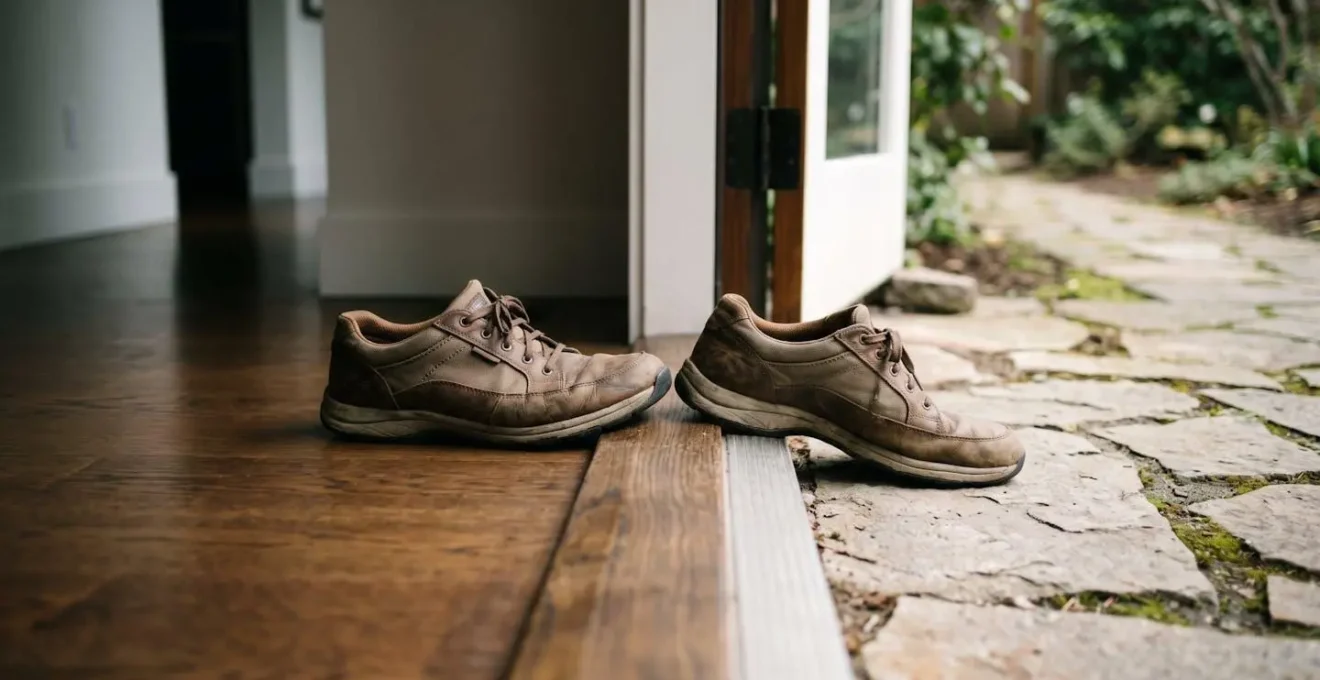
The result is that your ‘functional threshold’—the minimum strength and balance required for daily life—is eroded. The world outside doesn’t get more dangerous; you simply become less capable of navigating it. Eventually, a small crack in the pavement or an unexpected bump from another person, which you once would have handled effortlessly, is now enough to cause a serious fall. The retreat indoors becomes a self-fulfilling prophecy.
Breaking this cycle requires a conscious, deliberate, and gradual re-engagement with the world. It’s a process of rebuilding not just physical strength, but confidence. A structured protocol can help:
- Start Small: Begin with 15-minute visits to a familiar, safe outdoor space like your own garden or porch. Do this daily to build a routine.
- Extend Your Territory: Progress to short, planned walks, perhaps to the end of the drive or the nearest lamppost. Focus on your posture and breathing.
- Introduce Variables: Walk to a nearby destination like a postbox or a local shop on a quiet street. This introduces gentle slopes and different surfaces, beginning the process of retraining your balance system.
- Increase Duration: Gradually increase the time you are out, aiming for 20-30 minutes of walking. This builds endurance and reinforces confidence.
By intentionally and progressively stepping back out into the world, you are not being reckless. You are undertaking the most important part of your rehabilitation: reclaiming your environment and reversing the deconditioning that puts you at risk.
How to find wide-fit shoes that actually support the ankle?
Your feet are your foundation. They are complex structures containing dozens of bones, joints, and muscles, and they are packed with nerves that provide constant feedback to your brain about your body’s position in space—a sense called proprioception. The right footwear can enhance this system, providing stability and support. The wrong footwear, especially flimsy slippers or ill-fitting shoes, can sabotage it, blurring that crucial feedback and directly increasing your risk of a fall.
Many people focus solely on ‘comfort’ or a wide fit, but true stability comes from a specific set of structural features. A shoe that is merely soft and wide without support is just as dangerous as a high heel. When assessing a shoe for ankle support and fall prevention, it’s not the brand that matters, but its mechanical properties. You need to become a discerning consumer, looking for specific engineering features that promote stability.
A floppy, unsupportive shoe allows the foot to move too much, which can delay the brain’s reaction to a loss of balance. A firm, supportive shoe, in contrast, acts like an extension of your body, providing a stable platform and clear sensory information. This doesn’t mean the shoe has to be rigid and uncomfortable, but it must possess structural integrity. The next time you are shopping for shoes, ignore the marketing and perform a physical check using this five-point audit.
Your 5-Point Shoe Audit for Ankle Support and Stability
- Firm Heel Counter: Press on the back of the shoe where your heel sits. It should be firm and resist collapsing. This feature is crucial as it locks your heel in place and prevents the ankle from rolling inwards or outwards (pronation/supination).
- Torsional Rigidity: Hold the shoe at the heel and toe and try to twist it. It should offer moderate resistance. A shoe that twists easily like a wet cloth provides no midfoot support, leading to instability.
- Secure Fastening: Always choose shoes with laces or wide Velcro straps over slip-ons. A secure fastening system holds your foot firmly against the shoe’s supportive structures, preventing internal movement that impairs balance feedback.
- Minimal Heel-to-Toe Drop: Look for a relatively flat sole. A large ‘drop’ (a high heel) pitches your weight forward, altering your center of gravity and reducing stability. A lower drop (ideally under 4mm) promotes a more natural, stable posture.
- Anatomical Toe Box: While the midfoot and heel should be secure, the toe box must be wide enough for your toes to spread out naturally. This ‘splay’ is essential for balance, as your toes actively grip the ground during walking.
Investing in footwear that passes this test is not a luxury; it is as important as any other piece of medical equipment. It is a direct investment in your stability, your confidence, and your ability to stay active and independent.
The mistake of ‘hibernating’ that weakens muscles in just 3 weeks of inactivity
The human body is ruthlessly efficient. Tissues that are not used are considered surplus to requirements and are swiftly dismantled. This « use it or lose it » principle applies most dramatically to muscle mass in older adults. A period of forced inactivity—due to a bad winter, a bout of flu, or recovery from a minor surgery—can trigger a rapid and devastating loss of strength. This is the trap of ‘hibernation’.
While a few weeks of rest might seem harmless, the physiological cost is immense. According to Somerset NHS intermediate care research, just 10 days of bed rest for a healthy older person can result in a level of muscle aging and functional loss equivalent to 10 years. In as little as three weeks of reduced activity, you can lose a significant percentage of your leg strength, making activities like climbing stairs or getting out of a low chair noticeably more difficult. This isn’t a slow, gentle decline; it’s a cliff edge.
This rapid deconditioning is what makes bouncing back from illness so much harder for older adults. The weakness itself becomes a barrier to resuming normal activity, creating a dangerous feedback loop. The mistake is viewing this period of inactivity as passive. It must be seen as an active threat to your independence that requires a defensive strategy. Even when you are bed-bound or house-bound, you can take steps to mitigate the damage and send a signal to your body that your muscles are still very much required.
The key is isometric exercise, which involves contracting a muscle without changing its length. These exercises can be done while sitting or even lying down, require no equipment, and are highly effective at maintaining muscle tone and neurological connection.
- Glute Squeezes: While sitting or lying, consciously contract your buttock muscles, hold for 5-10 seconds, and release. This helps maintain the strength of your hip extensors, which are vital for standing and walking.
- Quad Sets: In the same position, tighten the large muscle on the front of your thigh (quadriceps) by trying to push the back of your knee down into the bed or chair. Hold for 5-10 seconds.
- Ankle Pumps: Regularly flex and point your feet. This simple movement maintains circulation and preserves calf muscle tone, which is crucial for balance and walking propulsion.
These small, frequent muscle contractions are a powerful counter-measure to the catabolic effects of inactivity. They are your holding action, preserving your strength base so that when you are ready to be fully active again, you are starting from a position of relative strength, not from the bottom of a deep hole.
Key Takeaways
- Frailty is primarily a condition of muscle loss (sarcopenia), which is reversible through targeted strength training at any age.
- Inactivity is the biggest risk factor; the ‘safe’ choice to stay home often creates a ‘deconditioning cascade’ that accelerates decline and increases fall risk.
- Progressive resistance, even starting with a chair for support, is the most effective tool for rebuilding strength, improving balance, and reclaiming independence.
How standing behind the chair for support improves fall resilience?
The single most important piece of gym equipment for reversing frailty is likely already in your dining room: a sturdy chair. A chair provides a safe, stable base of support that allows you to perform essential strength and balance exercises with confidence. It acts as a bridge, enabling you to work your muscles progressively until you no longer need the support. Standing behind a chair allows you to challenge your balance in a controlled environment, teaching your body to recover from instability without the fear of a real fall.
This approach—using support to enable challenging exercise—is the key to making dramatic functional gains, even from a state of significant frailty. It’s not about ‘easy’ exercises; it’s about making hard, effective exercises *possible*. The evidence for this is overwhelming and transformative.
Study: Frail Nursing Home Residents Increase Strength by 113%
In a groundbreaking study by Fiatarone et al., some of the most frail, institutionalized older adults (with a mean age of 87) participated in a 10-week high-intensity resistance training program. The results were revolutionary. While a non-exercising control group saw negligible change, the exercise group increased their muscle strength by an average of 113% and significantly improved their gait velocity. This study proved that even the very oldest and frailest individuals possess a remarkable capacity for adaptation and strength gain when given the right stimulus and support.
The chair is your starting point for this kind of transformation. It allows you to practice a progressive sequence of exercises that directly target the muscles and skills needed for fall resilience.
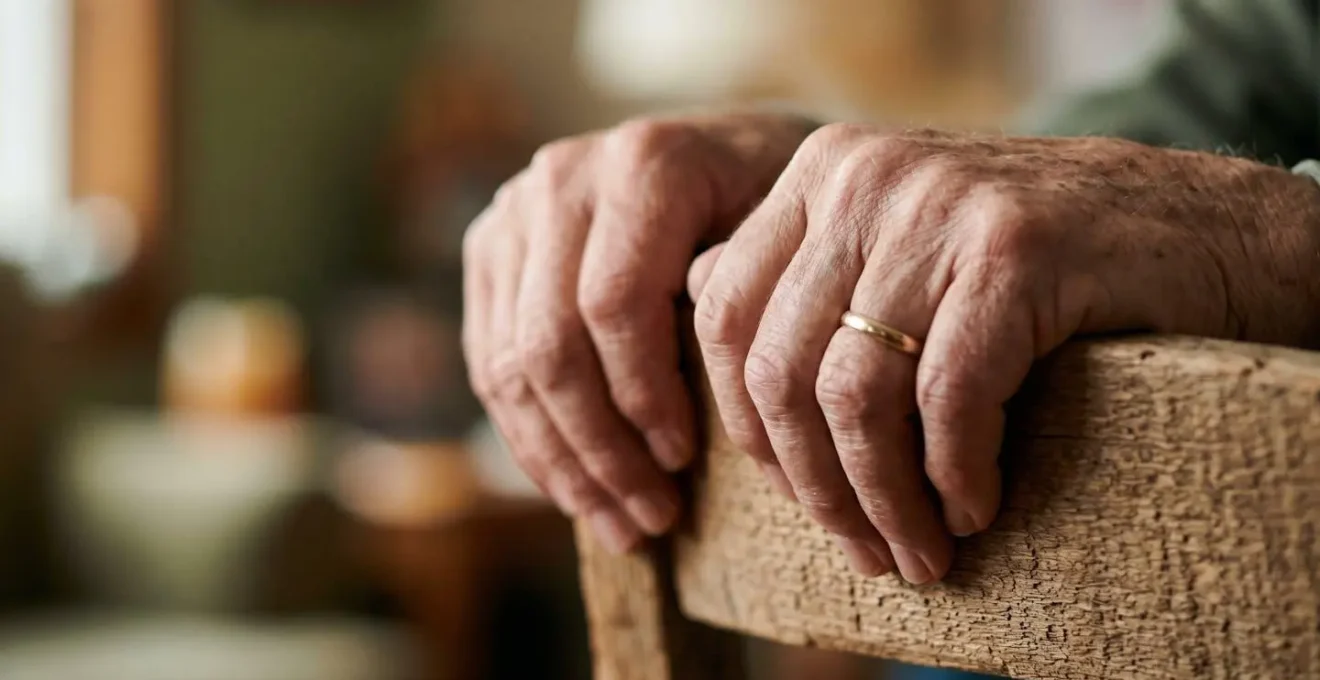
This isn’t just exercise; it’s neuromuscular re-education. You are retraining the connection between your brain and your muscles. A simple sequence could involve:
- Sit-to-Stands: The most functional exercise of all. Practice rising from the chair, using the back for as little support as possible. This builds foundational leg and glute strength.
- Standing Balance Tests: Stand behind the chair, holding on lightly. Practice standing on one leg for 10-30 seconds, or placing one foot directly in front of the other (tandem stance). This directly challenges and improves your stability.
- Chair-Supported Calf Raises: Holding the chair back, rise up onto your toes, hold for a moment, and lower slowly. This strengthens your ankles, a critical component of balance recovery.
By using the chair as a tool for progressive overload, you move from needing it for heavy support to using it for light balance, and finally, to performing the exercises without it altogether. This is the tangible, step-by-step path from frailty back to strength.
How to use chair yoga to alleviate arthritis pain without strain?
For individuals living with significant arthritis pain, the idea of high-intensity strength training can seem daunting or even impossible. This is where chair yoga can serve as a vital entry point and a powerful complementary practice. It is not a substitute for strength training, but it is an essential tool for managing pain, improving mobility, and preparing the body for more intensive work. It addresses the « joint » part of the equation, so you can then focus on the « muscle » part.
Chair yoga modifies traditional yoga poses so they can be done while seated or using a chair for support. This removes the strain of getting up and down from the floor and reduces the load on painful joints, particularly the knees and hips. The focus is on gentle, controlled movements that take your joints through their full, pain-free range of motion. This is crucial because joint cartilage is avascular; it gets its nutrients from the synovial fluid in the joint. Gentle movement helps to circulate this fluid, nourishing the cartilage and flushing out inflammatory by-products, which can directly help to alleviate stiffness and pain.
The benefits are manifold:
- Increased Flexibility: Gentle stretching can help to lengthen tight muscles that pull on joints, reducing pressure and pain.
- Improved Proprioception: Focusing on precise, slow movements enhances the mind-body connection, improving your awareness of where your limbs are in space, which is key for balance.
- Pain Management: The practice often incorporates breathing and mindfulness techniques, which have been shown to down-regulate the nervous system and change the perception of pain.
- Enhanced Mobility: By gently encouraging movement in stiff joints, you can preserve and even modestly increase your range of motion, making daily activities easier.
This practice serves as a perfect preparation for strength work. By reducing pain and increasing mobility, chair yoga can give you the physical capacity and confidence to begin the sit-to-stand exercises and calf raises that will build real, lasting strength. This is particularly important on a global scale, where studies show that sarcopenia affects 10-16% of the elderly worldwide, making accessible entry points to exercise critically important.
Think of chair yoga as the essential maintenance work that lubricates the machinery. It doesn’t build the engine, but it ensures the chassis is in good enough condition to handle the power once you start building it. It is a kind, intelligent, and effective way to start the journey back to pain-free movement.