
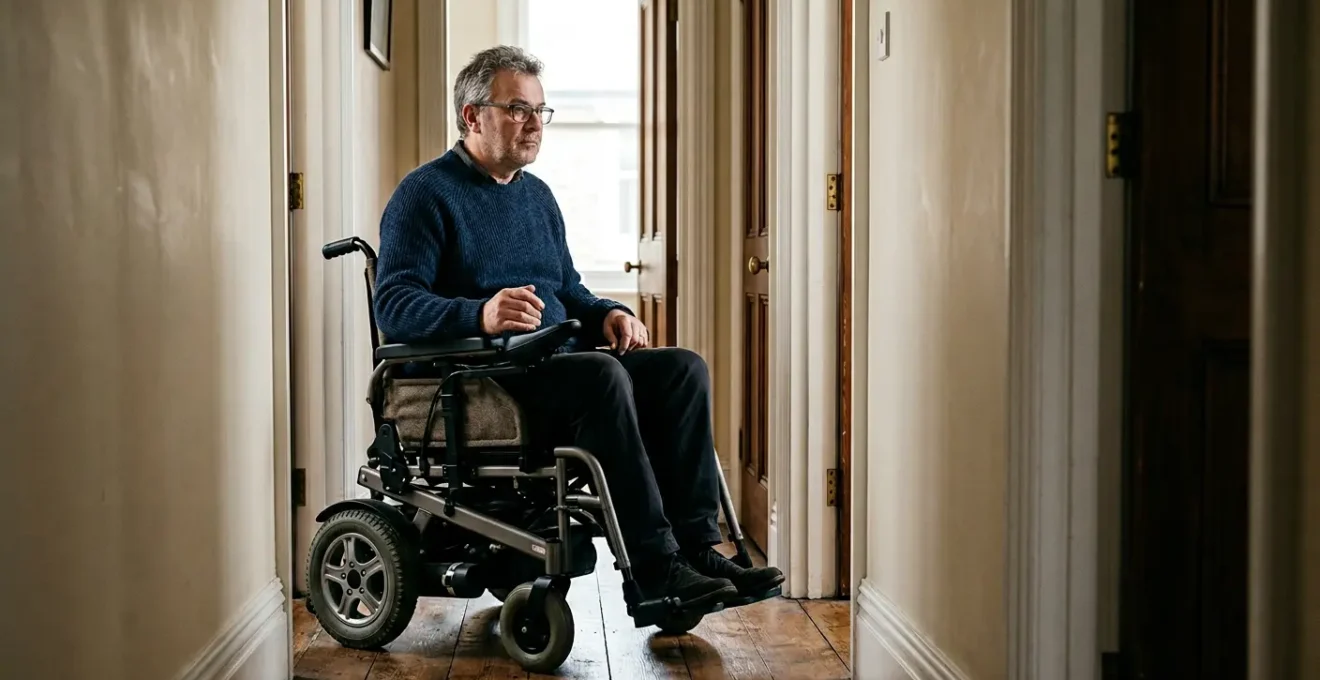
Successfully securing an NHS powered wheelchair is not about passively waiting for approval; it’s about proactively building a clinical case that proves your non-negotiable need for indoor independence.
- The NHS primarily funds powered mobility to maintain safety and function inside your home, not for outdoor convenience.
- Evidence is built by documenting how small daily struggles (like putting on socks or navigating a hallway) create significant clinical risks.
Recommendation: Frame your application around how a powered wheelchair is the only viable solution to restore your ability to perform essential Activities of Daily Living (ADLs) safely within your own four walls.
The loss of mobility within your own home can feel like a fundamental loss of independence. The thought of a powered wheelchair often represents a clear solution, a way to reclaim autonomy and safety. However, approaching the NHS for one can feel like navigating a complex and often disheartening bureaucracy. Many individuals are told to simply « talk to their GP, » a piece of advice that, while a necessary first step, vastly underestimates the strategic preparation required for a successful application.
The system is not designed to be obstructive, but it operates on a strict, evidence-based logic that is often opaque to the public. It does not assess ‘wants’ or ‘desires for a better quality of life’; it assesses demonstrable, clinical need against a very specific set of criteria. The common rejections and frustrations arise not from a lack of genuine need, but from a failure to communicate that need in the precise language the system understands.
The key is to shift your perspective. You are not simply asking for a piece of equipment. You are building a clinical narrative. This guide moves beyond the generic advice. It provides an insider’s view, grounded in the principles of an Occupational Therapist’s assessment, on how to deconstruct the NHS’s logic. We will explore why certain arguments fail and how to build a case that aligns perfectly with their core mandate: ensuring safety and independence within the home environment.
This article will break down the essential components of a successful application. We will cover the non-negotiable rules, the strategic use of funding options, the technical considerations for your home, and how to turn everyday challenges into compelling clinical evidence. By understanding the ‘why’ behind the process, you can transform your application from a hopeful request into a well-reasoned clinical case.
Contents: Qualifying for an NHS Powered Wheelchair
- Why does the NHS often reject power chair applications for outdoor-only use?
- How to use a Personal Wheelchair Budget to top-up for a better model?
- Rear-wheel vs mid-wheel drive: which is better for a small UK terrace house?
- The mistake of charging lead-acid batteries for short bursts that ruins them in 6 months
- How to measure your door width correctly to ensure a power chair fits?
- Why does needing help to put on socks count as a care need?
- How to get 6 weeks of free NHS reablement after a fall?
- How to reverse ‘frailty’ through strength training after 75?
Why does the NHS often reject power chair applications for outdoor-only use?
This is the most fundamental and often misunderstood principle of NHS Wheelchair Services. The core mandate is to provide equipment that enables a person to be mobile and safe within their home environment. A powered wheelchair is seen as a tool to perform essential Activities of Daily Living (ADLs) – such as getting to the bathroom, preparing a meal, or moving from one room to another. It is not, by its primary definition within the service, a tool for community access.
The rationale is budgetary and philosophical. The NHS has a duty to meet assessed clinical needs, and the most critical environment for maintaining independence is the home. Outdoor mobility, while vital for social inclusion, falls under a different scope, often considered the remit of social care or other mobility schemes. As a result, all NHS wheelchair services do not supply powered wheelchairs solely for outdoor use. If you can safely and independently mobilise around your entire home using a manual wheelchair or walking aids, your application for a powered chair for outdoor use will almost certainly be rejected.
This strict focus is explicitly stated in local NHS trust policies. For example, as the Bedfordshire and Luton NHS Wheelchair Services guidance clarifies:
It should be noted that although EPIOCs [Electrically Powered Indoor/Outdoor Chairs] can be used outdoors, their primary use must be indoors.
– Bedfordshire and Luton NHS Wheelchair Services, NHS Eligibility Criteria for Wheelchairs & Associated Equipment
Therefore, your entire clinical narrative must be built around proving that you cannot maintain independence and safety inside your home without a powered chair. The outdoor benefit is a secondary, albeit welcome, consequence of meeting the primary indoor need.
How to use a Personal Wheelchair Budget to top-up for a better model?
Once you have an assessed clinical need for a powered wheelchair, the next stage involves how that need is met. The Personal Wheelchair Budget (PWB) is a crucial tool in this process, providing flexibility and choice. Since 2 December 2019, people accessing wheelchair services have a legal right to a PWB. This isn’t ‘extra money’; it is the amount the NHS determines it would cost to provide a standard chair that meets your assessed needs.
The PWB gives you control over how this funding is used. Your occupational therapist (OT) will discuss the options, which generally fall into three pathways. It is vital to understand them to make an informed decision that best suits your lifestyle and financial situation. This is where you can leverage the budget for a model with features beyond the standard NHS provision.

The three primary ways to use your PWB are:
- Notional PWB (The Standard Offer): You accept the wheelchair prescribed by the NHS service. There is no additional cost to you. The chair remains the property of the NHS, which covers all repairs and maintenance. This is the simplest, most risk-free option.
- Notional PWB with Contribution (The Top-Up): If the standard NHS chair meets your clinical needs but you desire extra features (e.g., a seat riser for reaching high cupboards, more advanced controls, or aesthetic customisations), you can pay a ‘top-up’ fee. The chair still belongs to the NHS, and they will maintain and repair the standard parts. You are responsible for the cost of repairing or replacing the top-up features.
- Third-Party PWB (The Independent Purchase): You can take the value of your PWB and use it as a contribution towards purchasing a wheelchair from an independent supplier. You own the chair outright, but you also become fully responsible for all its insurance, repairs, and maintenance for a minimum of five years. This offers the most choice but carries the greatest financial responsibility.
Choosing the right pathway requires careful consideration of long-term costs versus desired features. The ‘top-up’ option is often a good compromise, allowing for enhanced functionality while retaining the safety net of NHS maintenance for the core chair.
Rear-wheel vs mid-wheel drive: which is better for a small UK terrace house?
Once eligibility for a powered wheelchair is established, the conversation with your OT will turn to the specific model. For those living in older UK properties, particularly Victorian or Edwardian terraces with narrow hallways and tight doorways, the choice of drive system is paramount. The debate between mid-wheel drive (MWD) and rear-wheel drive (RWD) is not about which is ‘better’ overall, but which is functionally superior for your specific environment.
A rear-wheel drive chair has its drive wheels at the back, providing excellent straight-line stability, especially outdoors. However, it has a larger turning circle, making it cumbersome in confined spaces. A mid-wheel drive chair, by contrast, has its main drive wheels positioned directly beneath the user’s centre of gravity, with smaller castor wheels at the front and back. This configuration allows the chair to pivot on the spot, giving it the smallest possible turning radius. This is a game-changer for indoor manoeuvrability.
The difference is stark: electric wheelchairs designed for tight spaces have turning radii of no more than 68cm, while some larger, outdoor-focused models can exceed 120cm. For navigating a narrow hallway into a small bathroom in a terrace house, this is the difference between independence and being unable to use essential facilities.
This table summarises the key differences for a typical UK home, based on data from mobility specialists:
| Feature | Mid-Wheel Drive | Rear-Wheel Drive |
|---|---|---|
| Turning Radius | Smallest – 360-degree turn on the spot | Largest – requires more space to turn |
| Indoor Manoeuvrability | Excellent – ideal for tight spaces, narrow hallways, Victorian terraces | Limited – challenging in confined areas |
| Centre of Gravity | Drive wheels under user’s centre – most intuitive to learn | Drive wheels behind user – turns slower, more control time |
| Stability Indoors | Excellent – front and rear castors provide anterior/posterior support | Very stable in straight lines |
| Outdoor Performance | Good on smooth surfaces; castors can struggle on rough terrain/ramps | Best outdoor stability and straight-line performance over uneven ground |
| Best For | Small UK terrace houses with narrow doorways and tight turns | Primarily outdoor use with good straight-line travel |
For most users whose primary need is indoor independence in a typical UK home, a mid-wheel drive chair is almost always the superior clinical choice. It is the most intuitive to handle and offers unparalleled manoeuvrability in the very environments where it is needed most.
The mistake of charging lead-acid batteries for short bursts that ruins them in 6 months
Receiving your powered wheelchair is a significant milestone, but ensuring its long-term reliability depends heavily on one often-neglected aspect: battery maintenance. Most standard NHS-provided chairs use sealed lead-acid (SLA) or gel batteries. While robust, their lifespan is critically dependent on a strict charging regimen. The single most destructive habit is ‘opportunity charging’—plugging the chair in for short bursts of an hour or two. This practice can permanently damage the batteries and drastically reduce their capacity in as little as six months.
Lead-acid batteries have a ‘memory’ for charging cycles. Consistently undercharging them causes sulfation, a process where lead sulfate crystals build up on the battery plates, preventing them from holding a full charge. The deeper the discharge before recharging, the fewer cycles the battery will last. For instance, lead-acid batteries last around 1,000 charge cycles if regularly discharged by only 30%, but this can drop to under 500 cycles if they are frequently run down to 50% of their capacity.
Waiting until the battery is almost flat is just as damaging as short-burst charging. The key is consistency and completing a full charge cycle every time. To maximise the life and performance of your chair’s batteries, it is imperative to follow a strict set of rules.
Essential Charging Rules to Avoid Battery Damage
- Full nightly charge: Fully recharge the battery every single night, regardless of how little you used the chair during the day. If it has been used, it must be recharged.
- Don’t run it flat: Never let the battery become completely depleted before charging. Waiting until the power gauge is in the red drastically reduces its overall lifespan.
- Charge to completion: Always wait until the charger indicates the battery is fully charged before unplugging it. Continuously interrupting the charge cycle causes permanent damage.
- Avoid extension cables: Do not use extension leads to charge your wheelchair. Plug the charger directly into a wall socket to avoid the risk of voltage drops, overheating, and potential fires.
- Inspect connectors: Regularly check the battery terminals and connectors for any signs of corrosion (a white, powdery substance). If you see any, do not attempt to clean it yourself; contact your wheelchair service or dealer.
Adhering to this routine is not just a recommendation; it is essential maintenance. It ensures your chair remains a reliable tool for your independence, preventing unexpected failures and costly, premature battery replacements.
How to measure your door width correctly to ensure a power chair fits?
A powered wheelchair is only effective if it can access all essential areas of your home. Before your NHS assessment, conducting a thorough ‘pinch-point’ audit of your home is a vital piece of preparation. The most critical measurement is your door widths, but it’s a task that is frequently done incorrectly. Simply measuring the space between the door frame is not enough; you must measure the narrowest usable clearance.
The correct method is to open the door to 90 degrees and measure from the face of the door itself to the opposite door frame. This accounts for the thickness of the door, which significantly reduces the available space. You must also consider the protrusion of the door handle, which can be the ultimate obstacle. For a wheelchair to pass through, you need the chair’s total width plus a few centimetres on either side for clearance – a tight fit is a failed fit in day-to-day use.
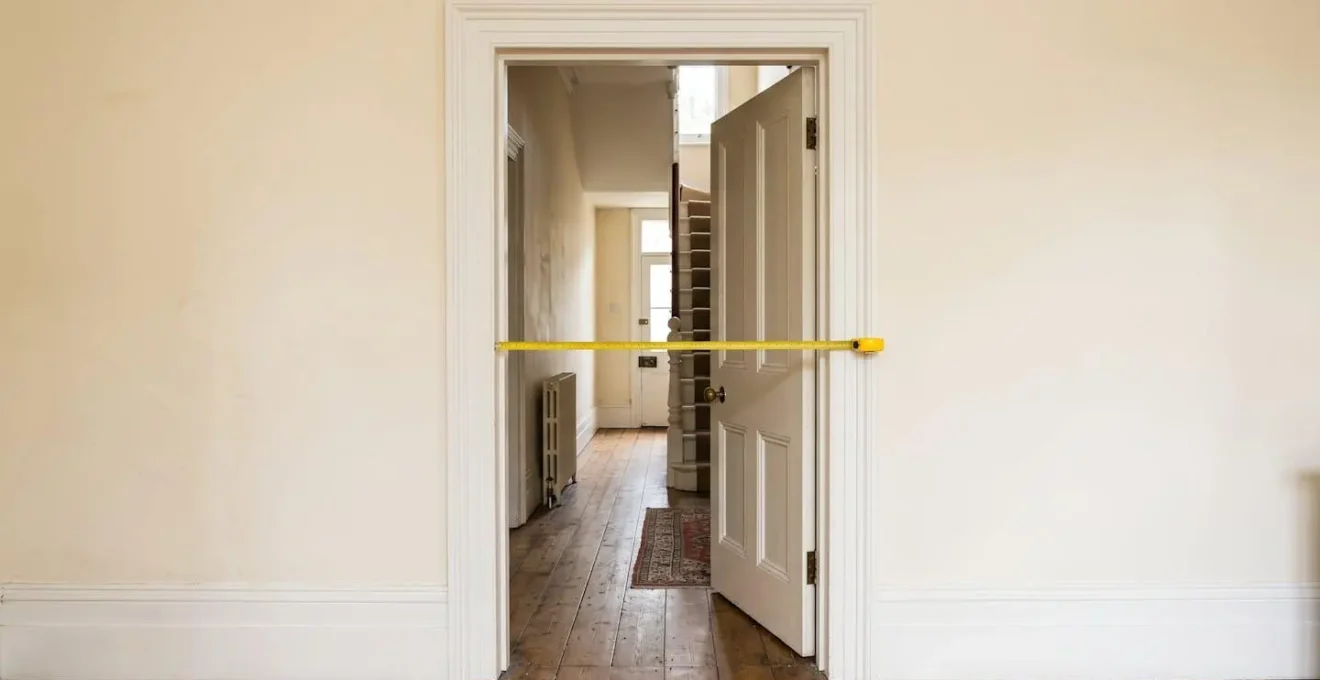
This audit should extend beyond just doorways. A narrow hallway might be wide enough for the chair itself, but a tight turn into a room can make the effective width much smaller, requiring a ‘three-point turn’ that may not be possible. Presenting your OT assessor with a detailed, self-conducted audit demonstrates proactivity and provides them with the precise data needed to justify the prescription of a specific, narrow-base model.
Your audit is the evidence that proves which parts of your home are accessible and, more importantly, which are not. This practical data is far more compelling than simply stating « my house is small. » Here is a checklist to guide your home audit, based on the approach used by services like Mersey Care NHS Wheelchair Service.
Your Home Pinch-Point Audit Checklist
- Doorways: Measure the narrowest point of each door frame when the door is fully open, accounting for both the door’s thickness and any protruding handles.
- Hallways and Turns: Check the width of all corridors and, crucially, the angle of approach to each doorway. A sharp, 90-degree turn from a narrow hall drastically reduces the effective clearance.
- Wall Obstructions: Identify any radiators, pipes, or furniture placed along walls that reduce the usable width of a corridor or room.
- Key Room Turning Space: Measure the clear floor space in the bathroom and toilet. Is there enough room for the chair to complete a 360-degree rotation? This is critical for transfers.
- Kitchen and Furniture: Assess clearance around kitchen islands, table legs, and the space under countertops for your footrests to pass.
- Thresholds: Check the height of all thresholds between rooms and at the main entrance/exit points. Even a small lip can be a major barrier for some powered chairs.
Why does needing help to put on socks count as a care need?
During an NHS wheelchair assessment, the Occupational Therapist will ask questions that can seem trivial or unrelated to mobility, such as « Can you put on your own socks? » This is not small talk. It is a highly strategic diagnostic question. The assessment is not a financial one; eligibility depends on clinical needs, not your income. The OT’s job is to build a clinical justification, and they do this using standardised Activities of Daily Living (ADL) assessments.
In this context, putting on socks is not just about footwear. It is a functional proxy for several key clinical indicators. The ability to perform this task requires:
- Flexibility and Range of Motion: Reaching your own feet requires a certain level of hip and spinal flexion.
- Balance: Bending over, especially while sitting or standing on one leg, is a significant balance challenge. An inability to do so can indicate a high fall risk.
- Fine Motor Skills and Strength: Gripping and pulling on the sock requires dexterity and hand strength.
Answering « No, I need help » or « I can, but it leaves me breathless and dizzy » provides the OT with a measurable piece of data. It helps to paint a picture of your overall functional capacity and risk profile. One single difficulty may not be enough, but when this is combined with other struggles—like being unable to reach a low cupboard, get up from the toilet unaided, or carry a plate from the kitchen to the table—a powerful clinical narrative emerges. It demonstrates that your mobility limitations are systemic and impact your ability to live safely and independently at home.
Your role in the assessment is to help the OT build this narrative. Don’t downplay your struggles. Be specific. Instead of « I have bad days, » explain « On three days last week, I was unable to put on my compression stockings, which led to increased swelling in my legs and made me feel unsteady. » This connects a small task to a direct, negative health consequence, which is the language of clinical justification.
How to get 6 weeks of free NHS reablement after a fall?
A fall resulting in a hospital stay can be a devastating event, but it can also be a strategic entry point to accessing vital NHS support that can build the evidence for a powered wheelchair. When planning for hospital discharge, many people are offered a standard ‘home care’ package. However, you should explicitly request a ‘reablement package’ instead. This is a distinct service with a different objective.
While home care focuses on having tasks *done for you*, reablement is an intensive, short-term service designed to help you regain skills and confidence to live independently again. Crucially, these services involve a multi-disciplinary team, including Occupational Therapists (OTs) and Physiotherapists. As part of hospital discharge pathways, NHS reablement services typically provide up to 6 weeks of free support, offering a golden opportunity to have your mobility needs professionally assessed in your own home.
To leverage this opportunity, you must be proactive during the discharge planning process. The key is to engage with the right people and use the right language.
Key Steps to Trigger an NHS Reablement Package
- Identify the Decision-Maker: In the hospital, find the Ward Social Worker or the Hospital Discharge Coordinator. They are the key personnel who coordinate post-discharge support.
- Use Specific Language: Do not just accept ‘help at home’. Explicitly state: « I would like to be assessed for a reablement package to maximise my independence. »
- Trial Equipment Proactively: Once the reablement team is visiting you at home, ask them to trial different mobility aids (e.g., walking frames, perching stools, manual wheelchairs). This is their job.
- Document Everything: Work with the OT and physio to document which tasks you can and cannot do, even with the new aids. Note what works, but more importantly, what limitations remain.
- Request a Detailed Final Report: At the end of the 6-week period, ask that the team’s final report clearly documents your ongoing mobility challenges and any equipment needs that have been identified but not fully met. This report becomes powerful, independent evidence for your subsequent application to NHS Wheelchair Services.
By using the reablement service strategically, you are not just recovering from your fall; you are actively collaborating with NHS professionals to create an official record of your clinical needs, which will significantly strengthen any future applications for more advanced mobility equipment.
Key Takeaways
- Your entire application must prove that a powered wheelchair is essential for safety and function inside your home. Outdoor use is a secondary benefit, not a justification.
- Documenting small, daily struggles (e.g., putting on socks, carrying a drink) is how you build a compelling clinical narrative of need.
- Use a Personal Wheelchair Budget (PWB) strategically to ‘top-up’ for features that enhance your independence, but understand the maintenance responsibilities involved.
How to reverse ‘frailty’ through strength training after 75?
It may seem counter-intuitive to discuss strength training in an article about securing a powered wheelchair. However, demonstrating proactivity in managing your own health is a powerful part of the clinical narrative you build for your assessment. Frailty is not an inevitable part of ageing; it is a medical syndrome characterised by loss of muscle mass and strength, which can often be slowed or even partially reversed through targeted exercise.
Engaging in a strength training programme does not undermine your case for a wheelchair; it strengthens it. It shows an assessor that you are actively doing everything within your power to maintain your physical function. The argument you present is not « I don’t need a chair because I’m doing exercises. » Instead, the argument becomes: « I am actively working to maintain my strength, but I need the powered chair to safely access the community and continue this vital activity. »
The NHS itself supports this approach. NHS Community Physiotherapy and Falls Prevention services across the UK offer assessments and rehabilitation for those whose mobility is impacted. A GP referral can often give you access to these supervised programmes. Furthermore, local authorities and charities like Age UK run numerous ‘Active Ageing’ schemes offering subsidised strength training classes. Participating in these demonstrates commitment to self-management.
Framing this correctly during your assessment is crucial. You position the powered wheelchair as an *enabler* for your health-maintaining activities, not a replacement for them. It is the tool that allows you to conserve energy on the journey to the gym or community centre, so you have the stamina to participate fully in the strength-building exercises once you are there. This transforms the request from one of passive need to one of active partnership in your own care.
The first step in this entire process is to start building your evidence. Begin today by keeping a simple diary for one week, noting every task you struggle with, and how it impacts your safety and independence at home. This document will become the cornerstone of your successful application.