

Most brain games only make you better at the game itself, failing to improve real-world memory.
- True cognitive gain comes from « far transfer, » achieved through novel, complex, and socially engaging activities.
- Passive entertainment like watching quizzes is ineffective; active recall is the key to strengthening neural pathways.
Recommendation: Ditch repetitive puzzles and start building a personalized « neurobic » workout that challenges your brain in new ways every day.
If you’ve spent hours mastering Sudoku or crossword puzzles only to find you’re still misplacing your keys, you’ve encountered a frustrating truth about the aging brain. The common advice to « do puzzles » to stay sharp is built on a flawed premise. While these activities can feel productive, they often lead to a very narrow type of improvement. You get better at crosswords, not necessarily at remembering names or navigating a new city. This happens because the brain is an efficiency machine; once it masters a task, it puts it on autopilot, minimizing the cognitive effort and the potential for growth.
The solution isn’t more of the same, but a radical shift in approach. This is where the concept of « neurobics » comes in. Coined by neurobiologist Dr. Lawrence Katz, neurobics is a form of brain exercise designed to create new neural pathways, rather than just reinforcing old ones. It’s about breaking routines and engaging your senses in unexpected ways. The key isn’t repetition; it’s novelty, complexity, and variety. True cognitive enhancement doesn’t come from practicing a single, isolated skill until you’re fast, but from systematically challenging the brain with activities that force it to adapt and build new, flexible connections.
This article moves beyond the simplistic advice. We will deconstruct why your current brain-training routine might be falling short and provide a scientifically-backed framework for building one that delivers real-world cognitive benefits. We’ll explore the critical difference between practice and genuine learning, the power of social interaction, and how to choose activities that trigger meaningful neuroplasticity. It’s time to stop training for the game and start training for life.
To guide you through this new approach to cognitive health, we’ve structured this article to answer your most pressing questions. Below is a summary of the key areas we will explore to help you build a truly effective brain-challenging routine.
Summary: A Neurobic Approach to Brain Health
- Why does being good at crosswords only make you good at crosswords, not remembering keys?
- How to use tablet apps that adjust difficulty to your performance?
- Bridge vs Solitaire: why the social interaction is the real brain booster?
- The error of watching quizzes on TV instead of playing along
- How to learn a new skill (like chess) to trigger neuroplasticity?
- Why learning a new language or instrument is better than Sudoku for the brain?
- Why is the peer-learning model of U3A so successful for retirees?
- How to differentiate normal ‘senior moments’ from Mild Cognitive Impairment (MCI)?
Why does being good at crosswords only make you good at crosswords, not remembering keys?
The core of this paradox lies in a cognitive science concept known as « transfer of learning. » Specifically, the difference between « near transfer » and « far transfer. » When you practice crosswords, you experience near transfer: you become faster at solving clues, better at recalling obscure words, and more adept at recognizing patterns within the puzzle’s structure. Your brain becomes highly efficient at that specific task. However, this proficiency rarely translates into remembering your grocery list or where you left your glasses. This is a failure of far transfer—the ability to apply knowledge or skills learned in one context to a different, unrelated one.
The brain isn’t developing a general « memory » muscle; it’s creating a highly specialized neural circuit for solving crosswords. This circuit is optimized for word retrieval based on cryptic clues, a skill that has little in common with the spatial and contextual memory needed to find keys. As cognitive psychologists have pointed out, solving a problem in one domain doesn’t automatically equip us to solve a different problem, even if an analogous solution exists.
Problem solvers often failed to notice the relevance of an analogy that they were readily able to apply once it was called to their attention.
– Catrambone & Holyoak, Journal of Experimental Psychology: Learning, Memory, and Cognition
This reveals the trap of repetitive brain games. They give a satisfying illusion of cognitive improvement because performance on the task itself gets better. But for real-world benefits, the brain needs challenges that force it to build flexible, generalizable problem-solving frameworks, not just hyper-specialized shortcuts. Engaging in a wide variety of novel tasks is what encourages this crucial far transfer.
How to use tablet apps that adjust difficulty to your performance?
Given the limitations of static puzzles, many turn to the burgeoning market of brain-training apps. However, not all apps are created equal. The most effective ones are built around a principle essential for neuroplasticity: adaptive difficulty. For an activity to be beneficial, it must operate in your « zone of proximal development »—that sweet spot where it’s challenging enough to require effort but not so difficult that it becomes discouraging. An app that doesn’t adjust its difficulty quickly becomes the digital equivalent of Sudoku; once you master its logic, the cognitive benefit plummets.
Effective apps use algorithms to monitor your performance in real-time. If you’re succeeding easily, they increase the complexity, speed, or number of variables you must track. If you’re struggling, they scale back to prevent frustration. This ensures you are constantly operating at the edge of your cognitive capacity, which is the primary stimulus for the brain to build new connections. While a scientific consensus exists that brain training improves specific skills, controversy remains about its far transfer potential, making the quality of the training protocol paramount.
When selecting an app, look for features explicitly described as « adaptive, » « personalized, » or « calibrated to your performance. » Be wary of apps that simply offer a static library of games. Quality matters immensely, as many apps fail to deliver on their promises. A concrete example highlights what to look for.
Case Study: The Quality Gap in Cognitive Training Apps
A 2024 comprehensive evaluation of cognitive training apps published in JMIR mHealth and uHealth revealed significant variability in quality. Researchers found that of the major apps, only BrainHQ consistently scored above 4.0 (out of 5) across all quality dimensions, including engagement, functionality, and information quality. Crucially, the study noted that only a fraction—a mere 20.8% of evaluated apps—offered user-tailored training modules, the very feature that enables adaptive difficulty and maximizes the potential for cognitive growth.
This shows that the marketing of many apps outpaces the science. To truly benefit, you must be a discerning consumer, prioritizing applications that dynamically challenge you rather than offering simple, repetitive digital pastimes.
Bridge vs Solitaire: why the social interaction is the real brain booster?
While both Bridge and Solitaire are card games that require strategy, they engage the brain on vastly different levels. Solitaire is a closed-system logic puzzle. You learn the rules and optimize your strategy against a fixed set of possibilities. It’s a solitary cognitive exercise. Bridge, on the other hand, is an open-system, dynamic, and intensely social activity. This social dimension is not just a pleasant addition; it’s a powerful cognitive multiplier.

Playing Bridge requires what is known as social cognition. You must not only track the cards and calculate probabilities but also interpret your partner’s non-verbal cues, infer their strategy from their bids, and anticipate your opponents’ actions. You are constantly building and updating a mental model of three other minds. This involves complex cognitive functions like theory of mind, emotional interpretation, and strategic communication—brain processes that Solitaire never touches. This dynamic social environment keeps the brain on its toes, preventing the descent into a comfortable, automated routine.
Case Study: The Cognitive Benefit of Daily Social Moments
A 2021 study in PLOS ONE provided strong evidence for the power of social interaction. Researchers followed 312 older adults (aged 70-90) and found that having more daily social interactions, particularly pleasant ones with friends, was directly related to better cognitive performance on the same day and for the next two days. This suggests that the engaging, real-time demands of social connection act as a potent, immediate brain booster, with effects that are more pronounced than interactions with relatives.
This is why activities with a rich social layer are so beneficial. The unpredictability of human interaction is the ultimate neurobic challenge. Research consistently shows that social engagement is a major factor in building cognitive reserve; indeed, an observational study indicates greater social participation is associated with a 30-50% lower subsequent dementia risk. Choosing Bridge over Solitaire is choosing a holistic brain workout over a narrow mental drill.
The error of watching quizzes on TV instead of playing along
Many believe that watching intellectually stimulating programs like a quiz show is a form of mental exercise. You hear a question, you think of the answer, and you see if you were right. It feels engaging, but from a cognitive standpoint, it’s a largely passive activity with minimal benefit for long-term memory. The critical error is confusing passive reception with active recall. The latter is one of the most powerful learning techniques discovered by cognitive psychology.
Active recall, also known as the « testing effect, » is the process of actively retrieving information from your memory. When you force your brain to pull out a fact, a name, or a date without any cues, you are strengthening the neural pathway to that piece of information. This effortful retrieval tells your brain, « This is important, keep this accessible. » In contrast, passively hearing the question and then the answer on TV requires very little cognitive work. You might recognize the answer and think, « I knew that, » but recognition is a much lower-level cognitive process than recall. The effort is what matters.
This principle has been understood for nearly a century, yet it’s often ignored in our daily habits. The evidence from cognitive psychology research on the testing effect demonstrates that active recall produces stronger neural pathways and significantly reduces forgetting compared to passive studying or review.
Active repetition is very much more effective than passive repetition. When acts of reading and acts of recall alternate, the efficiency of learning and retention is enormously enhanced.
– C. A. Mace, Psychology of Study (1932)
To turn a passive habit into a neurobic workout, you must introduce active recall. Don’t just watch the quiz show; pause it after each question and write down your answer before the contestants respond. Better yet, get together with friends and play a trivia game where you are all forced to retrieve information under pressure. The simple act of transforming a viewing experience into a participatory one makes all the difference.
How to learn a new skill (like chess) to trigger neuroplasticity?
The most powerful way to challenge the aging brain is to learn a new, complex skill. Activities like learning to play chess, taking up digital photography, or mastering a craft are profoundly effective because they demand the coordinated use of multiple cognitive systems. Unlike a simple puzzle, a skill like chess requires strategic thinking, pattern recognition, working memory (holding multiple future moves in your head), and adaptive decision-making. This complexity is what triggers significant neuroplasticity—the brain’s ability to reorganize itself by forming new neural connections.
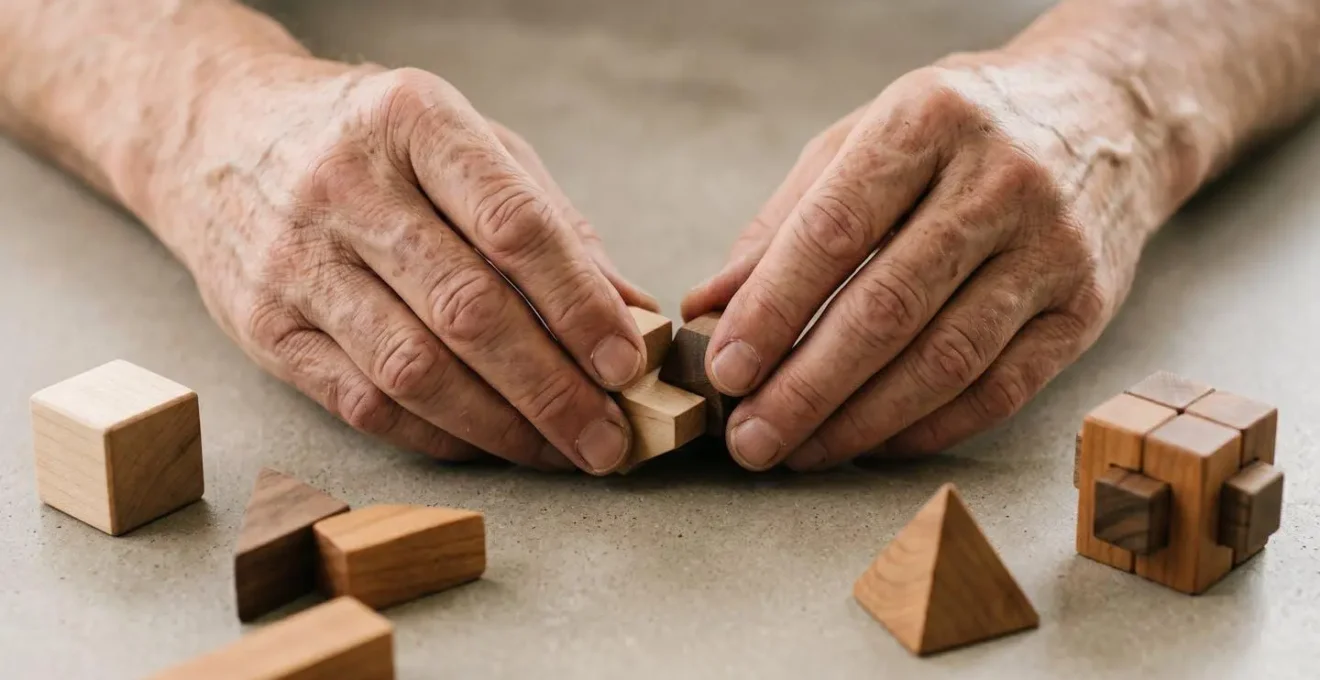
To maximize the neuroplastic benefits, the learning process should be structured. First, the skill must be genuinely novel. If you’re already a good card player, learning a slightly different card game won’t provide the same benefit as learning something completely different, like coding. Second, it must be challenging and require sustained concentration. You should feel a sense of mental effort. Third, it must be something you can progressively improve upon. The journey from novice to competent is where the brain rewires itself most intensely.
The commitment to practice is also non-negotiable. Cognitive benefits don’t appear overnight; they are the result of consistent effort over time. For example, a large-scale 2021 study published in Scientific Reports demonstrated that over 12,000 subjects aged 60 to 80 improved in cognitive performance scores after engaging in about 100 sessions of digital training. This highlights that persistence is key. Learning chess isn’t about a single game; it’s about studying openings, analyzing famous matches, and practicing tactics regularly.
Ultimately, the goal is to remain a learner. The process of grappling with new rules, new movements, and new ways of thinking is the workout. The feeling of being a beginner, of making mistakes and correcting them, is the sign that your brain is hard at work.
Action Plan: Designing Your Personal Neurobic Workout
- Inventory Your Routines: List your go-to mental activities (e.g., watching news, specific puzzles, reading one genre). Identify the « autopilot » tasks.
- Select a Novel Challenge: Choose one new, complex skill that is genuinely outside your comfort zone (e.g., a musical instrument, a language app, a strategy game like Go, a coding basics course).
- Integrate Multi-Sensory Tasks: Plan small daily changes that break routine. Try navigating your home with your eyes closed for a minute, eating a meal with your non-dominant hand, or identifying spices by smell alone.
- Schedule Social Cognition: Commit to at least one weekly activity that requires dynamic social interaction. This could be a debate club, a team game, a volunteer role requiring collaboration, or a peer-led discussion group.
- Track Effort, Not Just Performance: At the end of each week, rate your activities not on how well you did, but on how much mental effort they required. If everything feels easy, it’s time to increase the difficulty or introduce a new element.
Why learning a new language or instrument is better than Sudoku for the brain?
Learning a new language or a musical instrument represents the gold standard of neurobic exercise, far surpassing the benefits of repetitive puzzles like Sudoku. The reason lies in their immense complexity and the way they engage multiple brain systems simultaneously in a novel and coordinated fashion. They are not single-domain tasks; they are holistic brain workouts that build cognitive reserve in a way that isolated puzzles cannot.
Consider learning a language. It involves the auditory system (distinguishing new sounds), the visual system (reading new characters or words), and multiple memory systems (memorizing vocabulary, grammar rules). It also heavily engages executive functions like attention, task-switching (between your native and new language), and problem-solving. Similarly, playing an instrument combines fine motor skills, auditory processing, visual reading of music, and the emotional centers of the brain. This rich, multi-sensory engagement forces the brain to build and strengthen connections across different regions.
Neurobics engages our different senses in reordered and novel ways, forcing the quadrants of the brain which register these other senses to fire up rather than cruise through life on auto-pilot.
– Dr. Lawrence Katz and Manning Rubin, Neurobics: Fun and Fitness for Your Brain
This isn’t just a theoretical benefit; it can lead to measurable physical changes in the brain’s structure. The brain’s white matter, which consists of nerve fibers that facilitate communication between different brain regions, can be strengthened through this kind of intensive training. For instance, a recent 2024 study in Brain and Behavior found that middle-aged adults showed significant improvements in the integrity of their brain’s white matter tracts after just one month of using a cognitive training app. This demonstrates that complex training can physically bolster the brain’s communication network, a profound benefit that a simple puzzle is unlikely to provide.
Why is the peer-learning model of U3A so successful for retirees?
The global success of the University of the Third Age (U3A) model for retirees highlights a powerful synergy: the combination of continuous learning with social interaction. U3A is typically a peer-to-peer organization where members with a lifetime of experience share their knowledge by teaching courses to others. This model is profoundly effective for cognitive health because it engages participants on multiple levels, far beyond what traditional, passive learning can offer.
First, it embodies the principle of active engagement. Instead of just consuming information, members are often creating course materials, preparing lectures, and facilitating discussions. The act of teaching a subject is an extremely potent form of active recall and forces a deeper level of understanding. Second, it provides the complex, dynamic social cognition workout we’ve discussed. Participants are not just classmates; they are collaborators, debaters, and partners in learning, creating a rich and stimulating social environment.
This combination of social and cognitive stimulation is a powerful defense against cognitive decline. The evidence for this is increasingly robust. A landmark 2024 meta-analysis provided strong proof of this link.
Case Study: In-Person Social Interaction Boosts Executive Function
A systematic review and meta-analysis of randomized controlled trials, published in Innovation in Aging in 2024, found that social interaction interventions had a significant, large positive effect on executive function in older adults. Perhaps most tellingly, a subgroup analysis revealed that the cognitive benefits were greatest for healthy older adults who engaged in in-person social interaction, showing a much stronger effect than online-only interactions. This validates the face-to-face, community-based approach of models like U3A.
The U3A model succeeds because it’s not « school for seniors. » It is a framework that naturally encourages novelty (learning new topics), complexity (teaching and debating), and rich social connection. It creates a purpose-driven community centered on intellectual curiosity, which is the ideal environment for maintaining a resilient, agile, and healthy brain throughout retirement.
Key Takeaways
- Brain health depends on novelty and complexity, not just repetition of familiar puzzles.
- Effective brain training requires « far transfer, » applying skills to real-world situations, which rote practice fails to achieve.
- Active recall (testing yourself) is vastly superior to passive reception (watching or reading).
- Social cognition, engaged through activities like Bridge or debate, provides a unique and powerful mental workout.
How to differentiate normal ‘senior moments’ from Mild Cognitive Impairment (MCI)?
As we focus on enhancing cognitive function, it’s natural to become more aware of memory lapses. Forgetting a name or where you put your keys is a common experience at any age, often termed a « senior moment. » These are typically benign and related to factors like fatigue, stress, or simply having a lot on your mind. The key differentiator between these normal moments and a more concerning condition like Mild Cognitive Impairment (MCI) is the impact on daily functioning.

A normal « senior moment » is an inconvenience. You might forget an appointment but remember it later, or misplace your keys but can retrace your steps to find them. Your fundamental ability to manage your life—paying bills, cooking a meal, driving to a familiar location, engaging in your hobbies—remains intact. Friends and family are unlikely to notice a significant change in your overall competence or personality.
MCI, however, represents a noticeable step beyond normal age-related changes. While not severe enough to be classified as dementia, the memory or thinking problems are more frequent and persistent. A person with MCI might repeatedly ask the same questions, have trouble following a conversation or a recipe, or get lost in a familiar neighborhood. Critically, these issues are a change from their previous level of function and are often noticed by the individual or their loved ones. While they can still perform most daily activities independently, they may find complex tasks like managing finances or planning a multi-step event to be increasingly difficult.
The most important distinction is this: normal memory lapses are frustrating but don’t disrupt your independence. MCI introduces a consistent pattern of cognitive difficulties that begin to interfere with more complex aspects of daily life. If you or a loved one are concerned that memory issues are moving beyond simple forgetfulness and are starting to impact daily competence, it is essential to consult a healthcare professional. A proper evaluation can rule out other causes, provide an accurate diagnosis, and open the door to strategies for managing the condition and maximizing quality of life.
Embracing the principles of neurobics is about making a conscious choice to live a life of active engagement rather than passive comfort. It’s about seeing your brain not as a muscle to be drilled, but as a dynamic network to be explored. By prioritizing novelty, complexity, and meaningful social connection, you are not just playing games; you are investing in a more resilient and vibrant cognitive future. The next step is to move from understanding to action. Evaluate your current routine and identify one small change you can make today to begin your neurobic journey.