
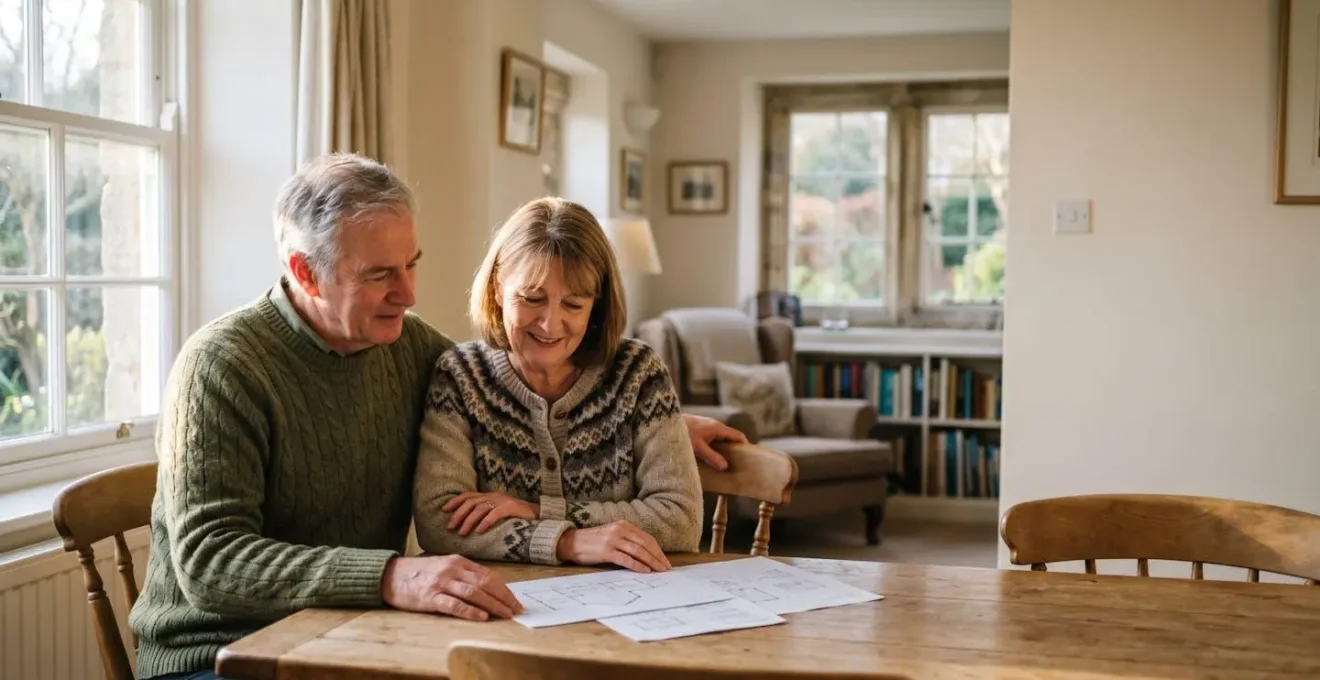
The biggest challenge of UK retirement isn’t financial security, but the loss of identity that follows the end of a career.
- Retirement planning often focuses on filling time with generic hobbies, which can lead to passivity and disconnection.
- A ‘Purpose Portfolio’ approach rebuilds self-worth by strategically combining contribution, structure, and community engagement.
Recommendation: Shift your focus from what you’ll *do* to who you’ll *be*, using your professional skills and local UK networks to consciously design your Third Age.
The final day at work arrives. There are handshakes, a farewell cake, and a collection of well-wishes for a long and happy retirement. Then comes the first Monday morning with no alarm, no commute, no overflowing inbox. For many, this newfound freedom can quickly feel less like a victory lap and more like a void. The structure, social connection, and sense of identity that a career provided for decades have vanished overnight, and the silence can be deafening. This is a far more common experience for UK retirees than many are prepared for.
The standard advice often involves suggestions to « take up a new hobby » like gardening or golf, or to « finally do that travelling ». While these are perfectly enjoyable activities, they often treat retirement as a long holiday—a period of consumption designed to simply fill time. They fail to address the fundamental human need for purpose, contribution, and a reason to get up in the morning. This approach can inadvertently lead to a passive lifestyle, social isolation, and a nagging sense that something vital is missing.
But what if the true key to a fulfilling retirement wasn’t about finding ways to pass the time, but about consciously redesigning your identity? This is the philosophy of the ‘Third Age’—not an ending, but a new and vibrant chapter of life defined by growth and contribution. The secret lies in moving beyond random activities and instead building a ‘Purpose Portfolio’: a balanced collection of roles, routines, and relationships that provides meaning and restores a sense of self-worth. It’s about identity architecture, not just activity scheduling.
This guide provides a practical, UK-centric framework to help you do just that. We will explore why this loss of identity is so prevalent, then walk through the concrete steps to build a fulfilling routine that balances rest with meaningful activity, leverages your unique professional skills for a greater good, and connects you with your local community—all without requiring a fortune. It’s time to stop planning for an absence of work and start designing a presence of purpose.
This article provides a structured path to help you navigate this new chapter. Below, you will find a summary of the key areas we will cover, from understanding the psychological shifts of retirement to finding practical, UK-based opportunities for connection and contribution.
Summary: A Guide to Purposeful Retirement
- Why do 60% of new UK retirees feel a loss of identity in the first 12 months?
- How to create a weekly schedule that balances rest and activity after 65?
- Retiring to the coast vs staying in the city: which is better for your social life?
- The common mistake of ‘television dependency’ that shortens healthy life expectancy
- How to find high-impact volunteering roles in the UK that use your professional skills?
- How to find local ‘Men in Sheds’ or social prescribing groups to combat loneliness?
- Guaranteed income for life or flexible access: which suits a cautious retiree?
- How to adjust your withdrawal rate to ensure your pension pot lasts until age 95?
Why do 60% of new UK retirees feel a loss of identity in the first 12 months?
The transition into retirement is often framed as a purely financial and logistical event, yet for a majority, the most significant challenge is psychological. The abrupt end of a long career triggers a profound shift in personal identity. For decades, your profession provides not just an income but a daily structure, a social circle, and a clear answer to the question, « What do you do? ». When that disappears, a vacuum is often left behind. This isn’t just a feeling; research confirms retirement is strongly associated with identity crisis, a lack of everyday structure, and a loss of purpose.
This sense of loss is deeply rooted in how we perceive our own value and status. A career offers a clear hierarchy and a set of responsibilities that affirm our competence. As one UK retiree, Simon, noted in a recent study on retirement adjustment, this feeling is deeply personal:
When you’ve got a job, you do define yourself a bit by your job. And you’ve got in your own mind a higher status of yourself.
– Simon, UK retiree, Retirement Adjustment Framework study, Sage Journals
This quote powerfully captures the essence of the issue. The « status » isn’t about impressing others; it’s an internal measure of our own contribution and place in the world. Losing your professional role can feel like losing a core part of yourself, leading to feelings of invisibility or irrelevance. This challenge is particularly acute in the first year, a period of adjustment where the novelty of freedom wears off and the reality of an unstructured life sets in. Without a conscious effort to build a new identity architecture, this period can lead to a decline in mental and even physical wellbeing.
How to create a weekly schedule that balances rest and activity after 65?
The key to escaping the retirement void is to replace the imposed structure of work with a chosen structure of purpose. However, the goal isn’t to cram your diary with activities to mimic a 9-to-5 schedule. A more effective approach is energy-based planning. This involves designing your week not around the clock, but around your natural energy rhythms. Are you a morning person with high focus before lunch? That’s the time for a challenging project, like learning a new skill or engaging in complex volunteering. Do you experience a dip in the afternoon? That’s the perfect slot for restorative activities like a walk in nature, reading, or a social call.
Instead of a rigid to-do list, think of your week in terms of ‘themes’ or ‘blocks’. For instance, you could structure it like this:
- Mondays & Wednesdays: Contribution Days. These are for your ‘work-like’ activities—volunteering, mentoring, or pursuing a project that uses your professional skills.
- Tuesdays & Thursdays: Growth & Wellness Days. These are dedicated to learning (an online course, a language class), physical activity (a fitness class, a long hike), and health appointments.
- Fridays: Connection Day. This is for intentional socialising—meeting friends for coffee, having lunch with family, or attending a community group.
- Weekends: Rest & Spontaneity. These days are kept deliberately free for relaxation, hobbies, and unplanned adventures.
This method provides a predictable rhythm without the rigidity of a workday. It ensures a healthy balance between stimulating activity and essential rest, preventing both burnout and boredom. The visual below represents this flow, moving from the focused energy of the morning to the calmer, more reflective periods of the evening. It’s a blueprint for a life that is both active and sustainable, giving you a sense of control and forward momentum.

By managing your energy, not just your time, you build a routine that feels invigorating rather than draining. This ‘Purpose Portfolio’ of activities gives each day a clear focus, helping to rebuild the sense of accomplishment that was once tied to your career. It’s your schedule, designed for your life, on your terms.
Retiring to the coast vs staying in the city: which is better for your social life?
A common dream for UK retirees is to sell up and move to a picturesque coastal town. The allure of sea air and a slower pace of life is powerful, but this decision has profound implications for one of your most valuable assets: your social network. While the coast can offer a strong sense of community, it often comes with trade-offs in accessibility and diversity of activities. Conversely, staying in a familiar city provides unparalleled access to infrastructure but can sometimes feel more anonymous.
The choice is not about which is objectively ‘better’, but which environment best supports the kind of social life you want to build in your Third Age. If you thrive in a close-knit community and enjoy nature-based activities, a coastal or village location might be ideal. However, if your ‘Purpose Portfolio’ includes attending diverse cultural events, joining multiple special-interest groups, or relying on public transport, a city’s density and infrastructure are significant advantages. It’s crucial to weigh the social infrastructure—transport, healthcare, and community groups—alongside the scenery.
A detailed comparison reveals the different opportunities and challenges each environment presents for maintaining an active and engaged social life. As an analysis of retirement trends in the UK shows, factors like transport and healthcare access are critical determinants of wellbeing in later life.
| Factor | Coastal Retirement | City Retirement |
|---|---|---|
| Social Infrastructure Density | Lower density, seasonal variations | Higher density, year-round activities |
| Public Transport | Often limited, car dependency | Extensive networks, accessible |
| Healthcare Access | May require travel to specialists | Multiple facilities nearby |
| Community Groups | Close-knit, but smaller selection | Diverse range, multiple options |
| Cost of Living | Variable, tourist areas expensive | Generally higher, especially housing |
Ultimately, the best decision involves a ‘social reconnaissance’ trip. Before committing to a move, spend an extended period (ideally off-season) in your desired location. Visit the local community centre, check the bus timetables, and talk to residents. Does the reality of the social fabric on the ground match the vision you have for your retirement? Your environment should be a support system for your new identity, not an obstacle to it.
The common mistake of ‘television dependency’ that shortens healthy life expectancy
With an empty schedule, it’s dangerously easy to fall into the trap of passive consumption, and its primary enabler is the television. What starts as catching up on a few shows can quickly morph into hours of sedentary viewing each day. This ‘television dependency’ is one of the most common and insidious mistakes new retirees make, acting as a silent saboteur of both mental and physical health. It fills time without providing any genuine engagement, contribution, or connection—the three pillars of a fulfilling Third Age.
The physical consequences are well-documented. A sedentary lifestyle is directly linked to a host of health problems. Furthermore, the British Psychological Society notes that weight gain after retirement often results from being less physically active and having less structured meal times. The mental impact is just as severe. Passive viewing provides a constant stream of low-level stimulation that requires no cognitive effort, leading to a decline in mental acuity. It displaces activities that build purpose and self-worth, replacing the satisfaction of accomplishment with the fleeting distraction of entertainment.
The antidote to television dependency is not to banish it entirely but to shift from passive consumption to active engagement. This means consciously choosing content that aligns with your growth goals and integrating it into your ‘Purpose Portfolio’. Instead of channel-surfing, you might watch a documentary related to a new project or follow an online course. The key is to be the curator of your consumption, not a passive recipient. The following checklist offers a structured way to transform your relationship with screen time from a passive habit into an active tool for growth.
Your Action Plan: From Passive Viewing to Active Learning
- Curate a personal ‘Retirement Curriculum’ using free UK platforms like FutureLearn or Open University courses aligned with your interests.
- Schedule specific ‘learning blocks’ of 30-60 minutes during your former passive TV time to create a new, positive habit.
- Join online communities or local discussion forums related to your chosen topics to add a crucial layer of social engagement.
- Replace evening passive viewing with documentary series or educational content that aligns with your project goals or new passions.
- Track your progress through completed courses or small projects to build momentum and restore a powerful sense of accomplishment.
By making this shift, you transform a potential health risk into a powerful engine for personal development, ensuring your mind remains as active and engaged as you want your body to be.
How to find high-impact volunteering roles in the UK that use your professional skills?
One of the most powerful ways to rebuild your identity after retirement is to find a new avenue for contribution. For many, this means volunteering. However, the generic image of rattling a collection tin or staffing a charity shop barely scratches the surface of what’s possible. The most fulfilling opportunities are those that allow you to leverage the decades of professional expertise you’ve accumulated. This is known as skills-based volunteering, and it’s a cornerstone of building a robust ‘Purpose Portfolio’.
Instead of starting from scratch, you can offer the high-level skills that charities and non-profits desperately need but often cannot afford. Whether you were an accountant, a project manager, a marketing director, or an HR specialist, there are organisations in the UK that can benefit immensely from your strategic guidance. This form of contribution is a win-win: the organisation receives expert support, and you regain a sense of professional value and accomplishment that is deeply affirming. It’s not just about ‘giving back’; it’s about being valued for who you are and what you know.

Finding these roles is easier than ever, thanks to dedicated UK platforms that connect skilled professionals with non-profits. These services act as matchmakers, ensuring your expertise is directed where it can have the most impact. One of the leading examples in the UK provides a clear model for this approach.
UK Case Study: Reach Volunteering
As the UK’s leading skills-based volunteering charity, Reach Volunteering connects experienced professionals with non-profits that need their specific expertise. The platform focuses on high-impact, often short-term projects in areas like finance, marketing, digital strategy, and mentoring. In 2023 alone, it helped over 5,400 professionals find meaningful roles. By requiring at least three years of professional experience and focusing on roles that typically demand less than 15 hours a week, it is perfectly suited for retirees seeking to make a significant contribution without a full-time commitment. This model demonstrates the immense demand for the strategic skills that retirees possess.
By seeking out roles that honour your professional past, you are not just filling time; you are engaging in identity architecture. You are proving, to yourself and the world, that your skills and wisdom are more valuable than ever.
How to find local ‘Men in Sheds’ or social prescribing groups to combat loneliness?
While purpose is crucial, it’s only one part of the equation. The other is connection. Loneliness is a serious health risk, and retirement, with its loss of daily workplace interactions, can be a major trigger. Fortunately, the UK has a growing and innovative infrastructure designed to combat social isolation, moving beyond traditional clubs to offer structured, supportive, and engaging community options. Two of the most effective pathways are the ‘Men in Sheds’ movement and the NHS’s social prescribing service.
The ‘Men in Sheds’ initiative is a remarkable grassroots success story. These are community spaces where men can connect, converse, and create. The ‘shed’ is a workshop, a place for members to work on practical projects together—from woodworking to repairing electronics. While the activities are the draw, the true purpose is to foster social bonds and improve mental health in a relaxed, informal setting. The impact is staggering; the UK Men’s Sheds Association’s 2023 survey found that 89% of regular attendees experienced a decrease in their depression. It provides a sense of camaraderie and shared purpose that can be a powerful replacement for the workplace environment.
For a more personalised approach, the NHS in England offers ‘social prescribing’. This is a formal system that allows GPs to refer patients to a ‘link worker’ who can help them connect with non-clinical community support. This is not just for medical issues; it’s designed specifically for people experiencing loneliness, anxiety, or a lack of purpose. The link worker acts as a guide, spending time to understand your interests and needs before connecting you with local groups, from choirs and walking clubs to allotment associations and, yes, Men in Sheds. It is a powerful, person-centred way to rebuild your social world. Accessing it is straightforward:
- Book a standard appointment with your GP or practice nurse and mention your interest in social prescribing.
- Discuss what matters to you beyond medical symptoms—mention feelings of loneliness or a desire for more structure and purpose.
- Ask specifically for a referral to a ‘social prescribing link worker’, who is part of your local Primary Care Network.
- The link worker will work with you over several sessions to create a personalised plan based on your passions and goals.
- They will then actively connect you with specific, vetted local groups and activities that match your plan.
These initiatives show that you don’t have to build your social life from scratch. There is a support system in the UK designed to help you find your tribe and re-establish the vital connections that make life meaningful.
Guaranteed income for life or flexible access: which suits a cautious retiree?
While this guide focuses on purpose beyond pensions, your financial decisions are the foundation that makes your ‘Purpose Portfolio’ possible. For a cautious retiree, the primary psychological battle is between the desire for absolute security and the need for flexibility to fund a vibrant Third Age. The two main paths—a guaranteed annuity or a flexible drawdown plan—are not just financial products; they are different philosophies for funding your life.
A guaranteed annuity provides a fixed income for life. You exchange a portion of your pension pot for the certainty of a monthly payment that will never run out. For someone who craves stability and wants to eliminate market anxiety, this can be incredibly liberating. It creates a ‘psychological runway’ of peace of mind, knowing your essential bills will always be covered. However, this security comes at the cost of flexibility. The income is fixed, meaning you have less capacity to fund a spontaneous large project, help family, or respond to unexpected opportunities.
A flexible drawdown plan keeps your pension pot invested, and you ‘draw down’ an income as you need it. This offers maximum flexibility to adjust your withdrawals based on your life stage, fund ‘passion projects’, or leave a larger legacy. The trade-off is that you retain the investment risk. The value of your pot can go down as well as up, and it requires active management and discipline to ensure the money lasts. It suits someone with a higher tolerance for uncertainty who wants to remain in control of their capital.
The choice depends entirely on your personal risk tolerance and the nature of your retirement goals. There is no single right answer, only the one that best aligns with your psychological needs and life plan.
| Aspect | Guaranteed Annuity | Flexible Drawdown |
|---|---|---|
| Psychological Runway | Frees you from market anxiety, provides mental peace | Requires tolerance for uncertainty and active management |
| Purpose Funding | Fixed income limits spontaneous projects | Enables ‘passion project’ funding and legacy building |
| Risk Profile Match | Suits those craving stability and predictability | Better for those planning to retrain or start ventures |
| Income Flexibility | No flexibility once purchased | Can adjust withdrawals based on life stage needs |
| Inflation Protection | Available but reduces initial income significantly | Potential for growth to outpace inflation |
| Legacy Potential | Typically no inheritance (unless specific features) | Remaining pot passes to beneficiaries |
Many retirees find a hybrid approach is best: using a portion of their pot to buy a small annuity to cover essential costs, while keeping the rest in a flexible drawdown plan for life’s adventures. This secures your foundation while preserving your freedom.
Key Takeaways
- Retirement’s main challenge is often psychological—a loss of identity—not just financial.
- Consciously design a ‘Purpose Portfolio’ of balanced activities rather than just ‘filling time’ with hobbies.
- Leverage your professional skills through UK-based platforms like Reach Volunteering to regain a sense of contribution and value.
- Use UK-specific resources like Men’s Sheds and NHS Social Prescribing to actively combat loneliness and build community.
How to adjust your withdrawal rate to ensure your pension pot lasts until age 95?
Once you’ve chosen your financial structure, particularly if you opt for flexible drawdown, the critical question becomes: how much can you safely take out each year? The old ‘4% rule’ is increasingly seen as outdated, especially given our growing longevity. Planning for a retirement that could last 30 years or more requires a more dynamic and realistic approach. Official UK statistics show that the number of people living into their 90s is rising dramatically, making a long-term strategy essential.
A modern approach to withdrawal rates is to think in phases. Your retirement is not a single, monolithic block of time. Your spending needs will likely be higher in the active, early ‘Go-Go’ years (65-75), when you are travelling and pursuing larger projects. They will naturally decrease in the ‘Slow-Go’ years (75-85) and further still in the later ‘No-Go’ years (85+). A sustainable withdrawal strategy reflects this reality, allowing for higher spending at the start while preserving capital for the long run.
Instead of a fixed percentage, many financial planners now recommend a dynamic withdrawal strategy. This could involve, for example, taking 5-6% in your early, active years, dropping to 3-4% in your middle years, and reducing further to cover only essential costs later on. Another popular method is the ‘guardrail’ approach, where you set a target withdrawal rate (e.g., 4%) but allow it to fluctuate within a certain band (e.g., 3% to 5%) based on market performance. If a strong market year pushes your pot’s value up, you can take a little more; if the market dips, you tighten your belt temporarily.

This isn’t about complex financial modelling you have to do yourself. The key takeaway is to understand that your withdrawal plan should not be a ‘set it and forget it’ decision. It requires a yearly review with a financial advisor to ensure it remains aligned with your life plan, market realities, and your goal of making your money last a lifetime. This financial stewardship is the final piece of your identity architecture—acting as the responsible CEO of your own Third Age.
Your Third Age is a project worthy of a plan. It is your opportunity to build a life of purpose, connection, and contribution on your own terms. Begin today by auditing your skills and interests to start designing the first component of your own Purpose Portfolio.