
Growing older does not mean surrendering control over how you live. For many people in the UK, the desire to remain in their own home, make their own choices, and preserve a familiar routine matters more than almost anything else. Yet the gap between wanting independence and actually achieving it can feel overwhelming when mobility changes, health conditions emerge, or family members live miles away.
This resource brings together the practical knowledge you need to bridge that gap. Whether you are adapting your own home, supporting an elderly parent, or working as part of a care team, the topics covered here address real, everyday challenges: from choosing a rollator that can handle uneven pavements to setting up monitoring technology that does not feel intrusive. Each section introduces a key theme and points toward more detailed articles where you can explore specific questions in depth.
Think of daily life and independence as a jigsaw puzzle. The pieces include your physical environment, the equipment you use, the people who help, and the technology that keeps everyone connected. When these pieces fit together well, the picture that emerges is one of dignity, safety, and genuine quality of life.
Your home should work with your body, not against it. Small modifications often deliver outsized benefits, allowing you to move confidently through spaces you have known for decades. The key is identifying where friction occurs—steps that feel precarious, cupboards that demand awkward reaching, or bathrooms that lack secure handholds—and addressing each point systematically.
Bathrooms present some of the highest-risk moments of the day. Wet surfaces, confined spaces, and the physical demands of bathing create a perfect storm for falls. Installing grab bars with clear red/green safety indicators, choosing between wall-mounted and freestanding shower stools, and selecting flooring such as safety vinyl or textured tiles all reduce risk significantly.
Walk-in tubs with heated seats help maintain body temperature during longer bathing sessions—an important consideration for anyone who feels the cold acutely or needs extra time. These details may seem minor, but they transform an anxiety-inducing activity into a manageable one.
Occupational therapists often speak of the Golden Zone: the area between your hips and shoulders where reaching and lifting require the least effort. Reorganising a kitchen around this principle—placing heavy items at waist height, retrofitting pull-out baskets, and using trolleys to slide hot pans instead of lifting them—reduces fatigue and the risk of burns or dropped objects.
Simple tool modifications also matter. Arthritic hands struggle with traditional can openers and jar grips, yet affordable adaptations exist that avoid expensive specialist gadgets. The goal is not to overhaul your entire kitchen but to make incremental changes that add up to a safer, more comfortable cooking experience.
A low letterbox that forces you to bend can trigger dizziness. Trailing wires create trip hazards. Folding suitcase ramps provide flexibility for visitors while permanent concrete ramps suit homes with frequent wheelchair use. Each decision depends on your specific circumstances, but the underlying principle remains constant: remove obstacles that drain energy or threaten balance.
Independence often hinges on the ability to move—both inside your home and out in the wider world. The right mobility aid, properly maintained, extends your reach enormously. The wrong choice, or equipment that is poorly understood, can create frustration and even new dangers.
Rollators vary widely. A model suited to smooth indoor floors may struggle on rough UK pavements, while an outdoor rollator can feel cumbersome in a narrow hallway. Consider where you will use the device most often, and look at accessories such as trays or cane holders that customise the rollator for tasks like the weekly shop.
Taking a rollator onto a UK bus requires confidence and a clear understanding of how to position yourself and your equipment. Knowing the etiquette—and your rights—prevents awkward confrontations and makes public transport a realistic option rather than an ordeal.
Shoes matter more than many people realise. Wide-fit options that genuinely support the ankle are hard to find, yet they make a measurable difference to gait and confidence. Ill-fitting footwear undermines even the best mobility aid.
Getting to hospital appointments raises its own questions. NHS hospital transport is free but often involves long waits and shared journeys. Private taxis offer flexibility at a cost. Community transport schemes occupy a middle ground, providing affordable, door-to-door services that suit many people’s needs. Understanding the trade-offs helps you plan realistically.
Washing, dressing, and attending to intimate hygiene are among the most personal activities imaginable. When these tasks become difficult, the emotional weight can be as heavy as the physical challenge. Preserving dignity means thoughtful planning, clear communication, and a willingness to adapt routines.
Sequencing matters. Performing tasks in an order that minimises fatigue—perhaps sitting while drying, laying out clothes the night before, or using long-handled aids—can transform a gruelling half-hour into a manageable process. Small efficiencies accumulate.
Inviting a stranger into such personal moments requires trust. Many older people find this transition deeply uncomfortable. Open conversations, gradual introductions, and involving the person receiving care in choosing their carer all ease the adjustment. The relationship works best when built on mutual respect rather than obligation.
When physical transfers require hoisting equipment, two carers are often legally necessary. This requirement stems from health and safety regulations designed to protect both the person being moved and the staff involved. Understanding why this rule exists—and how to adjust care packages accordingly—helps families plan realistically.
Assistive technology has advanced rapidly. Devices that once felt clunky or stigmatising now blend into daily life. Yet technology only helps if it is set up correctly, charged reliably, and understood by everyone involved.
Traditional pendant alarms connect to a call centre or dial family members automatically. Newer devices use accelerometer technology to distinguish between a genuine fall and simply sitting down quickly. Wristband and pendant designs each have trade-offs related to arm movement interference and aesthetics—some people want an alarm that does not look like a panic button.
Common mistakes include removing the device because it beeps during cooking, or forgetting to charge it when memory issues are present. Building charging into a fixed daily routine, perhaps linked to another habit like making tea, helps maintain consistency.
Smart plugs that track kettle usage can serve as a passive sign of life indicator. AI-powered systems learn a person’s routine over a period of weeks before they begin generating alerts, reducing false alarms. Voice assistants like Alexa can be configured to make emergency calls when reaching a phone is impossible.
Reliability depends on connectivity. Homes with unstable WiFi or no broadband at all require alternative solutions, such as mobile-network-based monitors or non-digital setups. Setting alert thresholds too sensitively leads to constant SMS notifications that everyone eventually ignores.
The transition from analogue to digital telephone networks affects many older alarm systems. Analogue pendant alarms may stop working as exchanges convert. Checking compatibility and upgrading equipment before problems arise is essential.
No amount of equipment replaces human relationships. Whether care comes from professional carers, family members, or a combination, clear communication and fair distribution of responsibility determine success.
A detailed job description for a carer—covering preferred wake times, how tea should be made, which topics to avoid discussing—sets expectations from the start. Outcome-based care, which focuses on what the person wants to achieve rather than ticking off tasks, generally improves quality of life more than rigid task-based schedules.
Siblings often disagree about who does what. A written care roster, discussed openly in a family meeting, reduces resentment. Acknowledging that fairness does not always mean equality—some family members have more time, money, or proximity—helps keep conversations productive rather than accusatory.
Balancing care for ageing parents with responsibilities toward your own children is exhausting. Sitting services that provide even two hours of respite each week offer breathing space. Recognising the signs of burnout and seeking help early protects both the carer and the person they support.
Where you live shapes every other aspect of daily independence. A remote village home may feel idyllic until transport becomes impossible, leading to isolation that accelerates decline. Conversely, downsizing from a three-bedroom semi to a one-bedroom flat involves emotional as well as practical challenges.
Community connections—clubs, library services for the housebound, local transport schemes—anchor people to social life. These links often matter as much as physical adaptations. Planning housing decisions with both practical access and social wellbeing in mind creates a foundation that supports independence for years to come.
Each topic introduced here opens onto more detailed questions. The articles within this section explore specific challenges in depth, offering step-by-step advice and honest comparisons. Start with the area that feels most pressing, and build your knowledge outward from there.

In summary: Stop seeing yourself as a limitless resource; start treating the UK’s support systems as tools to be strategically leveraged. Shift from emotional pleas for help to evidence-based documentation to unlock legal and financial support from your local council….
Lire la suite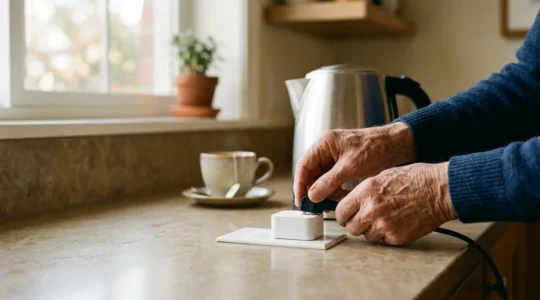
The key to effective passive monitoring isn’t the smart plug itself, but designing a resilient smart home system around it that provides reliable insights, not just raw data. Standard Wi-Fi plugs can be unreliable; dedicated protocols like Z-Wave or Zigbee…
Lire la suite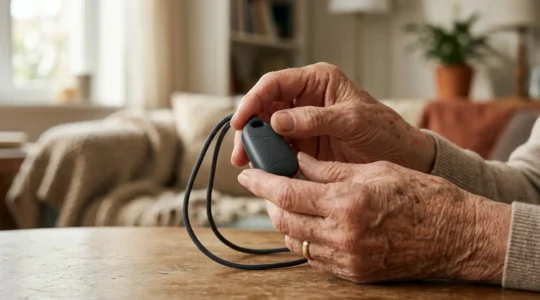
The accuracy of a fall detector isn’t magic; it’s a result of multi-sensor data analysis that creates a unique « algorithmic signature » for a genuine fall. Algorithms differentiate between a sudden impact (a fall) and a controlled descent (sitting) by analyzing…
Lire la suite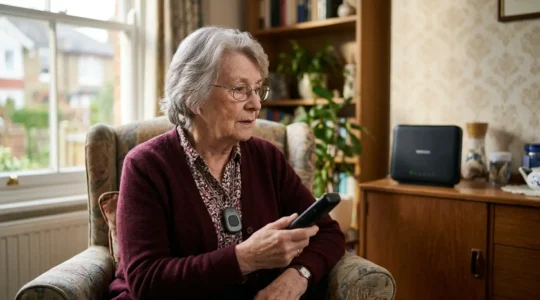
The impending digital switchover introduces a critical, often misunderstood risk: your analogue telecare alarm, which previously worked during a power cut, will now fail because its new digital line depends entirely on your powered internet router. Analogue lines had their…
Lire la suite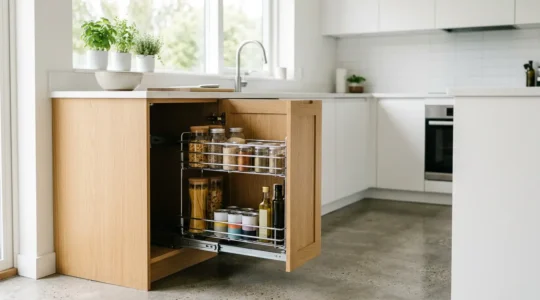
In summary: The key to a user-friendly kitchen for seniors isn’t a costly remodel, but smart, ergonomic retrofitting of existing cabinets. Prioritize solutions that promote good body mechanics, like pull-out systems that require a simple linear pull instead of twisting…
Lire la suite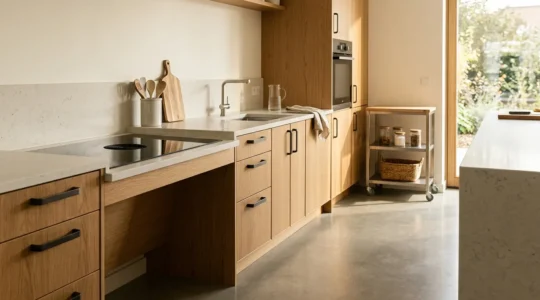
In summary: Designing a « Golden Zone » kitchen is not about buying gadgets, but about creating a system of movement that eliminates strain. Focus on horizontal « Zero-Lift » workflows, using trolleys and adjacent landing zones to slide heavy items instead of lifting…
Lire la suite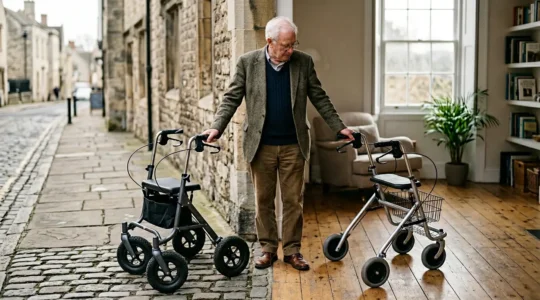
In summary: Your rollator’s setup is a clinical choice; setting handle height correctly prevents chronic back pain by ensuring proper biomechanical alignment. For rough UK pavements and cobblestones, pneumatic (air-filled) tires are essential for reducing vibration and protecting your joints….
Lire la suite
Organising personal care is less about completing a checklist of tasks and more about creating a system that protects a person’s dignity and independence. Understand the real rules for defining a « care need » to unlock support, moving beyond common myths….
Lire la suite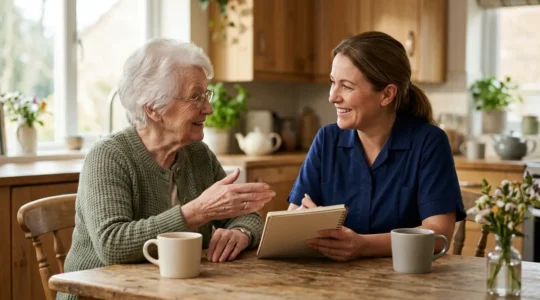
Forget the standard ‘job description’ that lists generic tasks. To truly maintain your independence and lifestyle, you must craft a detailed ‘Lifestyle Specification’ for your carer. This document shifts the focus from completing activities to achieving specific, meaningful outcomes that…
Lire la suite