
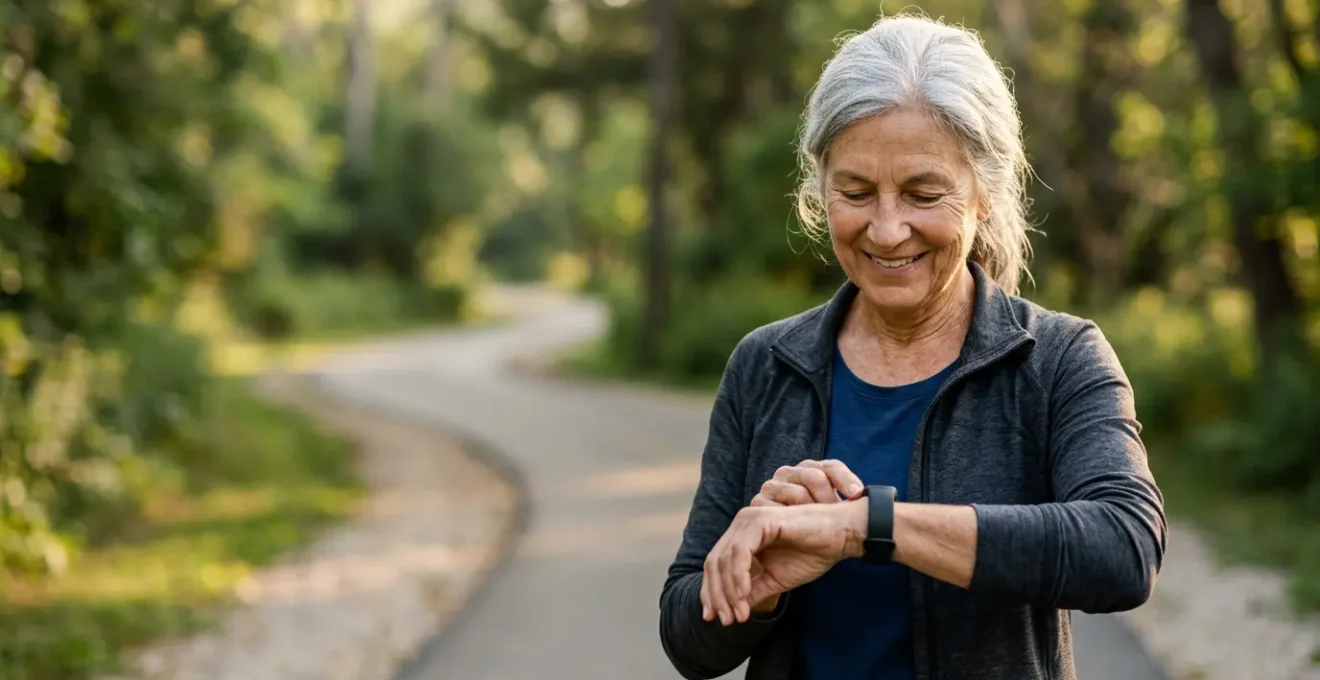
For seniors, especially those on medication, heart rate is a flawed and often dangerous metric for exercise intensity; the key to safe Zone 2 training lies in mastering internal signals like breathing and perceived exertion.
- Your heart’s recovery speed after exercise is a far better predictor of health than its peak speed during it.
- Simple environmental cues, like lampposts, can be used to structure effective cardio workouts without complex technology.
- Hydrotherapy offers a near-weightless environment, enabling sustained Zone 2 exercise for those with joint pain.
Recommendation: Stop relying solely on heart rate. Learn to use the « talk test » and Rate of Perceived Exertion (RPE) as your primary guides for maintaining a safe and effective cardiovascular workout.
For many seniors, the desire to maintain heart function is often at odds with a deep-seated fear of overexertion. You’ve been told to stay active, but the thought of pushing too hard, especially with a pre-existing condition, is a constant worry. The common advice is to « get a heart rate monitor » and stay within a specific « zone. » However, this approach is fundamentally flawed for a significant portion of the senior population, particularly those on common heart medications like beta-blockers.
The truth is, your body has a more reliable and intuitive system for gauging effort than any wrist-worn device. This system is based on physiological feedback—how your breathing feels, your ability to hold a conversation, and your overall sense of exertion. Relying on a heart rate number that may be artificially suppressed by medication can be misleading and potentially unsafe. It can either cause you to under-train, gaining no real benefit, or worse, ignore genuine signs of distress because the number on your watch seems « fine. »
This guide will shift your focus away from rigid numbers and towards a more profound understanding of your own body. As a cardiac rehabilitation specialist, my goal is to empower you with the knowledge to work *with* your cardiovascular system, not just measure it. We will explore why your heart’s ability to slow down is more critical than its ability to speed up, how to transform everyday activities into effective workouts, and how to leverage natural forces like water buoyancy to exercise without pain. It’s time to build a sustainable, safe, and truly effective cardio routine based on a tool you already possess: your own perception.
This article provides a comprehensive framework for understanding and implementing safe Zone 2 training. Below, you will find a detailed breakdown of each key aspect, from foundational principles of heart health to practical strategies you can use today.
Summary: A practical guide to safe Zone 2 exercise for seniors
- Why is how fast your heart slows down more important than how fast it speeds up?
- How to turn a dog walk into a cardio workout using lamp posts?
- Can diet and exercise really replace medication for high cholesterol after 70?
- The error of shoveling snow or walking in freezing wind with angina
- How to reduce salt without making food taste bland?
- Why is high blood pressure called the ‘silent killer’ in the UK senior population?
- Why does water reduce your body weight by 90%, relieving pain instantly?
- How to access hydrotherapy pools on the NHS vs leisure centers?
Why is how fast your heart slows down more important than how fast it speeds up?
We often fixate on how high our heart rate gets during exercise, viewing it as a badge of effort. However, a much more telling sign of your cardiovascular fitness is how quickly it comes back down. This metric, known as Heart Rate Recovery (HRR), measures the fitness of your autonomic nervous system. A fit heart, under the control of a healthy nervous system, recovers quickly. A slow recovery, on the other hand, can be a warning sign of underlying issues and is a powerful predictor of future cardiovascular risk.
Think of it like a car’s braking system. A sports car isn’t just defined by its top speed, but by how effectively it can slow down and control its momentum. Your heart is the same. A rapid HRR indicates that your body is efficient at shifting from a state of stress (exercise) to a state of rest. Poor HRR suggests the system is struggling to apply the « brakes. » In fact, sobering research confirms that each 10-bpm decrease in heart rate recovery translates to a 13% increase in cardiovascular event risk. This makes tracking your HRR a far more insightful practice than just chasing a peak heart rate number.
Measuring this at home is surprisingly simple and requires no special equipment other than a way to tell time. It provides a tangible, personal benchmark of your progress. As your fitness improves, you will see your HRR number increase, a direct and motivating confirmation that your Zone 2 training is paying off in a medically significant way. It shifts the goal from « working hard » to « recovering well. »
Your action plan: Measure Your Heart Rate Recovery at Home
- Capture peak heart rate: Immediately after stopping your Zone 2 exercise, find your pulse on your wrist or neck. Count the beats for 15 seconds and multiply by 4 to get your peak beats per minute (bpm).
- Rest for one minute: Stand or sit still immediately after taking your peak reading. Do not walk around. Time exactly 60 seconds.
- Measure recovery heart rate: At the one-minute mark, measure your pulse again using the same 15-second count method and multiply by 4.
- Calculate your HRR: Subtract your one-minute post-exercise heart rate (Step 3) from your peak heart rate (Step 1). The result is your HRR.
- Interpret your results: For seniors, a drop of 12 bpm or less is a signal for concern and a conversation with your doctor. A drop of 15-20 bpm is considered good, and an HRR of 25 bpm or more is excellent.
How to turn a dog walk into a cardio workout using lamp posts?
For many, the idea of a « cardio workout » conjures images of treadmills and complex gym equipment. But one of the most effective and accessible ways to implement Zone 2 training is by using the environment around you. A daily dog walk, often done at a leisurely pace, can be transformed into a structured interval session using a simple technique called Fartlek training, a Swedish term meaning « speed play. » The key is to use fixed environmental markers, like lampposts, to guide your effort.
This method of « environmental pacing » removes the need for stopwatches or fitness trackers. The concept is simple: walk at a brisk, Zone 2 pace (where you can still talk, but with some difficulty) between two lampposts, then slow down to a gentle recovery pace for the next one. For example: walk briskly from lamppost 1 to lamppost 2, then walk slowly from lamppost 2 to lamppost 3. Repeat this pattern for 20-30 minutes.
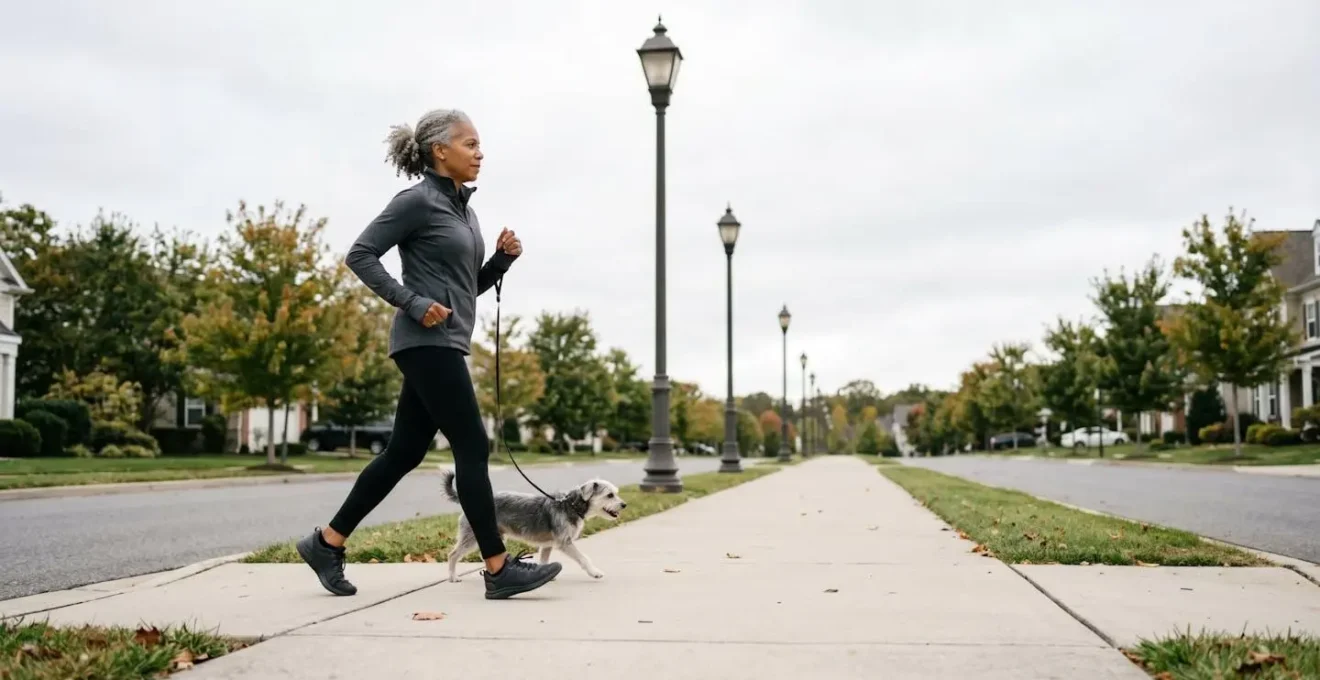
As you can see, this turns a monotonous walk into a dynamic workout that challenges your cardiovascular system and improves its ability to adapt to varying levels of demand. This is far more beneficial than walking at a single, steady pace. The intervals of increased effort push your heart to work more efficiently, while the recovery periods allow it to practice slowing down, directly improving the Heart Rate Recovery we discussed earlier. It’s a safe, self-regulated way to build endurance and requires no special planning—just a pavement and a series of lampposts.
Can diet and exercise really replace medication for high cholesterol after 70?
This is a critical question, and it requires a cautious and clear answer. While lifestyle changes, including Zone 2 training and a heart-healthy diet, are incredibly powerful tools for managing cholesterol, they should be viewed as partners to medication, not replacements, especially after the age of 70. The decision to reduce or stop any prescribed medication, such as statins, must only be made in close consultation with your doctor. Statins have a proven and significant protective effect that exercise alone may not replicate.
To put this in perspective, a 2025 UK modelling study found that standard statin therapy adds between 3 and 8 extra months in good health for adults aged 70 and older, even for those without a history of cardiovascular disease. This is a substantial benefit that should not be dismissed lightly. Exercise works on a different but complementary pathway. Zone 2 training improves your body’s metabolic efficiency, enhancing its ability to burn fat for fuel. This process can have a direct, positive impact on your cholesterol profile.
As cardiac specialist Dr. Yu-Ming Ni explains, this synergy is where the true power lies. Lifestyle and medication work together to provide comprehensive protection.
Lifestyle changes are powerful partners to medication and any desire to reduce medication must be a conversation with a doctor. Zone 2 training enhances mitochondrial function and the body’s ability to use fat for fuel, which can directly lower triglycerides and improve the LDL/HDL cholesterol ratio.
– Dr. Yu-Ming Ni, MD, Medical News Today – Heart disease: Older adults should consider statins for better health
The error of shoveling snow or walking in freezing wind with angina
Sudden, strenuous activity in cold weather is one of the most dangerous triggers for a cardiac event, particularly for individuals with angina or other heart conditions. The danger is twofold. First, the cold air itself causes vasoconstriction—the tightening of your blood vessels, including your coronary arteries. This forces your heart to pump harder to circulate blood. Second, an activity like shoveling snow is a sudden, high-intensity exertion that places an immense and immediate load on the heart. The combination of narrowed arteries and a sudden demand for more oxygenated blood can lead to chest pain (angina) or even a heart attack.
Walking against a freezing wind presents a similar, albeit less intense, risk. Your body is fighting the cold and the physical resistance of the wind, creating a significant systemic load. The error is underestimating this combined effect. An activity that feels manageable on a mild day can become hazardous in the cold. It’s crucial to recognize that your capacity for exertion is significantly reduced in these conditions.

Instead of risking outdoor exercise in freezing temperatures, the prudent choice is to move your Zone 2 workout indoors. This ensures you can maintain your fitness routine without exposing your cardiovascular system to the dangerous stress of vasoconstriction. There are numerous effective and accessible indoor alternatives that provide the same cardiovascular benefits in a controlled, safe environment.
- Mall walking: Use the climate-controlled environment of a shopping centre for long, uninterrupted walks.
- Stationary bike: A simple way to get 30-45 minutes of steady-state cardio, often while watching television.
- Chair aerobics: Guided low-impact seated routines are excellent for maintaining mobility and heart health without any impact on the joints.
- Indoor pool walking: Aqua-jogging or walking in a heated pool provides resistance without the strain of cold air.
- Home treadmill: Walk at a pace where you can comfortably maintain a conversation, ensuring you stay in a safe intensity zone.
How to reduce salt without making food taste bland?
Reducing sodium intake is a cornerstone of managing high blood pressure, but the number one complaint is that food becomes tasteless and unappetizing. The solution is not to simply remove salt, but to replace it with other layers of flavour. This strategy, known as « flavour layering, » involves using ingredients that provide acidity, pungency, umami, and smokiness to compensate for the lack of salt and create a rich, satisfying taste profile. Your palate is complex, and salt is only one component it craves.
Instead of reaching for the salt shaker, think about adding a squeeze of lemon (acidity), a dash of chili flakes (pungency), a sprinkle of nutritional yeast (umami), or smoked paprika (smokiness). Fresh and dried herbs like rosemary, dill, and oregano provide an aromatic dimension that salt cannot. The goal is to build flavour in stages, creating a more complex and interesting dish than one that relies solely on sodium for its taste. This approach transforms a restrictive diet into a creative culinary exploration.
The following table, inspired by cardiac nutrition guidelines, offers some practical swaps to begin your flavour-layering journey. You’ll quickly discover that reducing salt doesn’t mean reducing enjoyment; it means discovering a wider world of taste.
| Instead of salting… | Try this flavor-layered swap | Taste profile gained |
|---|---|---|
| Roasted vegetables with salt | Toss in balsamic vinegar and fresh rosemary before roasting | Acidity + Pungency |
| Grilled fish with salt | Fresh dill, lemon squeeze, and cracked black pepper | Acidity + Herbaceous |
| Pasta sauce with added salt | Tomato paste concentrate, garlic, and dried oregano | Umami + Pungency |
| Salad with salty dressing | Olive oil, Dijon mustard, and apple cider vinegar | Pungency + Acidity |
| Meat rub with salt | Smoked paprika, onion powder, and garlic powder blend | Smokiness + Savory depth |
Why is high blood pressure called the ‘silent killer’ in the UK senior population?
High blood pressure earns its ominous nickname, ‘the silent killer,’ because it typically has no noticeable symptoms until it has caused significant damage to the cardiovascular system. In the UK, millions of seniors are living with the condition, often completely unaware of it. Without regular checks, a person can feel perfectly fine while their heart and arteries are under chronic, damaging strain. This silent progression can eventually lead to severe health crises like heart attacks, strokes, kidney disease, and vascular dementia.
This is precisely why relying on how you « feel » day-to-day is not enough. The only way to know if you have high blood pressure is to have it measured. This « silence » also extends to exercise. Many seniors are prescribed medications like beta-blockers to manage blood pressure, which also affects heart rate. This creates a dangerous knowledge gap: you can’t rely on symptoms, and you can’t rely on your heart rate monitor. This is where focusing on your breathing and perceived exertion becomes a life-saving skill.
As experts from UMass Memorial Health explain, your breathing is a much more holistic and reliable indicator of cardiovascular effort than a heart rate number, which can be highly misleading.
Breathing level is a better tool for most people to tell if they are working hard enough or too hard. Your breathing level gives you information about how your whole cardiovascular system is doing with exercise, not just your heart. The equations used to predict what your heart rate should be with exercise have a 12-beat error rate, and many medications impact heart rate, so using heart rate really isn’t the best tool for most people.
– UMass Memorial Health – Cardiovascular Fitness Team, Cardiovascular Fitness – A Powerful Predictor of Health and Longevity
The « talk test » is the most practical application of this principle. For Zone 2, you should be able to speak in full sentences, but not sing. If you’re breathless and can only manage one or two words, you’re working too hard. If you can chat effortlessly, you need to increase your pace. This simple, internal biofeedback mechanism is your most trustworthy guide.
Why does water reduce your body weight by 90%, relieving pain instantly?
For seniors suffering from arthritis, joint pain, or mobility issues, land-based exercise can feel impossible. The simple act of walking can cause excruciating pain in the hips, knees, and spine. This is where hydrotherapy, or water-based exercise, becomes a transformative tool. The magic lies in a fundamental principle of physics: buoyancy. When you are submerged in water up to your neck, the water supports your body, effectively reducing your weight by approximately 90%.
This dramatic offloading of the joints provides immediate pain relief. A 150-pound person effectively weighs only 15 pounds in the water. This weightlessness allows for a freedom of movement that is simply unattainable on land. Suddenly, walking, jogging, and stretching are not only possible but comfortable. This effect is confirmed by hydrotherapy research showing a dramatic offloading of joints, making it an ideal environment for rehabilitation and fitness.
Beyond buoyancy, the water’s hydrostatic pressure provides a gentle, full-body compression. This helps to reduce swelling in the lower limbs, improve circulation, and can even have a calming effect on the nervous system. The combination of these effects creates a uniquely supportive and restorative exercise environment.
Case Study: Achieving Zone 2 Benefits with Arthritis
Hydrotherapy enables seniors with arthritis or chronic pain to exercise for the sustained duration (30-60 minutes) required for Zone 2 cardiovascular benefits, which would be impossible on land due to joint pain. The water’s hydrostatic pressure also helps reduce swelling in lower limbs and improves circulation, making the entire experience restorative and encouraging long-term adherence to cardiovascular training programs.
Key takeaways
- Heart rate recovery is a more important fitness metric than peak heart rate; a faster drop post-exercise signals better health.
- Perceived exertion and the « talk test » are superior to heart rate monitors for seniors on medication like beta-blockers.
- Zone 2 exercise and a healthy diet are powerful partners to medication for managing cholesterol, not replacements.
How to access hydrotherapy pools on the NHS vs leisure centers?
Once you understand the benefits of hydrotherapy, the next practical step is finding the right pool. In the UK, options generally fall into two categories: clinical hydrotherapy pools, sometimes accessible via an NHS referral, and standard public leisure centre pools. It is crucial to understand the difference, as it directly impacts the suitability for Zone 2 cardiovascular training. The key differentiating factor is water temperature.
NHS-affiliated or private physiotherapy hydrotherapy pools are typically very warm, often between 33-36°C. This temperature is excellent for pain relief, gentle mobility exercises, and managing conditions like arthritis. However, it is generally too warm for sustained cardiovascular exercise. Attempting a 30-minute Zone 2 workout in such high temperatures can easily lead to overheating and excessive strain on the heart. These pools are designed for therapy, not for endurance training.
For Zone 2 cardio, a standard leisure centre swimming pool is often the better choice. These pools are kept at a cooler temperature, usually between 26-28°C, which is optimal for preventing overheating during continuous activity like lap swimming or aqua-jogging. The water is still warm enough to be comfortable but cool enough to allow your body to regulate its temperature effectively during a sustained workout.
| Pool Type | Temperature | Best For | Zone 2 Cardio Suitability |
|---|---|---|---|
| Warm-Water Therapy Pool | 33-36°C (91-97°F) | Pain relief, gentle mobility, arthritis management | Lower – Risk of overheating during sustained cardio |
| Standard Leisure Pool | 26-28°C (79-82°F) | Sustained Zone 2 cardio, lap swimming, aqua-jogging | Higher – Optimal for 30-60 min continuous activity |
| Heated Community Pool | 28-30°C (82-86°F) | Balance between comfort and cardio performance | Moderate – Good compromise for sensitive seniors |
Now that you are equipped with the knowledge to train safely and effectively, the next step is to put it into practice. Use the « talk test » on your next walk, measure your heart rate recovery, and explore the aquatic options in your local area. Begin to build a consistent routine that respects your body’s signals and works in partnership with any medical advice you have received.