

Many approach the British winter as a defensive battle against colds and gloom. This guide reframes that thinking. True winter wellness after 70 isn’t about fighting external threats; it’s about proactively managing your body’s interconnected systems—bones, mood, circulation, and sleep—that are uniquely challenged by the UK’s climate. By understanding these systems and leveraging accessible tools like the NHS Pharmacy First service, you can build systemic resilience and genuinely thrive, not just survive.
The arrival of autumn in the UK brings a familiar sense of apprehension for many over 70. The days shorten, a persistent dampness settles in, and the conversation inevitably turns to flu jabs and thermal socks. Standard advice encourages us to « stay warm » and « eat well, » treating the body as a fortress to be defended against the winter siege. This approach, however, often misses the bigger picture. It focuses on isolated threats while ignoring the deeper, systemic impact the British winter has on our health.
The real challenge isn’t just a virus or a cold snap; it’s the cumulative environmental load. The lack of sunlight doesn’t just affect our mood; it fundamentally alters our bone health. The temptation to « hibernate » doesn’t just make us feel sluggish; it actively dismantles muscle strength at an alarming rate. Waking at 4 AM isn’t a random annoyance; it’s a sign that our internal body clock, our circadian rhythm, is out of sync with our environment. Simply fighting symptoms one by one is an exhausting and often losing battle.
But what if the key wasn’t to fight winter, but to harmonise our body’s internal systems with it? This guide offers a different perspective, rooted in a holistic and preventive approach. We will move beyond the platitudes to explore the « why » behind winter’s specific challenges to the senior body in the UK. We’ll uncover how to proactively navigate the NHS to get the care you need without long waits and how to interpret the results of your health checks to take meaningful action. This is a strategy for building deep, systemic resilience, enabling you to feel strong, balanced, and vital, all winter long.
This article provides a comprehensive roadmap to achieving that goal. We will explore the interconnected nature of your health, from bone density and mental well-being to cardiovascular safety, offering practical, UK-specific strategies for each.
Summary: A Doctor’s Guide to Winter Resilience After 70 in the UK
- Why Does the Lack of Sunlight in the UK Affect Bone Density More After 65?
- How to Access Free NHS Health Checks and Screenings Without Waiting Months?
- NHS Talking Therapies vs Private Counselling: What Is Best for Senior Anxiety?
- The Mistake of ‘Hibernating’ That Weakens Muscles in Just 3 Weeks of Inactivity
- How to Reset Your Circadian Rhythm When You Wake up at 4 AM Every Day?
- Why Is High Blood Pressure Called the ‘Silent Killer’ in the UK Senior Population?
- The Error of Shovelling Snow or Walking in Freezing Wind with Angina
- How to Interpret Your NHS Health Check Results When You Are Over 65?
Why Does the Lack of Sunlight in the UK Affect Bone Density More After 65?
The first casualty of the British winter is sunlight. For those over 65, this is more than a simple mood dampener; it’s a direct threat to the structural integrity of our bodies. The primary way our body produces Vitamin D is through direct skin exposure to the sun’s UVB rays. After age 65, the skin’s ability to synthesise Vitamin D decreases significantly. Compounded by the UK’s high latitude and persistent cloud cover from October to March, this creates a perfect storm for deficiency.
Vitamin D’s most critical role is to regulate calcium and phosphate levels in the body, which are essential for maintaining bone density. Without enough Vitamin D, your body cannot effectively absorb calcium from your diet, regardless of how much you consume. To compensate, it starts to draw calcium directly from your bones, weakening them from the inside out. This process accelerates the risk of osteoporosis and fragility fractures, turning a simple slip on an icy pavement into a life-altering event. Health guidance for seniors over 70 recommends a daily intake of 800 international units (IU) of Vitamin D, which is difficult to achieve through sunlight alone in winter.
While a supplement is often necessary, a food-first approach helps build a resilient foundation. Focusing on a diet rich in both Vitamin D and calcium provides your body with the raw materials it needs. Many of these foods also offer other benefits, such as omega-3 fatty acids in oily fish, which support cardiovascular and cognitive health.
- Oily fish: Salmon, sardines, and mackerel are excellent natural sources of vitamin D.
- Fortified foods: Check the packaging on breakfast cereals, bread, and yoghurts for added vitamin D.
- Eggs: The yolk is a natural, albeit small, source of vitamin D.
- Mushrooms: Some mushrooms exposed to UV light can provide a useful amount of vitamin D.
How to Access Free NHS Health Checks and Screenings Without Waiting Months?
A common source of frustration is the feeling of being a passive recipient of healthcare, often stuck in long queues for a simple GP appointment. However, the NHS is evolving, and adopting a strategy of proactive health navigation can unlock faster access to vital checks and advice. The key is to look beyond the GP surgery and towards the highly accessible resources in your local community, particularly your community pharmacy.
A game-changing development is the NHS Pharmacy First service, which launched in England at the start of 2024. This service empowers community pharmacists to manage and treat seven common conditions—including sore throats, earaches, and uncomplicated urinary tract infections in women—without a GP referral. You can simply walk in or call the pharmacy directly. The service, which the NHS estimates will save 10 million GP appointments per year, allows for immediate consultation and treatment, freeing up GP time for more complex issues.
This is just one part of a broader shift towards community-based, self-referral services. You no longer need to wait for a GP to act as a gatekeeper for many essential health needs. By knowing which services you can access directly, you take control of your health monitoring and early intervention.
- NHS Talking Therapies: You can self-refer for support with anxiety and depression without seeing your GP first.
- Community Pharmacy Blood Pressure Checks: Many pharmacies offer a free, walk-in service to check your blood pressure.
- NHS Pharmacy First: Direct access for the seven specified common conditions.
- Pharmacy Contraception Service: Accessible from local pharmacies without a GP visit.
NHS Talking Therapies vs Private Counselling: What Is Best for Senior Anxiety?
The dark, isolating nature of winter can amplify feelings of anxiety and low mood, a condition often linked to Seasonal Affective Disorder (SAD). Addressing mental well-being is as crucial as physical health. In the UK, you have two primary routes for therapy: the free NHS Talking Therapies service (formerly IAPT) and private counselling. The « best » option depends entirely on your personal priorities: cost, speed, and the type of therapy you need.
The NHS Talking Therapies service is an invaluable resource, offering evidence-based treatments like Cognitive Behavioural Therapy (CBT) at no cost. You can even refer yourself directly. However, its main drawback is demand outstripping supply. While the government has targets, reality on the ground can mean long waits. A 2024 analysis showed that while some people are seen quickly, the average wait for a second appointment is 53 days nationwide, with some regions experiencing waits of over 150 days. The therapy is also often structured as a fixed course of 6-20 sessions.
Private therapy offers the opposite: speed and choice. You can typically find a therapist and have your first session within a week. You also have access to a much wider range of therapeutic modalities beyond CBT, and you can continue for as long as you feel necessary. The significant barrier, of course, is cost. A third option exists in the charity sector, which often provides low-cost or donation-based counselling, though waiting lists can also be a factor. The table below summarises the key differences to help you decide.
| Factor | NHS Talking Therapies (IAPT) | Private Therapy | Charity/Low-Cost Options |
|---|---|---|---|
| Cost | Free | £50-£150+ per session | Sliding scale or donation-based |
| Waiting Time | 6 weeks to 3+ years depending on region | Within days to 1 week | 2-8 weeks typically |
| Access | Self-referral or GP referral | Direct booking with therapist | Referral through charity website |
| Therapy Type | Primarily CBT (Cognitive Behavioural Therapy) | Wide range of modalities | Varies by charity provider |
| Session Frequency | Set course (typically 6-20 sessions) | Flexible, client-determined | Often limited number of sessions |
The Mistake of ‘Hibernating’ That Weakens Muscles in Just 3 Weeks of Inactivity
When the weather is cold and dreary, the instinct to « hibernate »—to stay indoors, move less, and conserve energy—is powerful. While rest is important, prolonged inactivity is one of the most detrimental mistakes a senior can make during winter. Your muscles are a « use it or lose it » system, and after the age of 65, the rate of muscle loss (sarcopenia) accelerates dramatically when they aren’t regularly challenged.
The speed of this decline is shocking. Research demonstrates that even fit older adults can experience a 25% strength loss in just two weeks of inactivity. This isn’t just about feeling weaker; it has a cascade of negative effects on your systemic resilience. Strong leg and core muscles are your primary defence against falls. A robust muscular system improves your metabolism and insulin sensitivity, helping to manage blood sugar. It also acts as a reservoir of proteins your body can draw upon when fighting illness.
Giving in to hibernation for even a few weeks can significantly set back your strength, balance, and overall health, making you more vulnerable to both falls and infections. The solution is not to force yourself out into the wind and rain, but to build a consistent routine of safe, effective indoor activity. The goal is gentle, regular resistance that tells your muscles they are still needed. Simple chair-based exercises can be incredibly effective for maintaining strength in your legs, core, and upper body, providing the foundation for stability and independence.
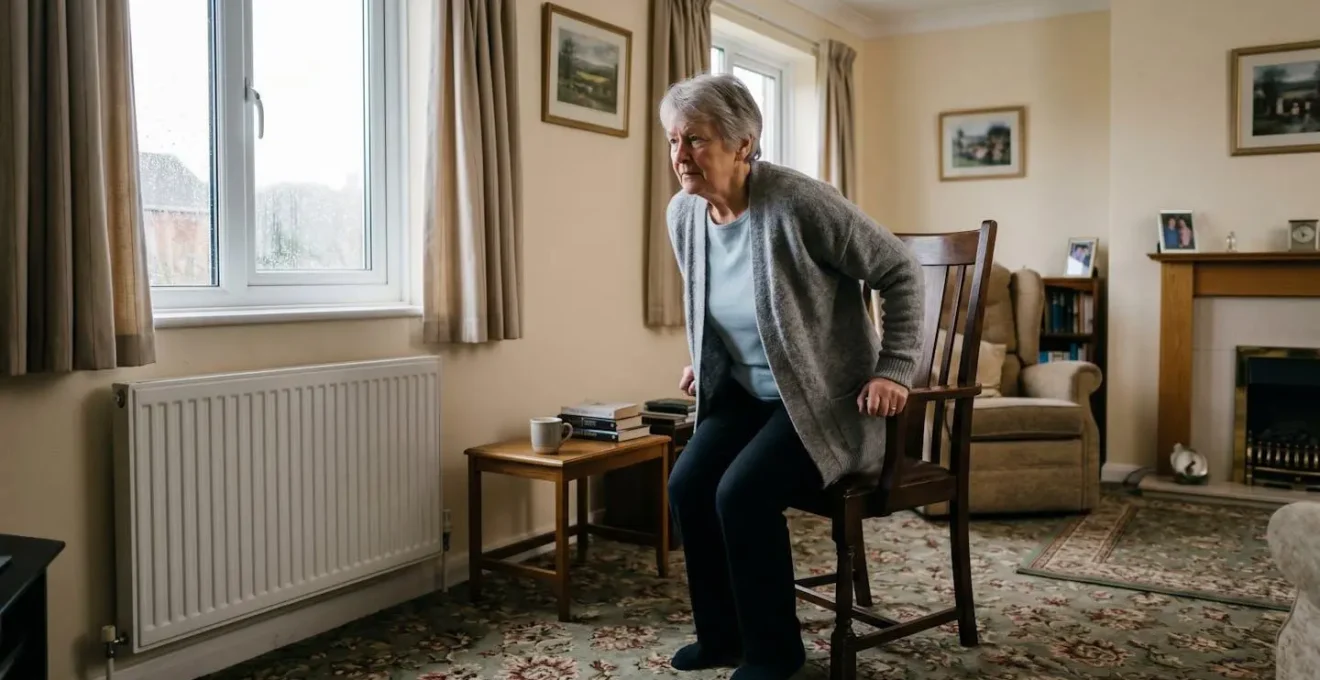
As this image shows, maintaining activity doesn’t require a gym. Using a sturdy chair in your own living room, you can perform exercises like sit-to-stands, leg lifts, and seated marching. These movements maintain crucial muscle groups, improve circulation, and can be done safely regardless of the weather outside. Consistency is more important than intensity; just 10-15 minutes a day can make all the difference.
How to Reset Your Circadian Rhythm When You Wake up at 4 AM Every Day?
A common and deeply frustrating experience for many seniors is waking in the pre-dawn hours, mind racing, with sleep feeling miles away. This isn’t just a sign of « getting older »; it’s often a symptom of a disrupted circadian rhythm—the body’s internal 24-hour clock. In winter, the lack of bright morning light and the tendency to stay in dim indoor lighting all day can confuse this natural cycle, leading to what’s known as ‘advanced sleep phase syndrome’.
When you wake at 4 AM, the absolute worst thing you can do is turn on a bright light, check your phone, or start worrying about being awake. This sends a powerful « wake up » signal to your brain, releasing cortisol and making a return to sleep nearly impossible. The key is to manage the environment and your mental state to gently coax your body back towards rest, without triggering a full stress response. This requires a pre-planned strategy, so you’re not making decisions in a groggy, anxious state.
The goal is to avoid stimulation—both from light and from anxious thoughts. Having a toolkit of calming, low-stimulation activities can help you ride out the wakeful period until sleepiness returns. This is not about forcing sleep, but about creating the perfect conditions for it to happen naturally. The following action plan can help you break the cycle of early waking and reset your internal clock.
- Avoid bright lights: If you must get up, use a very dim nightlight. Stay away from bathroom or kitchen lights.
- Resist checking screens: The blue light from phones, tablets, or clocks is a powerful disruptor of melatonin, the sleep hormone.
- Perform gentle stretches in bed: Focus on releasing tension in your neck, shoulders, and lower back without raising your heart rate.
- Listen to a calming audio programme: A quiet BBC Radio 4 programme, a podcast, or a talking book can distract your mind from anxious loops.
- Use a ‘worry journal’: Keep a notepad by your bed. If your mind is racing, write down your concerns to be dealt with in the morning. This act of ‘offloading’ can clear your mind.
- Practise controlled breathing: Techniques like the 4-7-8 method (inhale for 4, hold for 7, exhale for 8) can activate the body’s relaxation response and promote drowsiness.
Why Is High Blood Pressure Called the ‘Silent Killer’ in the UK Senior Population?
High blood pressure, or hypertension, earns its grim nickname because it typically has no symptoms. You can feel perfectly well while, internally, the condition is inflicting steady, cumulative damage on your most vital organs. It is a leading risk factor for the two biggest causes of death in the UK: heart attacks and strokes. After 65, blood vessels naturally become stiffer, which means almost everyone is at a higher risk, making regular monitoring absolutely non-negotiable.
The ‘silence’ of hypertension is what makes it so dangerous. Without the feedback of pain or discomfort, it’s easy to be unaware of the problem until a catastrophic event occurs. The constant high pressure forces your heart to work harder, causing the muscle to thicken and weaken over time. It damages the delicate lining of your arteries, making them more susceptible to the buildup of cholesterol plaque (atherosclerosis), which can lead to blockages. This damage can affect the brain (stroke, dementia), the kidneys (kidney failure), and the eyes (vision loss).
Because you can’t feel it, you must measure it. This is where proactive health navigation becomes a life-saving habit. You no longer have to wait for a GP appointment to know your numbers. Community pharmacies across the UK are now a primary hub for free, convenient blood pressure monitoring. Making a quick stop at your local chemist a regular part of your routine is one of the most powerful preventive actions you can take.
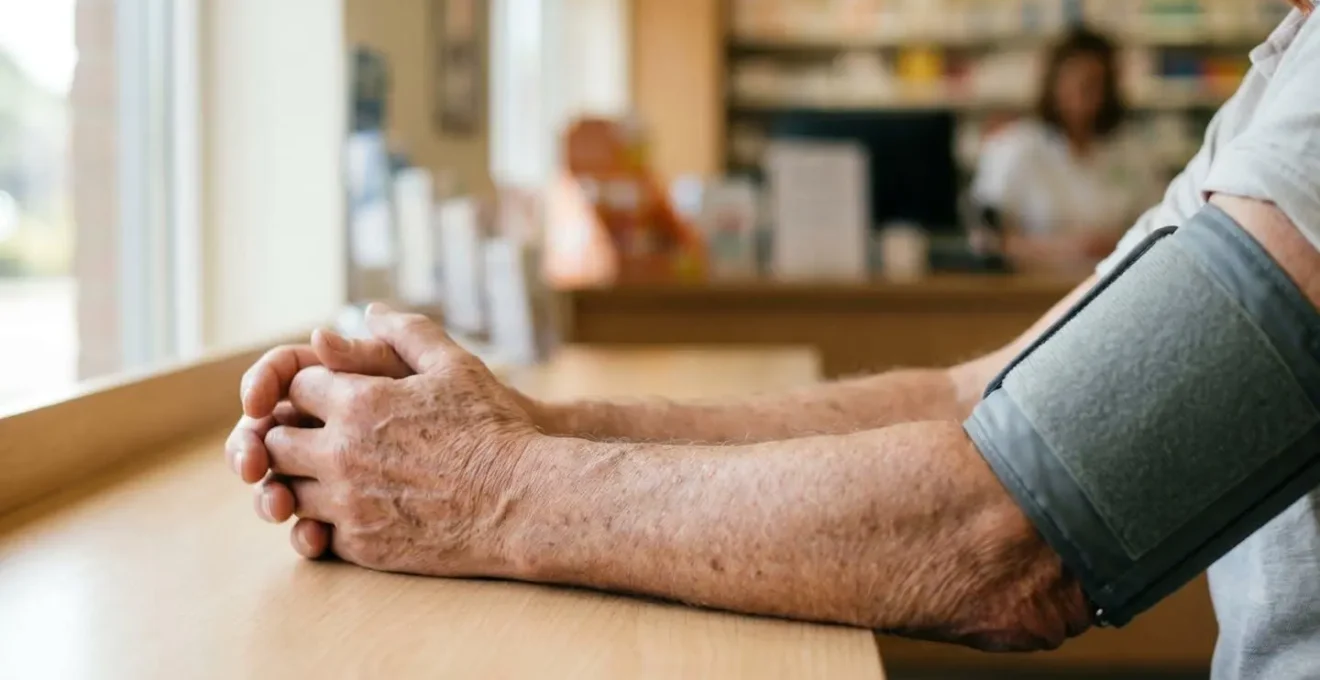
This simple, quick, and accessible check provides the data you need to protect your long-term health. Knowing your numbers is the first step to managing them, whether through lifestyle changes in diet and exercise or with medication prescribed by your GP. Don’t wait for symptoms that may never arrive; make monitoring a priority.
- GP surgery: You can book a routine appointment or use practice-based monitoring machines.
- Community pharmacy: The most accessible option for walk-in checks.
- NHS Health Check: Offered every 5 years to those aged 40-74 to assess cardiovascular risk.
- At-home monitors: Purchasing a device approved by the British and Irish Hypertension Society (BIHS) allows for regular, convenient self-monitoring.
Key Takeaways
- Winter health is systemic: Focus on managing interconnected systems (bones, mood, muscle, sleep) rather than just fighting colds.
- Proactive NHS navigation is key: Use services like Pharmacy First and community health checks to get faster, more convenient care.
- Inactivity is a major risk: Just two weeks of a sedentary lifestyle can cause significant muscle and strength loss, increasing fall risk.
The Error of Shovelling Snow or Walking in Freezing Wind with Angina
While staying active is crucial, not all winter activity is beneficial. One of the most dangerous errors is underestimating the immense strain that sudden, strenuous exertion in the cold puts on the cardiovascular system. Activities like shovelling heavy, wet snow or even walking briskly against a freezing wind can be triggers for a heart attack, especially for those with known or undiagnosed heart conditions like angina or high blood pressure.
This heightened risk is due to a double-jeopardy effect. Cold air causes your blood vessels, particularly the arteries supplying your heart, to constrict (vasoconstriction) to conserve body heat. This narrowing forces your heart to pump harder to circulate blood. At the same time, the physical exertion of shovelling or battling wind dramatically increases your heart’s demand for oxygenated blood. This combination of increased demand and reduced supply can lead to chest pain (angina) or, in the worst case, a full-blown cardiac event. It’s an acute form of cardiovascular prudence failure.
The risk is even higher for those who are generally sedentary and then suddenly engage in a burst of intense activity. Your body is simply not conditioned for the shock. Recognising the « red flags » before you even step outside is a critical preventive skill. This involves assessing not just your own health but the environmental conditions as well.
Action Plan: The Winter Exertion Red Flag Checklist
- Check the Environment: Before any strenuous outdoor task, check the temperature and wind chill factor. Avoid these activities if the temperature is below 0°C or the wind chill is significant.
- Review Your Health Profile: Be honest about your pre-existing conditions. If you have known or suspected hypertension, angina, or other cardiovascular issues, the risk is too high. Delegate the task.
- Monitor Warning Symptoms: If you must perform the task, stop immediately if you feel unusual breathlessness, chest tightness or pain, dizziness, nausea, or excessive fatigue. Do not « push through it. »
- Find Safer Alternatives: Use liquid de-icer spray or grit salt on paths instead of physical shovelling. These methods remove the ice without the cardiovascular strain.
- Leverage Community Support: Before winter sets in, find out if your area has a local Good Neighbour Scheme or similar volunteer group. They can often assist with tasks like snow clearing for vulnerable residents.
How to Interpret Your NHS Health Check Results When You Are Over 65?
Proactively getting checks for blood pressure and other markers is the first step, but the real power comes from understanding what the numbers mean. An NHS Health Check provides a snapshot of your cardiovascular health, but the results can seem like a foreign language. Learning to interpret these key figures transforms you from a passive patient into an informed partner in your own healthcare.
Your results for cholesterol, blood pressure, and blood sugar are not just numbers; they are indicators of underlying processes in your body. They tell a story about inflammation, arterial health, and metabolic efficiency. For example, knowing your ‘good’ (HDL) and ‘bad’ (LDL) cholesterol is more important than just the total figure. HDL acts like a scavenger, removing excess cholesterol from your arteries, so a higher number is protective. Conversely, high LDL contributes to the plaque that can clog arteries.
The table below provides a guide to the optimal ranges for key measures for those over 65 in the UK. Note that these are general targets; your GP will consider your overall health profile to determine your personal goals. Using this as a reference can help you prepare for a more meaningful conversation with your doctor.
| Measure | Optimal Range (65+) | What It Means |
|---|---|---|
| Vitamin D (25(OH)D) | ≥50 nmol/L | Sufficiency for bone health; <25 nmol/L is deficiency |
| Total Cholesterol | <5.0 mmol/L | Combined ‘good’ and ‘bad’ cholesterol measurement |
| HDL (‘Good’) Cholesterol | ≥1.0 mmol/L (men) ≥1.2 mmol/L (women) |
Higher is better – helps ‘clean’ your arteries |
| LDL (‘Bad’) Cholesterol | <3.0 mmol/L | Lower is better – contributes to plaque buildup |
| Blood Pressure | <140/90 mmHg | Upper number (systolic) / lower number (diastolic) |
| HbA1c (diabetes marker) | <42 mmol/mol | 42-47 is prediabetes; ≥48 indicates diabetes |
Armed with this information, your follow-up appointment becomes a strategic discussion, not a passive briefing. You can ask targeted questions that get to the heart of your personal risk and the most effective actions you can take. This empowers you to co-create a health plan with your GP.
- What is my QRISK3 score and what does it mean for my 10-year cardiovascular risk?
- Which single lifestyle change would have the biggest impact on improving these results?
- Based on these numbers, when should I be re-tested?
- Are any of my results in the ‘borderline’ zone that requires closer monitoring?
- Should I consider any preventive medications based on my results?
By understanding these interconnected systems and taking proactive steps to manage them, you can shift your experience of the British winter from one of endurance to one of vitality. The next logical step is to book a routine check-up with your GP or local pharmacy to establish your baseline and begin your journey towards systemic resilience.