
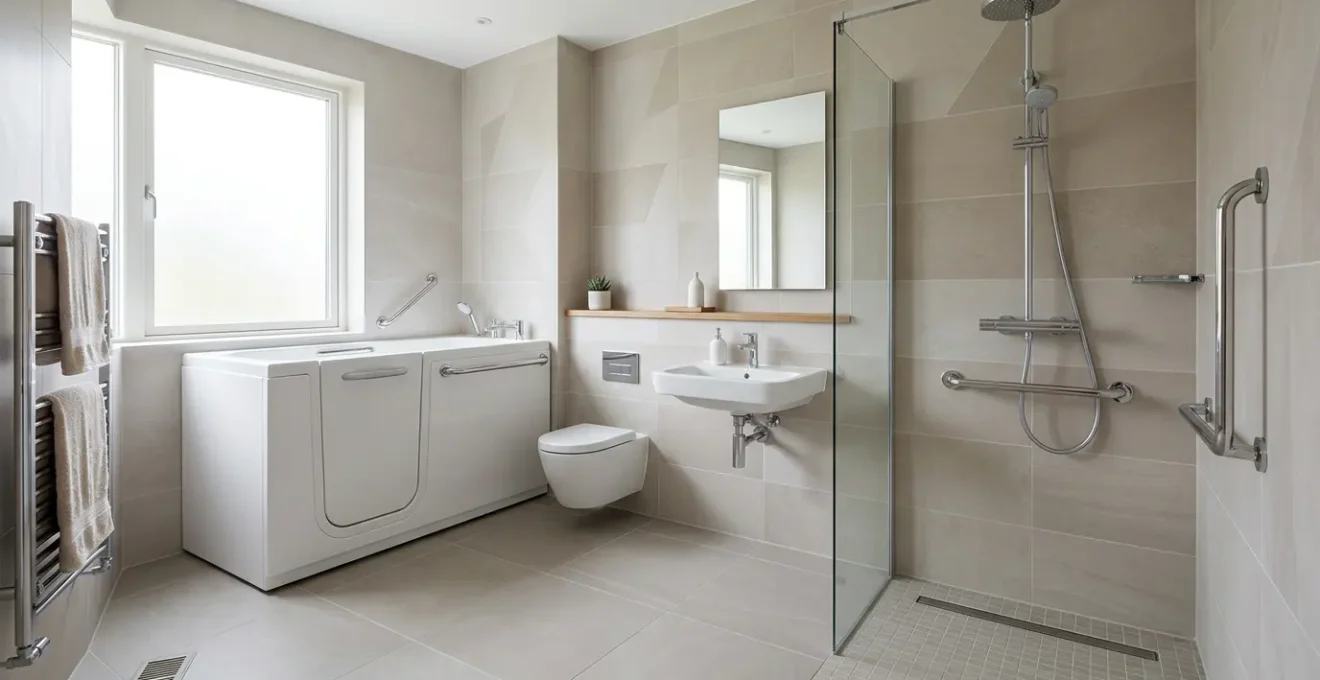
The common assumption that any accessibility upgrade automatically adds value is a dangerous myth for UK homeowners.
- The true market value of an accessible bathroom hinges on certified, insurable compliance, not just aesthetics or initial cost.
- A poorly specified or non-compliant installation (a DIY wet room or an oversized bath for your boiler) can be flagged as a valuation defect, actively reducing your property’s appeal.
Recommendation: To protect your property’s long-term value, your first step must be a professional Occupational Therapist assessment to determine what is ‘necessary and appropriate’ before considering any specific product.
As a property valuer, I’m often asked whether to install a walk-in bath or convert to a wet room. Homeowners are typically caught between a pressing need for safety and a deep-seated fear of creating a ‘medical’ looking space that could torpedo their property’s value. The internet is full of advice that pits the modern aesthetic of a wet room against the perceived safety of a walk-in bath. But this debate misses the most critical point from a valuation perspective.
The real question isn’t about style; it’s about compliance, suitability, and long-term financial sense. A beautifully tiled wet room that leaks or a top-of-the-range walk-in bath that your boiler can’t handle are not assets. They are liabilities. They are the red flags that a surveyor’s report will highlight, potentially costing you thousands in a sale. The value doesn’t come from the fixture itself, but from how well it solves a problem without creating new ones.
This article moves beyond the showroom brochures. We will dissect these solutions through the unforgiving lens of a real estate professional. We will analyse the hidden running costs, the non-negotiable safety features that impact emergency access, the critical relationship with your home’s existing plumbing, and the financial frameworks available to UK homeowners. The goal is to equip you to make a decision that enhances both your quality of life and your property’s market standing, rather than sacrificing one for the other.
To navigate this complex decision, this guide breaks down the critical valuation factors, from the micro-details of bath drainage to the macro-economics of ageing in place. Understanding these elements is the key to a successful and value-adding adaptation.
Summary: Walk-in Bath vs Wet Room: A Property Valuation Guide
- Why do you get cold waiting for a walk-in bath to drain before opening the door?
- How to install dual wastes and pumps to empty the bath in under 2 minutes?
- Inward vs outward opening doors: which is safer for emergency access?
- The error of installing a huge tub when you have a standard combi boiler
- How to add heated seats to a walk-in tub to maintain body temperature?
- How to waterproof a timber floor for a level-access shower upstairs?
- Stairlift vs moving to a bungalow: which makes more financial sense after 75?
- How to apply for a Disabled Facilities Grant (DFG) for a wet room conversion?
Why do you get cold waiting for a walk-in bath to drain before opening the door?
The single greatest design flaw of a walk-in bath is a practical one that has direct health implications. Unlike a traditional bath, you cannot get out until the water has fully drained. This process can take several minutes, during which the user is sat, exposed and wet, in a rapidly cooling environment. For an older person, this isn’t just uncomfortable; it’s a genuine health risk. The body loses heat dramatically faster when wet, creating a tangible danger of hypothermia.
From a clinical perspective, this risk is well-documented. The Cleveland Clinic provides a clear medical definition for this concern that every family considering a walk-in bath should understand:
Hypothermia is when your body’s core temperature falls to lower than 95 degrees. It occurs when your body can’t produce enough energy to keep the internal body temperature warm enough.
– Cleveland Clinic, Medical guidance cited in elderly bathing safety article
This period of waiting is often the most overlooked aspect by buyers, but it’s a critical failure in user experience. A potential buyer with an elderly parent will immediately spot this issue. It transforms the promise of a safe, warm bath into a potentially hazardous chilling process. A valuer sees this not as a luxury feature, but as a product with a significant functional drawback that limits its appeal to a knowledgeable user.
How to install dual wastes and pumps to empty the bath in under 2 minutes?
Manufacturers have attempted to solve the ‘getting cold while draining’ problem with technology. The premium solution is the installation of twin wastes and an electric pump system. Instead of relying on gravity, this actively pumps the water out, drastically reducing the drainage time from many minutes to, in some cases, under 90 seconds. This effectively mitigates the hypothermia risk and makes the walk-in bath a far more viable and comfortable proposition.
However, from a property valuation standpoint, this solution introduces a new layer of complexity and cost: mechanical maintenance. A simple gravity-fed drain is virtually maintenance-free. A dual-pump system, by contrast, is a mechanical device with seals, impellers, and electrical components that will eventually fail or require servicing. This introduces a long-term running cost that a prudent buyer will factor into their offer.
The costs are not insignificant. While specifications vary, industry data shows that the annual maintenance for dual pump systems typically costs between £150 and £500 per service. This recurring expense must be weighed against the initial benefit. A buyer might see the fast drain as a plus, but a surveyor will flag the pump system as an item requiring regular, specialist maintenance, unlike any other fixture in a standard bathroom. It turns a simple plumbing appliance into something more akin to a boiler, with associated whole-life costs.
Inward vs outward opening doors: which is safer for emergency access?
The choice of door swing on a walk-in bath seems like a minor detail, but it is one of the most critical safety features a surveyor will assess. An inward-opening door might seem neater and save space in a compact UK bathroom, but it presents a catastrophic risk in an emergency. If the user collapses or has a medical event inside the tub, their body will block the door from opening, making it impossible for emergency services to gain access.
For this reason, an outward-opening door is unequivocally the safer and more professionally specified option. It ensures that access to the user is never obstructed from the outside. This isn’t a matter of preference; it’s a fundamental principle of safe design for accessibility. A valuer or an Occupational Therapist (OT) would immediately identify an inward-opening door in a single-bathroom property as a serious design flaw.
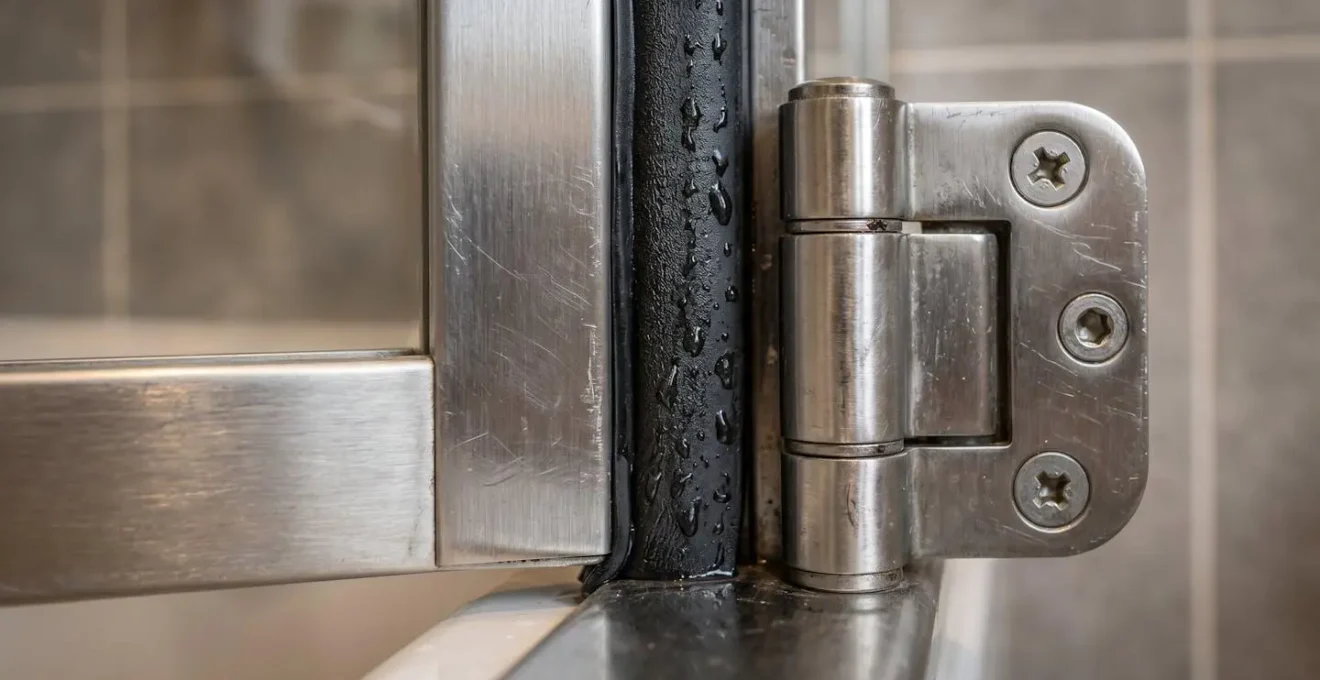
This decision is often taken out of the homeowner’s hands when public funding is involved. The choice of door configuration is a key part of the mandatory needs assessment that precedes any grant award. As noted in guidance on the Disabled Facilities Grant, OTs will almost always mandate an outward-opening door to guarantee user safety and emergency access, prioritising this over any aesthetic or spatial preference from the homeowner. A property featuring a professionally specified, outward-opening door signals a compliant, well-thought-out adaptation, which supports its value.
The error of installing a huge tub when you have a standard combi boiler
One of the most common and costly mistakes homeowners make is installing a large, full-length walk-in bath without considering their home’s hot water system. A standard UK combination (combi) boiler has a limited flow rate for hot water. A large tub, which can hold 150-180 litres, can take an excessively long time to fill—often over 10 minutes. During this time, the user is sitting in a slowly filling bath, again getting cold.
More importantly, the boiler may not be able to maintain a consistent temperature for that duration, leading to a tepid, uncomfortable, and potentially unsafe bath. From a valuer’s perspective, this is a fundamental mismatch between the adaptation and the property’s infrastructure. It’s an ‘improvement’ that doesn’t actually work properly. A knowledgeable buyer will ask about the boiler’s capacity, and a surveyor will note the incompatibility in their report, marking it as a defect.
The correct approach requires a simple calculation before purchase. You must check your boiler’s hot water flow rate (in litres per minute) and compare it to the bath’s volume. If the fill time is too long, the solution is not a bigger boiler, but a smaller, more efficient ‘upright’ style walk-in bath. These models hold around 60-75 litres, using less hot water than a standard bath and filling much faster. Furthermore, any professional installation must include TMV2 or TMV3 certified thermostatic mixing valves to ensure the water temperature remains stable and safe throughout the fill cycle, a key compliance point.
How to add heated seats to a walk-in tub to maintain body temperature?
To combat the issue of heat loss while filling and draining, high-end walk-in baths offer features like integrated heated seats and backrests. These are low-voltage systems built into the acrylic shell of the bath, designed to keep the user’s core temperature stable before the water arrives and after it drains away. This directly addresses the main comfort and safety drawback of the walk-in bath concept.
While effective, these features push the installation into a premium price bracket. From a market perspective, this is a luxury upgrade, not a standard feature. A valuer notes that while it enhances user comfort, the return on investment is questionable. Data on installation costs shows that luxury walk-in baths with integrated heated seats and power-lift features typically cost between £7,000 and £9,000 or more. This is a significant outlay for a feature that a future buyer may not value or want to maintain.
Crucially, adding any electrical component to a bathroom, especially a ‘wet’ zone like a bath, is heavily regulated in the UK. It is not a DIY job. As compliance guidance makes clear, the legal and safety stakes are absolute.
Any such installation MUST be done by a Part P registered electrician to be legal and safe in the UK.
– UK Building Regulations Compliance Guidance, Bathroom electrical safety regulations for elderly adaptations
The absence of a Part P certificate for such an installation would be a major red flag on a property survey, potentially halting a sale. Therefore, the value is not in the feature itself, but in the certified, compliant installation.
How to waterproof a timber floor for a level-access shower upstairs?
A wet room, particularly an upstairs one, is one of the most structurally intrusive adaptations you can make to a property. The primary valuation risk is simple: water leakage. On a solid ground floor, a leak is a problem. In an upstairs bathroom with timber joists, a leak is a catastrophe, causing immense damage to the floor structure and the ceiling of the room below. Therefore, the value of an upstairs wet room is 100% dependent on the quality of its waterproofing, or ‘tanking’.
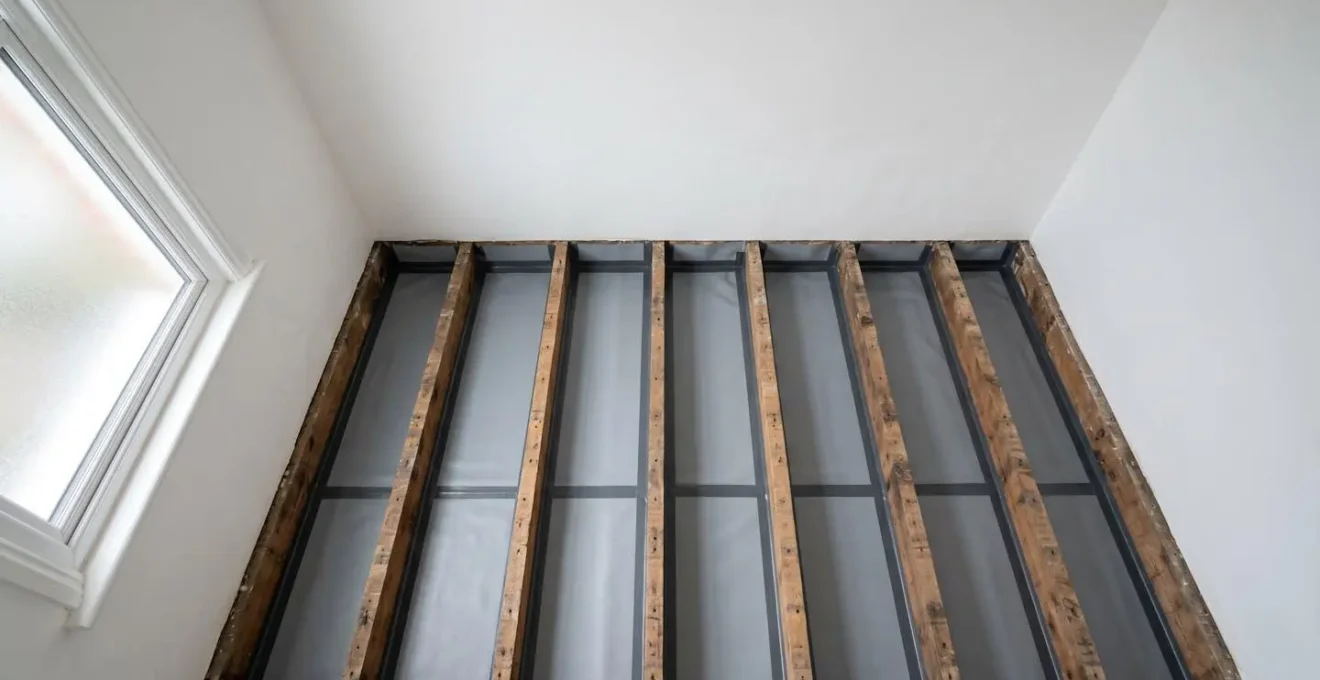
A professional installation involves creating a fully sealed, impermeable membrane across the entire floor and up the walls. This is a highly skilled job and is the main reason why professional wet room installations in the UK typically cost between £6,000 and £12,000. A DIY or poorly installed wet room is a valuer’s nightmare. It’s not an asset; it’s a ticking time bomb that any competent surveyor will flag as a major defect.
Case Study: The Uninsurable DIY Wet Room
UK home insurers are acutely aware of the risk. They require mandatory disclosure of an upstairs wet room installation. Failure to do so can invalidate your entire home insurance policy. Professional installations must be backed by a Building Control completion certificate, proving compliance with structural (Part A), ventilation (Part F), and accessibility (Part M) regulations. Estate agents consistently report that sales are delayed or fall through when surveys reveal an undocumented DIY wet room. Buyers are forced to factor in the high cost of ripping it out and having it re-installed and certified by a professional, leading to significant price reductions.
In short, a certified, guaranteed wet room can be a stylish and functional asset. An uncertified one is almost worthless from a market perspective and poses a serious risk to your property.
Stairlift vs moving to a bungalow: which makes more financial sense after 75?
The decision to install an accessible bathroom is often part of a wider question: should we adapt our current home or move to a more suitable one, like a bungalow? From a purely financial perspective, the numbers can seem complex. The combined cost of a stairlift and a wet room conversion might run to £10,000-£15,000, whereas moving house incurs Stamp Duty, legal fees, and removal costs, which can easily exceed that.
Some argue that adding a bathroom adds value. Research suggests UK buyers would offer an average of £5,170.88 more for a property with a second bathroom. However, this applies to a conventional bathroom; the value of a highly specialised accessible bathroom is less certain and depends entirely on finding a buyer with the same needs.
But a good valuer looks beyond simple figures. The most significant factor, often overlooked, is what Age UK’s research calls ‘community capital’. This is the immense, non-financial value of a person’s established local support network. After decades in one community, a senior has trusted neighbours, familiar shops, a long-standing GP relationship, and social groups. Moving to an unfamiliar area, even to a ‘perfect’ bungalow, severs these ties. Research consistently documents a subsequent increase in social isolation and mental health decline. This « cost » of moving cannot be measured in pounds and pence but has a profound impact on health and wellbeing.
Valuation Insight: The Cost of Losing ‘Community Capital’
When weighing the cost of adaptation against the cost of moving, the loss of this community capital must be considered a major financial risk. The potential for increased reliance on paid care services due to social isolation can quickly outweigh any savings made by downsizing. Therefore, investing in adaptations that allow someone to ‘age in place’ within their established community often represents the most sensible long-term financial strategy, preserving a critical health asset that a new property cannot replace.
From this perspective, a well-executed adaptation is not just an expense; it’s an investment in maintaining independence and preserving invaluable social infrastructure.
Key takeaways
- The value of any accessible bathroom is determined by its certified compliance (Building Control, Part P) and insurability, not its style.
- A poorly chosen or installed adaptation can be flagged as a ‘valuation defect’ by a surveyor, actively reducing property value.
- When comparing adaptation vs. moving, the non-financial ‘community capital’ of a familiar neighbourhood is a critical asset that must be factored into the decision.
How to apply for a Disabled Facilities Grant (DFG) for a wet room conversion?
For many UK homeowners, the high cost of a compliant wet room or walk-in bath is a major barrier. The Disabled Facilities Grant (DFG) is the primary government mechanism to fund necessary home adaptations. This is not a benefit, but a mandatory grant that your local council must provide if you meet the criteria. The process is rigorous, but it can cover the full cost of an adaptation deemed ‘necessary and appropriate’.
The grant is means-tested for adults but not for adaptations for a disabled child. The funding is substantial; the maximum grant payable under the Disabled Facilities Grant is £30,000 in England, £36,000 in Wales, and £25,000 in Northern Ireland. With a total budget increased to over £700 million, it is a well-funded programme. The key is understanding that the grant pays for function, not high-end finishes. It will cover the cost of a safe, compliant wet room with standard tiles, but not a luxury upgrade to designer fixtures.
Navigating the application process can be daunting, but it follows a clear, legally defined path. Successfully securing the grant is the surest way to guarantee your adaptation adds value, as the entire process is overseen by professionals who ensure the work is necessary, appropriate, and correctly certified.
Your action plan: The DFG application process
- Request Professional Assessment: The process starts not with a builder, but with a request for an Occupational Therapist (OT) assessment via your GP or local council’s social care department. This is mandatory and no application can proceed without it.
- Initiate Council Application & Means Test: With the OT report, contact your local housing authority to start the formal DFG application and complete the financial means test (if applicable).
- Obtain Compliant Quotes: You will need to get at least two quotes from approved contractors. Your council may provide a list, but ensure any quote specifies that the work will be completed with full Building Control certification.
- Submit & Await Decision: Submit the full application pack including the OT report, financial assessment, and contractor quotes. Be aware that waiting times for approval can vary significantly between councils.
- Supervise Approved Work: Once approved, the grant is paid either to you or directly to the contractor. The work must be completed to the council’s satisfaction to meet all necessary safety and building regulations.
To guarantee your adaptation is a true asset and not a future liability, your first conversation should not be with a salesperson, but with an Occupational Therapist and your local council’s DFG team. This is the only way to ensure the work is necessary, compliant, and financially sound.