
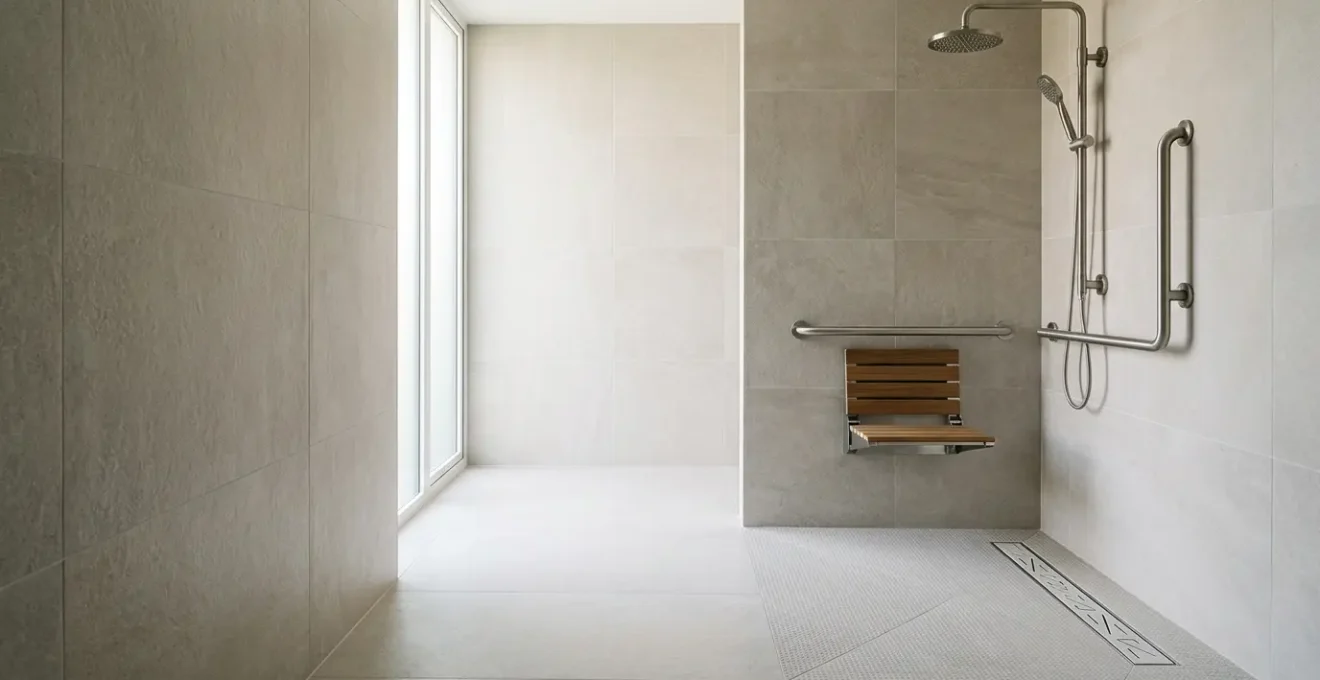
Navigating the Disabled Facilities Grant for a wet room feels complex because success hinges on understanding the council’s strict definition of ‘necessary, reasonable, and practical’—not on personal preference.
- Council surveyors must reject any feature deemed a ‘luxury’, focusing funding on permanent, integrated solutions that meet assessed clinical needs.
- Non-negotiable safety features, such as thermostatic mixing valves (TMVs) and robust structural waterproofing, are mandatory for grant approval.
Recommendation: A successful application anticipates the council’s logic by building a case that proves every requested adaptation is a cost-effective, long-term, and safe solution to a specific mobility challenge.
Applying for a Disabled Facilities Grant (DFG) can often feel like navigating a bureaucratic maze, especially when your goal is a significant adaptation like a wet room conversion. As a homeowner, you have a clear vision of what you need to make your life safer and more comfortable. However, the council operates under a strict set of rules, and the gap between your desired outcome and what the grant can fund is where most difficulties arise. Many applicants are understandably frustrated when requests are questioned or rejected, but these decisions are rarely arbitrary. They are rooted in a legislative framework that every council surveyor and occupational therapist must follow.
The process always begins with an assessment by an Occupational Therapist (OT), who identifies your specific needs. The council’s role is then to determine the most appropriate and cost-effective way to meet those needs through adaptation. This involves evaluating if the proposed work is ‘necessary and appropriate’ and ‘reasonable and practical’. Understanding this bureaucratic logic is the single most important factor in a successful application. It’s not about finding loopholes, but about presenting your needs in a way that aligns with the council’s mandatory criteria for safety, longevity, and responsible use of public funds.
This guide will walk you through the council’s perspective on common DFG issues. By understanding the ‘why’ behind the decisions—from rejecting a spa bath to insisting on specific waterproofing methods—you can better prepare your application, manage your expectations, and ultimately secure the funding for an adaptation that truly serves you for years to come.
To help you navigate this process, this article breaks down the key considerations and frequent sticking points from a council caseworker’s perspective. The following sections explain the reasoning behind the grant’s requirements.
Summary: A Caseworker’s Guide to DFG Applications
- Why does the council surveyor reject your request for a Jacuzzi bath?
- How to waterproof a timber floor for a level-access shower upstairs?
- Wall-mounted vs freestanding stool: which is safer for a small cubicle?
- The error of not installing a thermostatic mixing valve (TMV) in a senior’s shower
- When to install a plinth vs a raised toilet seat: hygiene and stability factors
- How to claim Housing Benefit to cover service charges in sheltered accommodation?
- Why do you get cold waiting for a walk-in bath to drain before opening the door?
- Walk-in bath vs wet room: which adds more value to a UK property?
Why does the council surveyor reject your request for a Jacuzzi bath?
One of the most common points of confusion in a DFG application is the distinction between a need and a preference. An applicant may feel a Jacuzzi or whirlpool bath would help with aches and pains, but from the council’s perspective, the grant is not intended to fund features considered to be luxuries. The funding is strictly limited to facilitating essential daily activities, such as getting in and out of the bath or shower safely. A standard bath with appropriate grab rails and aids can achieve this objective.
The surveyor and OT must adhere to the official guidance governing the DFG. This principle is central to the entire DFG process, as outlined in official government documentation. A key passage states that the work must be essential to address the individual’s requirements in a reasonable and feasible manner. As the UK Government’s own DFG guidance clarifies:
The grant could cover the cost of adapting your home: The work must be necessary to meet your needs and the work must be reasonable and practical.
– UK Government DFG Guidance, GOV.UK Disabled Facilities Grant official page
A Jacuzzi’s therapeutic features, while pleasant, are not considered ‘necessary’ to the act of bathing. The additional cost for jets, pumps, and complex plumbing would therefore be rejected as it goes beyond the scope of meeting the assessed need. The council will only fund the most cost-effective solution that safely resolves the mobility issue identified by the Occupational Therapist. Any features beyond that basic, safe provision must be funded privately by the applicant.
How to waterproof a timber floor for a level-access shower upstairs?
When a wet room or level-access shower is approved for an upstairs bathroom with a timber floor, the council’s technical officer or surveyor will be exceptionally strict about the waterproofing method. This is not a matter of aesthetics; it is a critical issue of structural integrity and long-term durability. A leak from an upstairs wet room can cause catastrophic damage to the floor joists and the ceiling below, leading to far more extensive and costly repairs in the future. The DFG is an investment in a permanent solution, and preventing such outcomes is a primary concern.
The surveyor will insist on a process known as ‘tanking’. This involves creating a completely impervious membrane across the entire shower area, which then connects to a specialized drain. For timber floors, this requires more than simply painting on a waterproof sealant. A robust, flexible tanking membrane with decoupling properties is required to accommodate the natural, slight movements in a timber structure without cracking. This ensures the bathroom remains watertight for decades.

As the image demonstrates, this is a highly technical process. The surveyor will expect to see a pre-formed floor ‘former’ with a built-in gradient to direct water to the drain, laid over a reinforced plywood subfloor. The tanking membrane must be applied meticulously over this, extending up the walls to a specified height. This approach is the only way to guarantee a fully compliant and durable installation, protecting both the user and the property itself from future harm and expense.
Your Checklist for a Grant-Compliant Upstairs Wet Room
- Assess existing structure: Liaise with a surveyor to inspect timber joists and confirm load-bearing capacity for the new installation.
- Document the proposed materials: Gather specifications for the floor former, plywood subfloor (min. 18mm), and the specialist tanking membrane.
- Verify drainage plan: Ensure the proposed gradient (a 1:40 fall) and waste connection are independent and meet building regulations.
- Review for long-term suitability: Does the plan use permanent, integrated waterproofing rather than temporary solutions? This is key for DFG approval.
- Finalise the technical submission: Compile all structural and waterproofing plans into a clear document to submit alongside the OT report.
Wall-mounted vs freestanding stool: which is safer for a small cubicle?
The choice of a shower seat may seem minor, but in the context of a DFG-funded adaptation, it is a decision based on a careful assessment of safety, space, and long-term user needs. For a small shower cubicle, a wall-mounted, fold-up stool often appears to be the most practical solution for saving space. However, a council surveyor must also consider the structural implications and future flexibility, which often leads them to recommend a high-quality freestanding stool instead.
A wall-mounted stool requires a solid, load-bearing wall for a secure installation. If the shower is built against an internal stud wall, significant and costly reinforcement work may be needed, which can make the option not ‘reasonable and practical’ from a cost perspective. Furthermore, a fixed stool cannot be adjusted if the user’s condition changes or if other household members need to use the shower. A heavy-duty freestanding stool, conversely, offers excellent stability without any structural work and can be moved or adjusted as required. The following comparison, based on guidance from accessibility charities like the disability equality charity Scope, highlights the factors a surveyor must weigh.
| Factor | Wall-Mounted Fold-Up Stool | Freestanding Heavy-Duty Stool |
|---|---|---|
| Stability for Transfers | Requires solid wall structure; may need reinforcement if non-load-bearing stud wall | Provides stable floor-mounted base; no wall reinforcement needed |
| Space Efficiency | Folds away to free floor space for wheelchair turning circles (critical in small cubicles) | Occupies permanent floor space even when not in use |
| Future Flexibility | Fixed installation; difficult to adjust if user’s needs change | Portable and adjustable; can be repositioned or used by multiple household members |
| DFG Surveyor Cost Consideration | May be deemed not ‘cost-effective’ if wall reinforcement exceeds £500-£1,000 | Often approved as more economical solution requiring no structural modifications |
| Best For | Users with stable condition requiring carer assistance in very small shower areas | Users with degenerative conditions or households with multiple accessibility needs |
Ultimately, while a fold-down seat is sometimes approved, the decision rests on a holistic assessment. If the wall is not suitable or if the user’s needs may evolve, a freestanding model is often the safer and more cost-effective recommendation for DFG funding.
The error of not installing a thermostatic mixing valve (TMV) in a senior’s shower
Of all the technical specifications for a DFG-funded bathroom, the requirement for a Thermostatic Mixing Valve (TMV) is one of the most critical and non-negotiable. A TMV is a safety device that blends hot and cold water to a pre-set, safe temperature and automatically shuts off the flow if the cold water supply fails. For the council, installing a TMV is not an optional extra; it is an absolute necessity to prevent severe scalding injuries, which pose a disproportionate risk to older adults and those with sensory impairments.
Vulnerable individuals may have reduced sensitivity to temperature, slower reaction times, or mobility issues that prevent them from moving away from dangerously hot water quickly. Data on scalding injuries in the UK is stark and directly informs this strict policy. Safety reports confirm that while young children are most numerous victims of scalds, older adults suffer the most severe consequences. Indeed, UK safety data on bath water scalding incidents shows almost three quarters of fatalities from scalding are people aged 65 and over. This highlights the grave danger that an incorrectly set water temperature presents.

The risk is compounded by the fact that vulnerable people can be scalded at lower temperatures than the general population. The Health and Safety Executive (HSE), a key authority in UK safety standards, provides clear guidance on this point.
The average person may be scalded at 50°C, whereas a vulnerable person has a much lower threshold at 44°C.
– Health and Safety Executive, HSG 274 Part 2 – The control of legionella bacteria in hot and cold systems
Therefore, any DFG application for a new shower or bath will have the installation of a TMV3-approved valve as a mandatory condition. It is a fundamental aspect of the grant’s duty of care to ensure the adaptation does not introduce new hazards into the home.
When to install a plinth vs a raised toilet seat: hygiene and stability factors
Raising the height of a toilet is a common adaptation to make transferring from a wheelchair or standing up easier. Applicants often assume a simple, clip-on raised toilet seat is the quickest and cheapest solution. However, from a council’s perspective, these are often seen as temporary aids, not permanent adaptations. For DFG funding, the preferred solution is almost always a permanent, integrated modification like installing a toilet plinth or a purpose-built ‘comfort height’ toilet.
The reasoning is twofold: stability and hygiene. Clip-on seats can become loose over time, creating a significant fall risk during transfers. They also create seams and crevices that are difficult to clean, posing a hygiene challenge, especially for users who require assistance. A toilet plinth, which is a sealed, purpose-made block fitted under the existing toilet bowl, raises the entire unit. This creates a completely stable, seamless, and easy-to-clean solution. It becomes part of the fabric of the building, aligning with the DFG’s focus on permanent, long-term improvements.
This preference for permanent solutions is not just theoretical; it is reflected in how councils allocate DFG funds in practice, prioritising integrated modifications over temporary equipment.
Case Study: Hastings Council’s Focus on Permanent Adaptations
In its quarterly report, Hastings Council provided a clear example of this principle. An analysis of grants approved between October and December 2024 showed that the funding consistently favoured permanent solutions. The report stated that the £350,000 allocated for 42 separate adaptations demonstrated that « permanent integrated solutions (like plinth-raised toilets and wet room conversions) are the primary focus of DFG funding rather than temporary aids such as clip-on raised toilet seats. » This approach ensures the adaptation provides safe, reliable, and hygienic use for the long term.
Therefore, while a raised seat might be provided by social services as a short-term measure, a DFG application is the opportunity to install a permanent and safer solution. The council surveyor will almost always specify a plinth or comfort height toilet to meet the assessed need for a higher seat.
How to claim Housing Benefit to cover service charges in sheltered accommodation?
While the Disabled Facilities Grant (DFG) is specifically for physical adaptations to a property, it is important for applicants to understand the wider landscape of financial support, as different needs are met by different schemes. A common point of confusion is the funding for service charges, particularly in settings like sheltered or supported accommodation. These charges often cover communal facilities, warden services, or emergency alarm systems. The DFG cannot be used to pay for these ongoing service charges.
Instead, help with these specific costs typically comes from the Housing Benefit system (or the housing element of Universal Credit). To claim this, the service charges must be eligible. Generally, charges for services related to the provision of adequate accommodation are eligible. This can include the costs of maintaining communal areas, lift maintenance, and warden services. However, charges for personal support, such as meals or in-home care, are not eligible for Housing Benefit and must be funded through other means, such as social care budgets.
To make a claim, you must apply to your local council’s Housing Benefit department. You will need to provide your tenancy agreement, which should break down the service charges. The council will then assess which of these charges are eligible for support based on national regulations. The amount you receive will be means-tested, taking into account your income and savings. It is a separate process from the DFG application, with different forms and assessment criteria, but it is a vital source of support for those living in accommodation with mandatory service fees.
Why do you get cold waiting for a walk-in bath to drain before opening the door?
Walk-in baths are often proposed as an alternative to a level-access shower. While they solve the problem of stepping over a high side, they introduce a significant and often overlooked design flaw: the user must wait inside the tub for it to fill up and, more importantly, for it to drain completely before the door can be safely opened. This waiting period can be a source of considerable discomfort and even health risks.
As the bath drains, the user is left sitting exposed to the air while wet. The rapid cooling effect of water evaporating from the skin (evaporative cooling) causes a swift drop in body temperature. For a healthy person, this is merely uncomfortable. However, for an older person or someone with underlying health conditions, the consequences can be more severe. This is not just a matter of comfort but a genuine clinical concern.
It’s not just discomfort. For users with arthritis, Raynaud’s phenomenon, or poor circulation, the rapid cooling can cause pain, stiffness, and increased health risks.
– Analysis of walk-in bath user experience issues, EAM Mobility wet room property value guide
This unavoidable waiting period is a key reason why an Occupational Therapist may recommend a level-access shower over a walk-in bath. A shower allows the user to remain in a continuously warm stream of water and to exit immediately after bathing, completely avoiding the period of chilling. When assessing for a DFG, the goal is to find a solution that is not only accessible but also safe and comfortable in its entirety. The risk of chilling in a walk-in bath is a significant functional drawback that a wet room or level-access shower simply does not have.
Key takeaways
- The DFG funds ‘necessary’ and ‘practical’ adaptations, not luxury preferences like Jacuzzi baths.
- Permanent, integrated solutions (like toilet plinths and full ‘tanking’ waterproofing) are always prioritised over temporary aids (like clip-on seats).
- Non-negotiable safety features, particularly TMV3-approved thermostatic valves to prevent scalding, are mandatory for all DFG-funded shower and bath installations.
Walk-in bath vs wet room: which adds more value to a UK property?
Beyond the immediate functional benefits, a homeowner must also consider the long-term impact of an adaptation on their property’s value. This is a crucial final consideration, as the choice between a walk-in bath and a wet room can have significantly different financial outcomes. While both are funded by the DFG to meet a mobility need, their appeal on the open property market varies dramatically. A wet room is increasingly seen as a modern, high-end feature, whereas a walk-in bath is often perceived as a niche medical device.
A professionally installed wet room has broad appeal. It offers a sleek, minimalist aesthetic that is attractive to design-conscious buyers, families with young children (as it’s easy to clean), and a growing market of older buyers looking to ‘future-proof’ their homes. Consequently, it can be a genuine asset. In contrast, a walk-in bath has a very narrow market appeal. A prospective buyer who does not need it may only see it as a liability that they will have to pay to remove and replace with a standard bathroom suite. This can negatively impact both the saleability and the final price of the property. The following table, based on analysis from property experts, outlines these differences.
This decision is also important in the context of the DFG itself. As this table from property advice specialists Homebuilding & Renovating shows, if the grant amount exceeds £5,000, the council can place a charge on the property, requiring partial repayment if it’s sold within 10 years. An adaptation that increases property value may help offset this potential liability.
| Factor | Walk-in Bath | Wet Room |
|---|---|---|
| Target Buyer Market | Narrow: exclusively buyers with specific mobility needs | Broad: families, design-conscious buyers, ageing-in-place purchasers, downsizers |
| Marketability Impact | Reduces appeal; may be perceived as liability to remove | Premium feature; increases desirability especially for over-55 market |
| Estimated Property Value Impact | Potential negative impact if only bathroom solution; buyers may mentally deduct removal cost (£2,000-£3,500) | Positive impact: can add £5,000-£10,000 to property value if professionally installed |
| Reversibility Cost | High: future buyer may need to pay £2,000-£3,500 to remove and reinstall standard bath | Low: modern wet room is a desirable feature requiring no removal |
| DFG Grant Repayment Risk | Subject to local authority grant repayment clause if property sold within 10 years and grant exceeded £5,000 | Same grant repayment clause applies; however, increased property value may offset repayment obligation |
| Best Strategic Use | Only if an additional standard bathroom exists elsewhere in the property | Ideal as the sole bathroom solution or an ensuite; a future-proof investment in property marketability |
Therefore, from both a functional and financial standpoint, a wet room represents a superior long-term investment. It not only provides a more practical and safer bathing solution but also enhances the property’s market value, making it the strategically wiser choice for most homeowners.
To ensure you submit the strongest possible application, your next step should be to request an assessment from your local council’s Occupational Therapy service, armed with a clear understanding of what makes an adaptation necessary, reasonable, and practical.